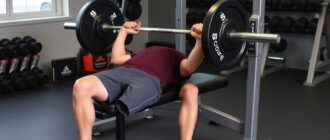
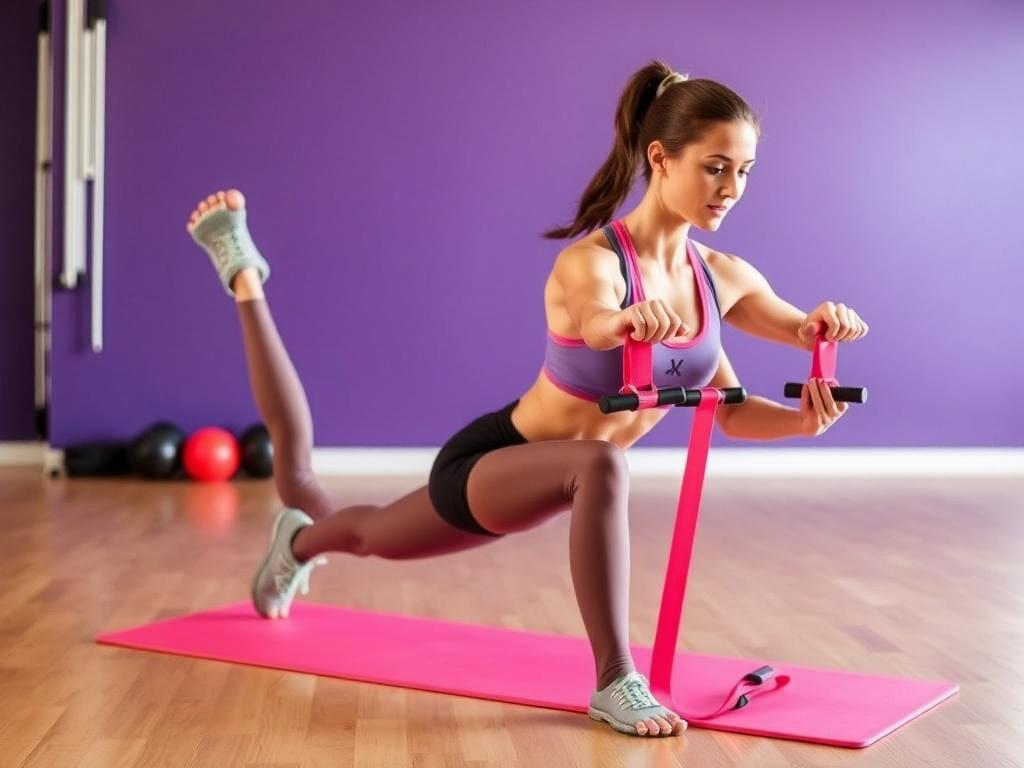
Resistance bands are one of the most flexible, portable, and surprisingly potent tools you can add to a training bag. They fit in a pocket, travel well, and scale from gentle rehab work to serious strength challenges. If you want efficient, low-impact training that still delivers real-world strength, bands deserve a permanent place in your routine.
On this page I’ll walk through practical techniques, useful progressions, safety tips, and sample plans so you can build muscle, improve mobility, and stay injury-free. I’ll also share some personal notes from years of coaching clients and blending band work into gym sessions and hotel-room workouts.
For those searching in Russian, the phrase Упражнения с резинками для фитнеса is a neat shorthand for this toolbox — but the ideas here will suit anyone ready to work smarter, not just heavier.
Why resistance bands are so effective
Bands provide variable resistance: the farther you stretch them, the more force they generate. That means they change the loading curve compared with free weights and can emphasize portions of a movement where your muscles are strongest. That unique characteristic makes bands perfect for targeting weaknesses, improving lockout strength, and increasing time under tension.
Another big advantage is the constant tension. Unlike dumbbells, which can lose tension at the top of a movement, bands maintain force through the entire range of motion. That continuous load is excellent for muscle activation, metabolic stress, and teaching the nervous system to stabilize under shifting forces.
Finally, bands are inherently joint-friendly. They allow smooth acceleration and deceleration, which reduces impact and shear at the joints. For people nursing minor aches, recovering from injury, or simply wanting less brutal training sessions, bands let you build strength without excessive joint strain.
Types of bands and what they do
Not all bands are the same, and choosing the right type will change how you train. At a glance, bands fall into a few broad categories: flat therabands, loop bands, tube bands with handles, fabric booty bands, and figure-8 or therapy mini-loops. Each has a distinct feel and best use cases.
Tube bands with handles mimic cables and are great for presses, rows, and standing work. Flat bands suit rehab and mobility drills where you wrap or loop them around limbs. Fabric bands are wide and comfortable for lateral glute work. Therapy mini-loops focus on small muscle activation and prehab patterns.
| Type | Typical use | Resistance range |
|---|---|---|
| Flat theraband | Rehab, assisted stretching, mobility | Light to medium |
| Loop band (mini to power) | Glute activation, lateral work, pull-aparts | Light to heavy |
| Tube with handles | Upper-body pressing and pulling, full-body workouts | Light to very heavy |
| Fabric band | Comfortable glute work, hip abduction | Light to heavy |
| Figure-8 / therapy loop | Small muscle rehab, isolation, shoulder health | Extra-light to light |
When you shop, look for thickness and length specifications and, if possible, color-coded resistance markers. Quality matters: cheap bands can snap, lose elasticity, or have inconsistent tension. A modest investment in a reputable brand pays off fast.
How to choose the right band for your goals
Start by matching the band’s resistance to the movement, not your ego. For lower-body compound moves you’ll want medium to heavy bands that still allow full range of motion. For shoulder work and rehab, an extra-light or light band will let you focus on control and form.
Think in terms of progression: buy a set with staggered resistances so you can increase load without changing exercises. I recommend at least three tensions: light for mobility and warm-ups, medium for most accessory work, and heavy for lower-body or resisted compound patterns.
Length matters too. Longer loop bands or therapy flat bands enable full-extension movements and better anchoring. Short mini-loops are great for stable hip work but limit overhead and long-range pulling. If space allows, keep a longer tube with handles and an assortment of loops.
Essential techniques and safety tips
Safety with bands starts with inspection. Before every session, look for nicks, thinning, or discoloration that could signal impending failure. Replace bands that show wear; cheap replacements are not worth a popped band and a bruised ego—or a worse injury.
Anchoring is another safety concern. Make sure the band is secure around a stable, non-sharp anchor. If you wrap a band around a door, use a door anchor or check that the hinge side is closed and locked. Never wrap a band around a limb and then tuck it under something sharp.
Control the tempo. With bands it’s tempting to let them snap you back; resist that urge. Use slow, controlled eccentric and concentric phases to ensure muscle engagement and to protect connective tissue. Slow reps also increase metabolic stimulus and time under tension.
Anchoring and attachment methods
There are a few reliable anchoring strategies. First, use manufactured door anchors or straps specifically designed for bands; they create a broad contact area and reduce slippage. Second, a sturdy pole, squat rack upright, or heavy furniture can serve as an anchor if you loop the band through itself and test the setup.
Loop-through anchoring is simple: feed one end of the band through the other, creating a secure knot that resists sliding. For tube bands with handles, clip the carabiner to a fixed anchor or use a door anchor for overhead press variations. Always give a firm tug and visually inspect the anchor before you begin.
When anchoring to your feet or limbs, keep circulation in mind. Avoid tight constriction that could numb a limb. Use fabric bands on skin-sensitive areas and periodically check for redness or discomfort during longer sets.
Common form mistakes and fixes
A frequent error is letting the band guide the movement instead of your muscles. If the band pulls you into a position, pause and reset. Anchor the band so that your muscles control the end range rather than the band yanking you across it.
Another mistake is too much slack at the start. You want some pre-tension so the muscle is loaded from the first inch of movement. For presses and rows, maintain tension through your set by stepping slightly to increase baseline stretch or choosing a shorter band length.
Finally, watch compensations: rounded shoulders during band rows, lumbar arching during banded squats, and knee collapse on lateral band walks. Slow down, reduce resistance, and use a mirror or a training partner to correct posture until the movement pattern becomes automatic.
Core exercises for full-body strength
Resistance bands are remarkably good at building core stability because they often create rotational and anti-rotational forces. That unpredictability forces the abs, obliques, and deep stabilizers to work continuously. Using bands for core work is both practical and highly transferable to real-life activities.
Core training with bands doesn’t mean only crunches. Think anti-rotation, pallof presses, resisted chops, and loaded carries with dynamic tension. Those patterns teach the body to resist unwanted movement and to transfer force efficiently from feet to hands.
Below are foundational core patterns that are easy to program. Each increases stability, teaches pelvic control, and improves posture when combined with regular breathing and bracing practice.
Upper-body moves
Upper-body band work is versatile and can replace cable machines in a pinch. Banded rows, chest presses, pull-aparts, and overhead presses are all approachable and scaleable. They also place less compressive load on the shoulders if performed with control.
Start each upper-body session with light pull-aparts and face pulls to prime the scapular stabilizers. Those simple moves set the tone, sharpen motor control, and reduce the risk of shoulder irritation during heavier pressing variations.
- Banded row: Anchor at mid-chest height, sit or stand, pull elbows back, squeeze shoulder blades.
- Chest press: Anchor behind you, push forward like a standing bench press, control the return.
- Overhead press: Step on the band or anchor low, press upward while keeping ribs down.
- Biceps curl: Stand on the band or anchor under feet, curl with elbows fixed at your sides.
- Triceps extension: Anchor overhead, hinge at the elbow and extend while keeping upper arm steady.
For each exercise, aim for deliberate cues: full scapular retraction on rows, ribs down on presses, and a tight core on overhead moves. Adjust band thickness until you can complete your target reps with good form and 1-2 reps left in reserve.
Lower-body moves
Lower-body band work excels at glute activation, hip stability, and fatigue-resistant conditioning. You can use bands for squats, deadlifts, hip thrusts, and lateral work to build strong, resilient hips and hamstrings without relying solely on heavy barbells.
Lateral band walks and clamshells correct hip mechanics and engage the often-neglected gluteus medius. Those small muscles translate to better knee tracking and improved sprint and squat mechanics when combined with targeted strength work.
- Banded squat: Step on the band, hold handles at shoulders, squat while keeping knees tracking over toes.
- Glute bridge: Place a loop above knees, drive hips up, squeeze glutes at the top with tension pulling knees outward.
- Deadlift variant: Stand on the band, hinge from hips, pull to standing while feeling the band’s rising tension.
- Lateral band walk: Place loop above knees or at ankles, step sideways with a braced posture and controlled steps.
- Bulgarian split squat with band: Anchor the band under front foot or behind back foot to add resistance and stability demand.
Programming tip: use heavier bands for bilateral loading (squats, deadlifts) and lighter bands for high-rep activation work. Combine one heavy band movement and one high-rep banded accessory per session for balanced stimulus.
Core and mobility
Pallof presses are a band staple for anti-rotation strength. Anchor the band at chest height, step sideways to create tension, and press straight out while resisting rotation. This drill builds deep trunk stability without spinal flexion.
Band-resisted planks and mountain climbers add a new dimension to core endurance. Loop a band around your wrists or feet and hold a plank while fighting lateral or rotational drift. The added challenge improves endurance and proprioception simultaneously.
Use bands for mobility by assisting into end ranges safely. A flat band works wonderfully for shoulder dislocations, hamstring-assisted stretches, and ankle mobilizations. Approach mobility with breath control and gentle progressive loading rather than abrupt bounces.
Sample workout plans
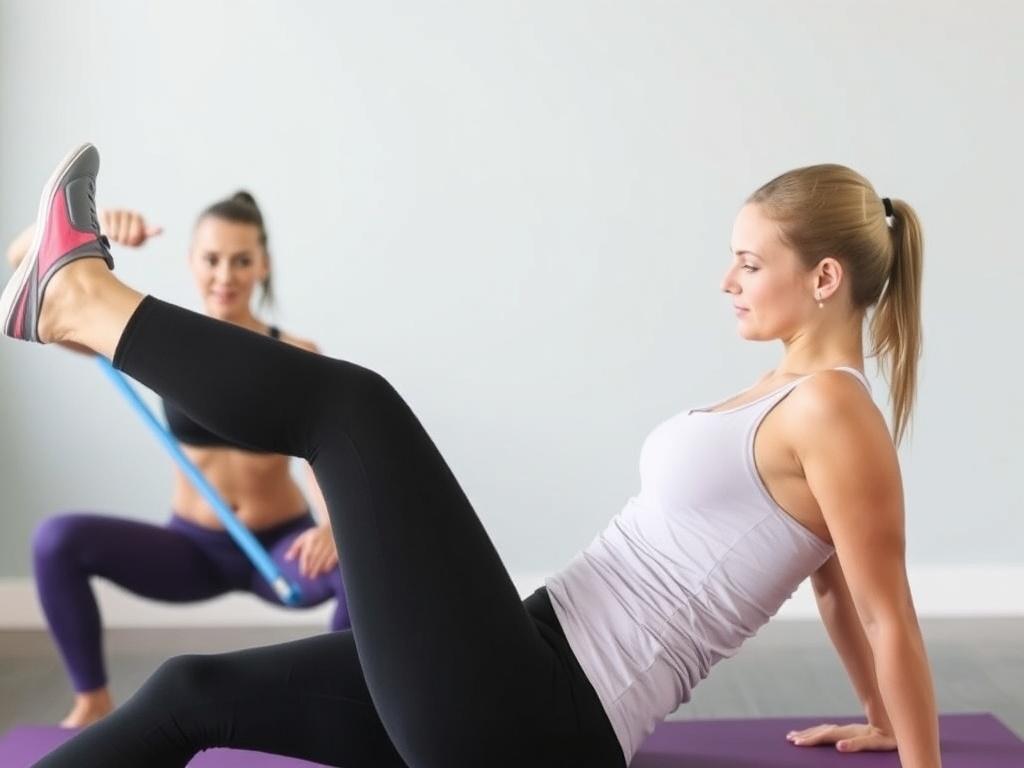
Below are practical templates you can use depending on time and experience level. Each plan blends compound band work, accessory strength, and mobility cues to create balanced sessions. Adjust sets, reps, and band selection to match your current capacity.
| Level | Frequency | Primary focus | Typical set/rep |
|---|---|---|---|
| Beginner | 2–3x per week | Form, mobility, activation | 2–3 sets of 10–15 |
| Intermediate | 3–4x per week | Strength and hypertrophy | 3–4 sets of 8–12 |
| Advanced | 4–6x per week | Power, maximal strength, sport prep | 4–6 sets of 3–8 |
These templates are starting points. If you’re training with bands only, increase total volume or tempo to match the stimulus you’d get from barbells. If you’re mixing with free weights, use bands to fill gaps: speed work, lockout training, and accessory hypertrophy.
4-week beginner progression
Week 1: focus on learning patterns. Perform two full-body sessions per week with an emphasis on control. Start each session with 5–10 minutes of joint-specific warm-up and light band pull-aparts. Keep intensity moderate and practice bracing on every rep.
Week 2: increase volume. Add a third session and up accessory sets from two to three. Introduce lateral band walks and Pallof presses for 2–3 sets of 12–20 reps. Begin to use a slightly heavier band on lower-body compound moves if form remains clean.
Week 3: refine tempo and add challenge. Add slow eccentrics and brief pauses at the top of movements. Consider supersetting a lower-body banded exercise with an upper-body push for metabolic density. Track progress by noting whether you can add reps or a heavier band.
Week 4: test and consolidate. Run a lighter testing session with increased reps to failure on one or two movements and then drop volume for recovery. Use this week to evaluate which exercises you enjoy most and which bands you’ll keep in rotation long-term.
Progressions and loading strategies
Progression with bands means more than just moving to a thicker band. You can manipulate repetitions, tempo, band length, and exercise complexity. Shortening a band or stepping further away from the anchor increases resistance without changing equipment.
Tempo plays exceptionally well with bands. Slow eccentrics (3–5 seconds) make a modest band feel much heavier due to increased time under tension. Pauses at difficult points of the lift—such as the bottom of a banded squat or the top of a hip bridge—accentuate weakness and build strength where it matters most.
Complexes and cluster sets also work: string three band exercises together (deadlift, row, squat) with little rest for conditioning, or use short clusters (e.g., 4 reps, 15 seconds rest, repeat) to accumulate heavy stimulus without sacrificing form.
Rehabilitation and flexibility uses
Physical therapists use bands routinely because they offer graded resistance, precise control, and a low-risk environment for healing tissues. Bands allow you to fatiguing specific muscle groups while avoiding excessive joint compression that heavier weights create.
For shoulder rehab, start with light external-rotation work and face pulls to rebuild rotator cuff capacity. Light, high-rep sets—sometimes 15–30 reps—help restore endurance without provoking pain. Bands also assist eccentric loading protocols, which are powerful for tendon health.
Inflexibility and tightness respond well to band-assisted mobility. A band can give extra leverage for hamstring and thoracic extensions while keeping the spine neutral. Use bands as gentle tools for progressive range-of-motion rather than forcing into painful positions.
Caring for and storing bands
Proper maintenance extends the life of your bands. Keep them out of direct sunlight and away from sharp objects. Heat and UV damage degrade elastomers over time, so a cool, dark drawer is a better home than a car trunk in summer.
Cleaning bands is simple: wipe them with mild soap and water and dry thoroughly. Avoid petroleum-based products or abrasive cleaners that can attack the rubber. Inspect bands frequently for micro-cracks or changes in elasticity.
Store bands loosely coiled or draped; do not knot them tightly for long periods. Label bands by resistance with a permanent marker or small tags so you don’t fumble during workouts. Small habits like these keep training smooth and safe.
Troubleshooting and frequently asked questions
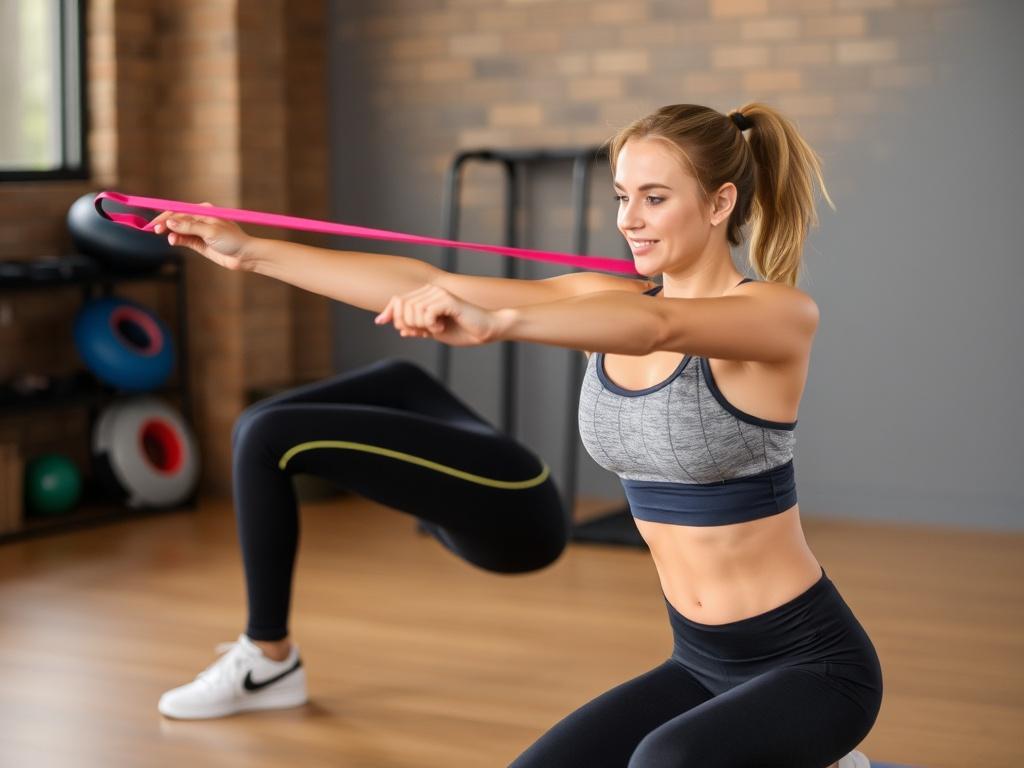
My clients often ask how to combine bands with weights. Use bands for speed, accessory, and lockout work while keeping barbells for maximal load. Alternatively, combine both by using bands to add accommodating resistance to barbell lifts for a hybrid stimulus that trains both strength and velocity.
If a band feels too light, shorten it by stepping farther away from the anchor or double-looping it. If it feels too heavy, widen your stance, use a longer band, or switch to a lighter tone. Fine-tuning tension is as important as choosing the right exercise.
For soreness that persists beyond normal training fatigue, back off intensity and prioritize mobility work. Bands are great for active recovery—perform light band circuits, mobility flows, and low-load core work to speed up tissue adaptation without adding stress.
Practical tips I use with clients
I often begin stubborn clients with bands because the immediate reduction in joint stress increases adherence. When beginners feel capable and pain-free, they return with confidence. Over time I gradually reintroduce heavier loads or barbell patterns while keeping bands for soft-tissue prep and accessory volume.
One practical routine I use on travel days: a long loop, a medium tube with handles, and a small mini-loop. A 20-minute band session in a hotel room—glute bridges, rows, split squats, Pallof presses, and lateral walks—keeps strength intact and prevents stiffness from long flights.
Another trick is combining band work with brief isometrics. For example, hold the top of a banded chest press for 8–10 seconds between sets of 6–8 reps. That blend of tension types encourages both strength and endurance adaptations simultaneously.
Common programming mistakes and how to fix them
One common mistake is using bands as a gimmick rather than a tool—treating them as fillers instead of planned, progressive stimuli. Fix this by setting clear goals each week: increase reps, shorten rest, or shift to a heavier band for targeted lifts.
Another error is neglecting the eccentric phase. Because bands can accelerate during the concentric portion, trainees sometimes let the eccentric collapse. Prescribe tempos explicitly—3–4 seconds down—to preserve muscle integrity and maximize growth stimulus.
Finally, people often overuse the same handful of band exercises. Build variety: pair vertical pulls with horizontal presses, mix unilateral and bilateral patterns, and rotate in mobility-focused sessions so bands contribute to long-term development, not just short-term novelty.
Bringing bands into a long-term training plan
Think of bands as complementary rather than competitive with traditional training tools. Use them to correct imbalances, add volume without heavy joints, and spice up conditioning. Over months and years, that approach builds resilience, reduces injury risk, and keeps training adaptable to life’s constraints.
Periodize band use: a block focusing on speed and power might lean heavily on bands for contrast work, while a hypertrophy block uses bands for high-volume sets and peak contractions. Switch emphases every 4–8 weeks to prevent stagnation and to keep sessions interesting.
Above all, prioritize consistency. Bands are useful precisely because they remove barriers: you can train on a busy day, in small spaces, or when recovery prevents heavy loading. Use that flexibility to build a habit of showing up, and the results will follow.
I hope these practical ideas help you see bands not as a cheap substitute, but as an indispensable component of modern training. With a few thoughtful bands, a little know-how, and consistent practice, you’ll create workouts that are efficient, adaptable, and surprisingly effective. Pack a band, pick a plan, and start experimenting—small changes compound into big improvements over time.