

Flexibility often gets reduced to one stretch at the end of a workout, but improving your range of motion is a layered process that touches strength, nervous system control, and consistent practice.
This article walks through practical methods, science-backed strategies, and daily habits you can use to become more mobile, whether you want to touch your toes, deepen a squat, or move freely in everyday life.
Why flexibility matters beyond aesthetics
Better flexibility improves movement quality and lowers the chance of awkward compensations that lead to pain over time.
Joint range of motion influences how efficiently muscles work; when hips or shoulders are stiff, other areas take on extra load and wear out faster.
Flexibility also affects athletic performance. Runners, swimmers, and lifters all gain from targeted mobility in sport-specific joints, which can translate into better stride length, catch position, or a safer bottom of a squat.
Finally, greater mobility expands your movement options in daily life—bending, reaching, and twisting become easier, and old injuries are less likely to flare up when tissues move smoothly.
Common myths about flexibility
One myth is that stretching once in a while will permanently increase flexibility. Flexibility is adaptive; it requires a stimulus repeated over time to create lasting change.
Another misconception is that static stretching before heavy lifting prevents injury. In many cases, long static holds before maximal lifts can reduce power and should be replaced with dynamic mobility.
People also assume flexibility equals frailty. In truth, the most functional approach blends flexibility with strength across the joint’s full range, which protects structures and produces controlled mobility.
How flexibility actually improves: the physiology
Soft tissues like muscles, tendons, and fascia can lengthen modestly through regular stretching, but much of the early gains come from the nervous system learning to allow a greater range.
Muscle spindles and Golgi tendon organs regulate tension; with repeated exposure to a new position, the nervous system lowers protective resistance, which feels like increased flexibility.
Structural remodeling—changes to connective tissue—takes longer and depends on load, frequency, and recovery. This is why short-term gains may be neural, while long-term improvements require consistent, progressive work.
Different types of stretching and when to use them
Static stretching involves holding a position at the end of a range for 15–90 seconds, and it’s effective for lengthening tissues and calming the nervous system after activity.
Dynamic stretching uses controlled movement through ranges of motion and is best as a warm-up tool to prepare muscles for work and improve movement patterns.
Proprioceptive Neuromuscular Facilitation (PNF) combines contraction and relaxation to gain range quickly; it’s powerful when performed correctly but requires a partner or careful self-application.
Ballistic stretching—bouncy movements—is generally discouraged unless you are trained, as it raises injury risk without consistent control and strength through the range.
Warm-up vs. mobility vs. stretching: clarifying the terms
A warm-up raises circulation and body temperature; it should include light movement and dynamic mobility that mimics the main activity to come.
Mobility work targets joint-specific control and coordination within ranges you want to improve, often integrating strength and balance as well as flexibility.
Stretching is one tool within mobility, focused on lengthening tissues or reducing neural tightness. The best programs combine all three in a logical sequence for safe, lasting gains.
Designing a flexible program that actually works
Frequency matters: aim for daily short sessions or at least 3–5 focused sessions per week for significant improvement, because the nervous system responds best to repeated exposure.
Intensity should be moderate—enough to feel a stretch or discomfort, not sharp pain. Use the 1–10 discomfort scale and stay in the 3–6 range during most work.
Duration is a balance. For static holds, 30–90 seconds per stretch can be effective; PNF uses shorter contractions with repeated cycles. Start smaller and progress as tolerance grows.
Progression means increasing time under tension, adding active strength through the newly gained range, or moving to more complex positions that challenge control and stability.
Sample daily mobility routine for beginners

Begin with 5–10 minutes of general warm-up—brisk walking, cycling, or joint rotations—to raise core temperature and lubricate joints.
Follow with dynamic movements like leg swings, arm circles, and hip openers for 5–10 minutes, moving smoothly and under control through the targeted ranges.
Finish with 10 minutes of 2–3 static stretches held for 30–60 seconds each, focusing on the areas that feel tight: hamstrings, hip flexors, chest, and shoulders.
Progression for intermediate and advanced practitioners
Intermediate work blends loaded mobility and longer holds. Start including exercises such as deep squat holds with additional weight, loaded Romanian deadlifts for hamstring tolerance, and weighted shoulder dislocations.
Advanced practitioners emphasize strength at end ranges—eccentric-loaded movements, controlled end-range isometrics, and complex positions like loaded splits or gymnastic bridges.
Consistency remains key: even advanced routines benefit from short daily maintenance sessions and focused practice for specific skills several times per week.
Incorporating strength training to lock in flexibility
Strength through a range is what makes flexibility useful and safe. Without strength, a long muscle can’t control movement, which increases injury risk during dynamic tasks.
Include compound lifts across full ranges when possible—deep squats, Romanian deadlifts, and overhead presses—and add accessory work that challenges end-range control, like Bulgarian split squats for hip mobility.
Eccentric training (slow lowering) builds both strength and tendon tolerance in new ranges and is especially useful after achieving a new positional depth with stretching.
Specific strategies for common problem areas
Hips: Combine glute activation, controlled hip-opening drills, and hip flexor stretches. A daily pattern of movement—lunges, deep squat holds, and bridging—remedies desk-sitting tightness.
Hamstrings: Use dynamic leg swings and eccentric-loaded hamstring exercises, then follow with moderate static stretching. Avoid overstretching without posterior chain strength support.
Shoulders: Train thoracic mobility and scapular control alongside rotator cuff strength. Wall slides, banded pull-aparts, and controlled overhead loaded carries help maintain healthy, accessible shoulders.
Mobility drills categorized by joint
Neck: gentle rotation and controlled flexion/extension, combined with isometric holds to build strength at end ranges.
Thoracic spine: foam-roll upper back with active rotations; follow with quadruped T-spine rotations and controlled cat-cow movements.
Hips: world’s greatest stretch, 90/90 rotations, and Cossack squats to blend mobility with loaded control.
Knees and ankles: ankle dorsiflexion drills, calf eccentric work, and loaded full-range squats to maintain healthy alignment under load.
Using PNF safely for faster gains
PNF typically follows a pattern: move to a stretch, contract the muscle against resistance for 5–10 seconds, relax, then deepen the stretch for 10–30 seconds. Repeat 2–4 times.
To do PNF alone, perform an active contraction against your own resistance or hold a strong isometric push against a solid object, then relax and deepen the position.
PNF is potent but taxing; schedule it 2–3 times per week for targeted areas and always include a proper warm-up beforehand to reduce injury risk.
Breath, relaxation, and nervous system tools
Breathing can change how the nervous system responds to a stretch: slow, diaphragmatic breaths lower sympathetic tone and make it easier to access greater range without clenching.
Try inhaling to prepare and exhaling as you deepen a stretch; this simple cue often yields immediate improvements in tolerance and comfort.
Progressive relaxation techniques and brief mindfulness during mobility sessions help the brain let go of unnecessary muscular guarding, which improves outcomes faster than effort alone.
How to handle pain and avoid injury
Distinguish between muscular discomfort and sharp joint pain. If you feel a sudden pinch, grinding, or acute joint pain, stop and reassess—this is not a productive gain signal.
Progress slowly with problematic joints and get a professional assessment if pain persists. Often, modified approaches and strength-building restore pain-free motion within weeks.
Use pain as a teacher: chart when and where it occurs, then remove or modify movements that provoke it until control and strength mitigate the problem.
Recovery, sleep, and nutrition for tissue health
Tissues adapt better when you sleep enough and eat to support repair. Protein, vitamin C, and a balanced diet encourage connective tissue remodeling.
Hydration and collagen-supporting nutrients can help; while research is evolving, practical habits like vitamin C with collagen and adequate protein are low-risk and plausible aids.
Active recovery—light movement, walking, and gentle mobility—promotes fluid exchange in tissues and reduces morning stiffness more effectively than inactivity.
Tools and props: when to use foam rollers, bands, and blocks
Foam rolling and self-myofascial release ease tissue stiffness and can be helpful before mobility work, but they are not a substitute for strength-building through ranges.
Resistance bands provide controlled assistance or resistance to help you access new positions safely—band-assisted splits and shoulder distractions are practical examples.
Blocks and yoga props let you support partial ranges while building strength and tolerance progressively. Use them to reduce stress while you learn new positions.
Sample 8-week progression plan
Weeks 1–2: focus on daily short mobility sessions—10–15 minutes—emphasizing thoracic rotations, hip openers, and ankle mobility. Keep intensity low to moderate.
Weeks 3–5: add strength-through-range work twice weekly and 2 weekly PNF sessions for the tightest areas. Increase holds and add eccentric loading once per week.
Weeks 6–8: move to targeted end-range loading, longer holds in key positions, and sport-specific mobility practice. Maintain daily maintenance sessions to lock in gains.
Example weekly schedule
Below is a simple table showing a balanced week that alternates mobility, strength, and recovery work to maximize progress without overdoing any single system.
| Day | Primary focus | Duration |
|---|---|---|
| Monday | Dynamic mobility + leg strength | 40–60 min |
| Tuesday | Short mobility + PNF for hips | 20–30 min |
| Wednesday | Thoracic work + upper-body strength | 40–60 min |
| Thursday | Active recovery: walking + gentle stretching | 30 min |
| Friday | Loaded mobility (deep squat/overhead) | 40–60 min |
| Saturday | Skill practice (splits/bridges) + PNF | 30–45 min |
| Sunday | Rest or light mobility | 20–30 min |
Tracking progress: tests that reveal real gains
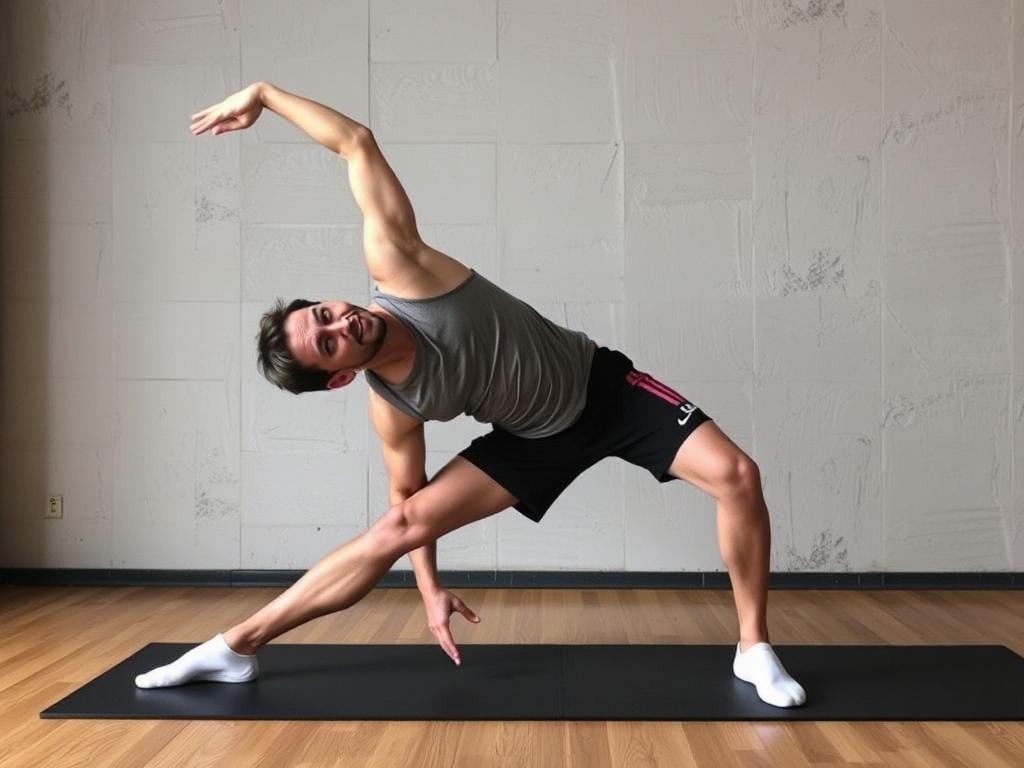
Simple tests include the sit-and-reach for hamstrings, the overhead reach for shoulder mobility, and single-leg squat depth for hip function; record these monthly to track trends.
Video is a useful tool: filming your movement from consistent angles shows subtle improvements in posture and joint position that you won’t notice day-to-day.
Also track subjective measures—ease of movement during daily tasks and pain levels—because functional progress matters more than arbitrary degrees on a protractor.
Common mistakes and how to correct them

Mistake: doing long static stretches immediately before power work. Fix: prioritize dynamic mobility for warm-up and reserve static holds for after training or separate sessions.
Mistake: stretching without adding strength through the new range. Fix: integrate loaded control work and end-range isometrics to make gains sustainable.
Mistake: chasing flexibility with excessive frequency but no recovery. Fix: schedule rest days and listen to soreness cues—quality matters more than quantity.
Real-life examples: how I improved my splits and shoulder mobility
When I started, my front split felt unreachable. I began with ten minutes of consistent daily mobility, focusing on hip flexors and hamstrings, and added eccentric Nordic hamstring work twice weekly.
Within eight weeks I gained meaningful depth; after three months I could hold a deeper position while maintaining hip control. The key was blending gentle stretching with strength and patience.
For my shoulders, combining thoracic extension drills, banded overhead distractions, and slow overhead presses at full range created a reliable upward trend in mobility without pain.
Adapting routines for older adults or post-injury recovery
Older adults often benefit from more frequent, shorter sessions that prioritize joint-friendly movements and gradual loading; emphasis should be on pain-free progress and balance training.
After an injury, consult a professional, but generally begin with low-amplitude mobility and light strength, progressively increasing range and load as healing and control improve.
Gentle daily movement beats sporadic intense efforts for longevity; consistency with conservative progression keeps tissues resilient and functional over years.
Motivation and habit formation: how to make it stick
Small wins build momentum. Set micro-goals—five minutes of mobility each morning, two focused sessions per week—and celebrate consistency rather than perfection.
Integrate mobility into existing routines: do hip openers while coffee brews or thoracic rotations between work calls to make practice effortless and regular.
Track sessions in a simple calendar to visualize streaks. When improvement becomes visible and daily life becomes easier, motivation often shifts from willpower to habit.
When to consult a professional
If you experience persistent joint pain, limited progress after months of consistent effort, or sudden changes in function, see a physical therapist, sports doctor, or experienced coach.
A professional can identify compensations, joint restrictions, or strength deficits that need a targeted approach and can provide hands-on treatments and customized progressions.
Working with a coach for short periods often accelerates progress by correcting technique and providing a tailored plan that you can maintain on your own afterward.
Final practice checklist to apply today
Warm up before mobility work, use dynamic drills before activity, and save longer static holds for after training or a separate session to avoid losing power.
Mix stretching with strength through range, use PNF judiciously for stubborn tightness, and prioritize breathing and relaxation to reduce guarding.
Be consistent, track progress, and adjust intensity based on pain-free progress rather than chasing an arbitrary endpoint. Small, daily investments compound into lasting freedom of movement.
Use these principles to form a plan that fits your goals and schedule, and you’ll find that improving flexibility becomes a rewarding part of how you move and live every day.