
Many people wake up with a stiff neck, drag through the day with tension across their shoulders, or notice a persistent tightness along the base of the skull. The phrase Упражнения для шеи и воротниковой зоны captures exactly what we need to address — targeted movement and care for the neck and the collar, or “collar-zone,” that often carries stress. This article lays out clear, practical steps you can use immediately, whether you need a quick desk-break sequence or a longer rehabilitation-style routine.
Why the neck and collar zone matters
The neck connects the head to the torso, supports the spine, and houses critical nerves and blood vessels. When the small muscles and connective tissues in this area tire or shorten, symptoms can be wide-ranging: headaches, reduced range of motion, jaw tension, and even discomfort traveling down the arms. Paying attention to the collar zone is not only about comfort; it affects posture, breathing, and how you move through daily tasks.
Neck and upper chest tension also changes movement patterns higher and lower in the body. A forward head posture forces the small posterior neck muscles to work constantly, and that imbalance can ripple into the shoulders and upper back. Working the collar zone restores balance and allows larger muscles to carry load more efficiently, reducing strain in other areas.
Finally, the neck is a common repository of emotional and physical stress. Chronic sedentary habits, stress, and repetitive motions combine to create a predictable pattern of tightness. That pattern responds well to a thoughtful blend of mobility, stretching, strengthening, and self-care that I’ll outline below.
Common causes of neck and upper-chest tension

One of the most common contributors is prolonged forward head posture, often caused by phone use, laptop work, or slumped sitting. When the head drifts forward even an inch, the effective load on the cervical spine increases substantially, which means muscles and ligaments work harder just to keep you upright. This eventually shows up as fatigue and tightness concentrated around the base of the skull and across the collarbones.
Repetitive tasks and asymmetrical postures — carrying a bag on one shoulder, cradling a phone, or sleeping on an awkward pillow — cause localized overuse. These behaviors create compensations, where certain muscles shorten and others weaken. The result is pain that feels localized but is actually a system problem, not a single bad muscle.
Medical conditions or past injuries can also create persistent problems: whiplash, osteoarthritis, herniated discs, or nerve irritation may change the way you tolerate movement. That’s why exercises must be chosen and scaled appropriately, and why the safety guidance below is important to follow before progressing into more demanding routines.
Know the anatomy in plain language
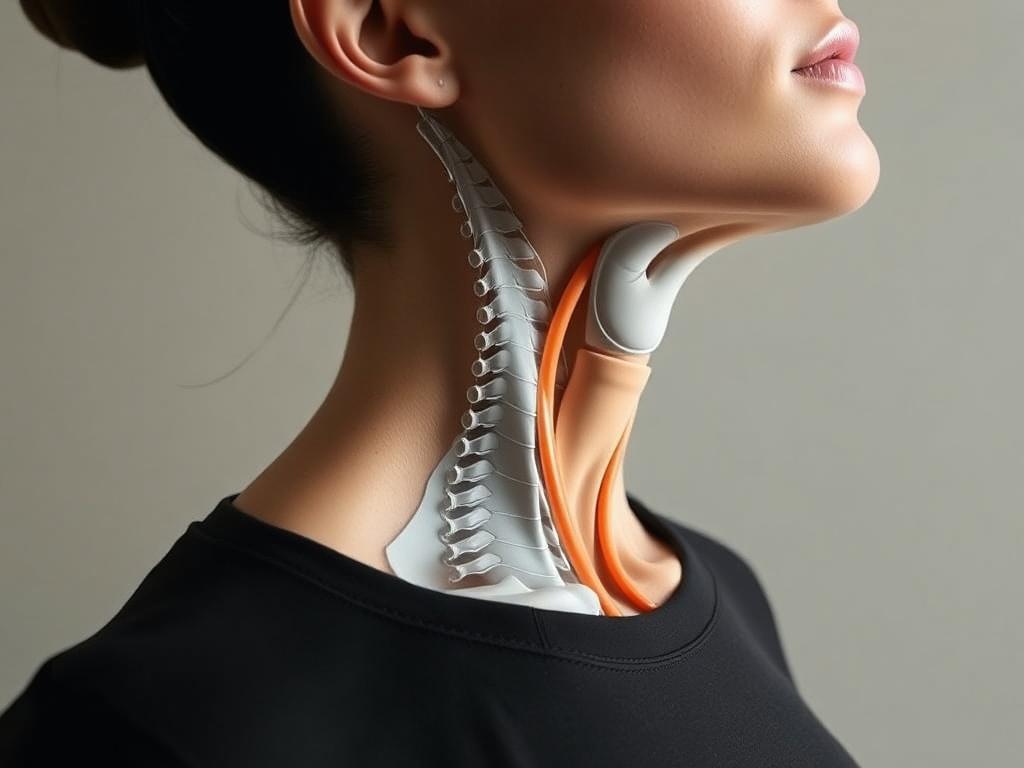
A little anatomy helps you understand why specific moves make sense. The neck contains seven cervical vertebrae, layered with small stabilizing muscles at the back and larger trunk muscles that influence shoulder position. The collar-zone — the muscles and tissues around the neck base, clavicles, and upper chest — includes the sternocleidomastoid, trapezius, scalenes, levator scapulae, and pectoral muscles among others.
Small muscles close to the spine control fine positional adjustments and endurance; they are often tight and tender. Larger muscles across the upper chest and shoulders provide gross movement and power but can become weak or inhibited. Rehabilitation succeeds when we restore mobility to the joints, length to the shortened tissues, and strength and endurance to the muscles that support posture.
Understanding where pain originates rarely changes the need for simple, safe movement. Still, when you can visualize the layers — joint, muscle, nerve, and connective tissue — you’ll be more confident choosing exercises and noticing which adjustments make the most difference.
Safety first: when to see a professional
Most neck discomfort improves with careful movement and time, but some signs require prompt medical attention. Seek professional evaluation if you experience sudden severe pain, high fever with neck stiffness, numbness or weakness in the arms or legs, difficulty breathing or swallowing, or dizziness and visual changes. These symptoms can indicate a more serious condition.
If you have a diagnosed cervical disc herniation, recent trauma, or known spinal instability, consult your physician or physical therapist before starting an active program. A clinician can give imaging-appropriate guidance and help you select exercises that build stability without risking further injury. When in doubt, err on the side of professional assessment rather than pushing through alarming symptoms.
Even without red flags, watch how your body responds: a little soreness after a new exercise is normal, but sharp pain, radiating symptoms, or worsening headaches are reasons to stop and seek advice. Modify intensity, frequency, or technique rather than persisting through pain, and use pain as an informative signal rather than a goalpost to ignore.
Warm-up and breathing basics
Before beginning intensive work, spend a few minutes warming the area. Gentle, rhythmic movement increases blood flow and prepares connective tissue to lengthen safely. A brief warm-up that includes diaphragmatic breathing, scapular circles, and gentle neck mobility reduces the risk of trigger points flaring up during deeper stretching or strengthening.
Breathing matters. Many people hold their breath when working near the neck, which increases muscular tension throughout the collar zone. Practice belly breathing: inhale slowly through the nose, allowing the belly to expand, then exhale through pursed lips. Coordinating breath with movement—inhale with preparation, exhale on effort—helps relax accessory muscles around the neck and shoulders.
Try a two- to three-minute warm-up routine: seated diaphragmatic breaths, five to ten scapular retractions, and gentle head nods for flexion and extension. These few minutes pay off when you progress into targeted mobility and strengthening exercises that follow.
Mobility exercises: restore comfortable motion
Chin tucks (cervical retraction)
Chin tucks are a foundational mobility and postural exercise designed to counter forward head posture. Sit tall or stand with shoulders relaxed, then draw the chin straight back, like creating a double chin without tilting the head. Hold for three to five seconds, release slowly, and repeat for 8–12 repetitions.
This movement targets deep cervical flexors and encourages the head to balance over the shoulders. Keep the motion small and controlled; it should not produce pain. Over time, chin tucks improve daily posture and reduce the constant activation of posterior neck muscles.
Neck rotation with eyes leading
Rotation practiced with awareness reduces joint stiffness and reestablishes comfortable range through the mid to upper neck. Sit tall, turn your head gently to the right while keeping your chin level, and use your eyes to lead the motion. Pause at the comfortable end range for two to three seconds, then return to center and repeat to the left for 8–10 repetitions each side.
Avoid forcing the head beyond comfortable limits; allow movements to be smooth. If rotation is limited on one side, perform small, frequent repetitions rather than long holds. This exercise often helps with morning stiffness and reduces the feeling of being “stuck” when you try to look over your shoulder.
Upper thoracic extension on a chair
Stiffness often sits not only in the neck but in the upper thoracic spine, which impedes healthy head position. Sit near the front edge of a chair and interlock your fingers behind your head, elbows wide. Gently arch backward over the backrest, focusing movement at the upper back rather than forcing the lower neck; hold for 2–4 seconds and return, repeating 6–10 times.
This mobilizes the thoracic spine and gives immediate relief to people with rounded shoulders. Slightly lifting the chin as you extend ensures the motion is felt in the upper back and upper chest rather than creating compression in the lower cervical vertebrae.
Stretching exercises: lengthen tight tissues
Levator scapulae stretch
The levator scapulae runs from the neck to the shoulder blade and frequently becomes tight, causing neck stiffness and shoulder elevation. Sit or stand tall, turn your head 45 degrees to one side, then tilt your chin down toward your chest. Use the opposite hand to gently guide the head downward for a gentle stretch along the back of the neck.
Hold for 20–30 seconds and repeat twice on each side. Keep your shoulders relaxed during the stretch and breathe slowly to help the muscle release. Stop if you feel sharp pain or pins-and-needles sensations extending into the arms.
Chest opener (pectoralis stretch)
Tight pectoral muscles pull the shoulders forward and compress the collar zone. Stand in a doorway, place your forearm on the doorframe with your elbow at shoulder height, and gently shift forward until you feel a stretch across the front of the chest. Hold 20–30 seconds and switch sides, repeating twice.
Even a modest chest-opening routine helps the collar-zone muscles relax because the overall posture opens and reduces the forward pull on the neck. Small regular changes in chest flexibility can produce substantial improvements in shoulder position and neck comfort.
Scalene stretch
Scalenes are small muscles at the side of the neck that can compress nerves or blood vessels if chronically tight. Sit upright, tilt your head away from the side you are stretching, and slightly rotate your chin upward. Hold the position for 20–30 seconds and repeat on the other side.
Be mindful of dizziness when stretching the scalenes because of their proximity to vascular structures; move slowly and breathe through the stretch. If you experience lightheadedness, stop and consult a professional before continuing.
Strengthening and endurance for posture support
Isolated deep neck flexor training
Deep neck flexors provide the endurance needed to keep your head stacked over your spine for long periods. Lie on your back with knees bent and gently nod the head as if saying “yes,” then slide the head slightly away from the floor, holding for five to ten seconds. Repeat for 8–12 repetitions, focusing on gentle, controlled contractions rather than strong flexion of the chin to the chest.
These muscles respond to low-load, high-repetition training: short holds repeated multiple times per day. Progress by increasing hold times slowly and adding repetitions, not by straining, which recruits superficial muscles instead of the targeted deep flexors.
Scapular retraction with band
Healthy neck posture depends on scapular stability. With a light resistance band anchored in front of you, hold the band and pull your shoulder blades together, keeping elbows close to the ribs. Hold the squeeze for two to three seconds, then return slowly for 10–15 repetitions.
Progress the resistance gradually as endurance improves. Stronger scapular retractors take load off the neck during arm movements and reduce compensatory neck muscle activation, especially when reaching or lifting objects overhead.
Wall angels
Stand with your back against a wall, feet a few inches away, and press the entire spine—including the lower back, upper back, and head—lightly into the wall. Slide your arms up and down as if making a snow angel, keeping contact with the wall. Perform 8–12 slow repetitions, focusing on thoracic movement and scapular control.
Wall angels help retrain the upper back’s ability to extend and control scapular motion, which is crucial for relieving constant neck strain. This exercise also acts as a dynamic stretch for the chest and an endurance challenge for the upper back muscles.
Isometrics and gentle resistance
Side-bend isometrics
Isometric exercises build strength without excessive joint movement, making them ideal when irritation flares. Press your right hand against the right side of your head while resisting with the neck muscles, keeping the head from moving. Hold for 6–10 seconds, relax, and repeat three to five times per side.
Isometrics enhance muscle endurance and can be performed frequently throughout the day without equipment. They are particularly helpful for stabilizing the neck before more dynamic activities.
Forward isometrics
Place the palm of your hand on your forehead and push forward while resisting with your neck to keep the chin from jutting outward. Hold for 6–10 seconds and repeat three to five times. Keep the jaw relaxed and avoid breath-holding during the contraction.
This straightforward exercise targets the muscles that prevent excessive forward head posture and translates immediately into improved support for sitting and standing tasks. Use light resistance and steady breathing to maintain control and avoid recruiting compensatory upper chest muscles.
Self-massage and trigger point release
Hands-on release can be very effective when combined with movement work. Use your fingers, a small ball, or a massage tool to gently explore the tight areas along the base of the skull, upper trapezius, and the upper chest. Apply steady, moderate pressure to tender spots for 20–30 seconds, then follow with slow movement and stretching of the same area.
A lacrosse ball against a wall is a convenient and effective option. Place the ball between the wall and the tight tissue, lean into it with controlled pressure, and make small circles or hold on a tender point until you feel a softening. Always avoid pressing directly on bony areas or the front of the neck where sensitive structures lie.
Combining release with active movement produces durable improvements: loosen tissue first, then move through the new range so the nervous system learns the relaxed position. This sequence reduces the chance that the area will quickly revert to its previous tightness.
Daily routines and sample programs
Consistency beats intensity for long-term improvements. I recommend a daily five- to ten-minute morning routine to mobilize and reset, a brief mid-day micro-break to counter work posture, and a longer evening session if you have time for strengthening or deeper work. The following sample programs are scalable to different abilities and schedules.
| Level | Frequency | Duration | Focus |
|---|---|---|---|
| Beginner | Daily | 5–10 min | Mobility + breathing |
| Intermediate | 3–5x/week | 15–20 min | Stretching + light strengthening |
| Advanced | 3–4x/week | 20–30 min | Progressive resistance + endurance |
Beginner routine example: 1) three minutes of diaphragmatic breathing; 2) 10 chin tucks; 3) 6–8 gentle neck rotations each side; 4) levator and scalene stretches, 20–30 seconds each. This short ritual helps reduce morning stiffness and is easy to maintain.
Intermediate routine example: include the beginner elements and add wall angels (3 sets of 10), banded scapular retractions (3 sets of 12), and a 5-minute self-massage on tight areas. Perform these three to five times a week to build endurance and structural support.
Advanced routine example: progress to longer holds in deep neck flexor work, heavier band resistance for scapular control, and multi-angle isometric training. Add functional integration—practice good posture during carrying, computer work, and sleep preparation—to make the gains persistent.
Micro-breaks and workplace strategies
You don’t need a gym to help your neck. Frequent micro-breaks—30 to 90 seconds every 20–30 minutes—produce substantial improvements when performed consistently. Simple moves like chin tucks, scapular squeezes, and a quick doorway chest stretch interrupt the habitual forward head posture and reset your muscles.
Ergonomic adjustments amplify the benefits of movement. Raise your monitor to eye level, position your keyboard so elbows rest near 90 degrees, and use a chair with lumbar support. If you use a phone frequently, switch to ear buds or a headset rather than cradling the phone between ear and shoulder.
Finally, schedule “movement minutes” into your calendar if you’re prone to working straight through lunch. A short routine at midday both reduces pain and improves focus; many people find their energy and productivity increase when they treat movement as a non-negotiable part of the workday.
Tracking progress and setting realistic goals
Small, measurable goals keep you motivated. Track range-of-motion improvements, frequency of headaches, or your ability to hold a better posture for longer periods rather than aiming for an arbitrary pain level reduction. Use a simple log or phone note to record daily activities and symptom levels for two to four weeks to spot trends and triggers.
Set realistic timelines: modest, consistent change is the norm. Expect noticeable improvement in three to six weeks with regular practice, and reserve patience for slower structural changes. Celebrate small wins like increased ease turning your head while driving or reduced morning stiffness.
If progress stalls or symptoms change, consider consulting a physical therapist who can tailor the program and introduce hands-on techniques or specific modalities to help you progress. Professional input can fast-track recovery and prevent setbacks.
Author’s experience and a real-life case

Over the past decade I’ve coached office workers and athletes through stubborn neck and collar-zone issues. One memorable client was a software engineer who suffered daily headaches and shoulder tension after years of remote work. We started with the short daily beginner routine and added progressive scapular strengthening over months.
Within six weeks, the client reported fewer headaches and greater ease with overhead reaching. By three months, work tolerance was up and pain was infrequent. The success came from combining small daily habits with posture-focused strengthening and workplace adjustments—the exact sequence I recommend here.
Personal experience taught me one key lesson: people who maintain short, regular practices reap far more benefit than those who attempt long, infrequent sessions. The neck’s endurance systems respond best to consistent, low-load work rather than sporadic, high-intensity efforts.
Common mistakes and how to avoid them
A frequent error is doing only stretching without building the strength to maintain new posture. Stretching lengthens tissues but without strength and endurance the area quickly reverts to its prior tight state. Pair mobility work with targeted strengthening to lock in improvements.
Another mistake is overloading the area too quickly. Heavy lifting or aggressive stretching may provoke flare-ups. Progress in small increments, monitor your response, and prioritize control and quality over quantity. If fear of movement is present due to past pain, start with guided isometrics and breathing to build confidence.
Finally, inconsistent technique undermines results. Small posture changes during exercises—like tucking the chin during a forward isometric—make a big difference. Use a mirror, record yourself, or ask a knowledgeable coach to check form during early sessions.
Equipment, props, and when to use them
You don’t need fancy gear: a resistance band, a lacrosse ball, and a supportive chair are enough for most people. Bands provide progressive resistance for scapular and neck work; a ball is great for self-massage; and a chair or doorway is perfect for mobility drills. Use a towel roll under the neck for very gentle support during certain lying exercises if your neck needs extra comfort.
Specialized tools like cervical traction devices or percussive massagers can help some individuals but should be used under guidance. For many, simplicity is better—minimal tools, consistent practice, and mindful movement produce the bulk of results. Only add equipment if it solves a specific problem in your routine.
When traveling or on a tight schedule, keep your routine portable: a short sequence of chin tucks, scapular squeezes, and doorway chest stretches fits into a hotel room and takes less than 10 minutes. Consistency during travel is often the difference between maintaining gains and regressing quickly.
How to integrate these practices into lifelong habits
Movement practices become lifelong habits when they are non-negotiable and easy to perform. Anchor a short sequence to your morning routine—after brushing your teeth, perform your five-minute mobility ritual. Link another brief practice to lunch or your daily coffee break so it repeats reliably.
Make the environment supportive: position your phone charger so you must stand to pick it up, keep a resistance band within reach of your desk, or set periodic reminders. Small environmental tweaks lower the activation energy needed to move and help the exercises become automatic rather than optional.
Finally, treat the neck and collar-zone the way you treat other maintenance tasks—regular attention prevents pain before it starts. With realistic expectations and a few minutes of daily work, the vast majority of people can reduce discomfort, improve posture, and reclaim comfortable movement for years to come.
If you’re ready to begin, start gentle, build steadily, and listen closely to feedback from your body. A small, consistent investment in mobility, stretching, and strength will transform how your neck and collar zone feel in everyday life.