
The phrase Как накачать ноги девушке comes to mind for many women who want stronger, more toned legs without wasting time on ineffective routines. This guide gives a clear, realistic path: anatomy, training principles, sample programs, nutrition, recovery, and common mistakes to avoid. Read on for a plan you can follow for months, broken into manageable steps and backed by real-world experience.
Why focused leg training matters
Legs are the foundation of athletic performance and everyday movement. Strong quadriceps, hamstrings, glutes, and calves improve posture, stabilize joints, and reduce the risk of injuries during daily tasks or sports.
Beyond function, leg training shapes your physique in ways that cardio alone cannot. Muscle on the legs increases resting metabolism, changes silhouette, and gives better balance and confidence when wearing different clothes.
Training legs also has systemic benefits. Heavy compound work like squats and deadlifts boosts hormonal responses, strengthens bone density, and transfers to improved performance in other lifts and activities.
Understanding leg anatomy for smarter workouts
To train effectively, you should know the major players: the quadriceps at the front of the thigh, the hamstrings at the back, the gluteal muscles, the adductors and abductors of the inner and outer thighs, and the calves. Each group requires different movement patterns to develop fully.
Quadriceps respond best to knee-dominant movements like squats, lunges, and leg presses. Hamstrings and glutes need hip-dominant work—deadlifts, Romanian deadlifts, glute bridges, and hip thrusts—to maximize strength and shape.
Calves and smaller stabilizers take lots of volume and frequent stimulation. Because calves are used all day, they often respond better to higher reps and varied foot positions. Planning exercises that hit each muscle from multiple angles produces better balance and aesthetics.
Principles to follow: the training fundamentals
Progressive overload is the single most important rule: gradually increase weight, reps, or sets over time to force adaptation. Without increasing demand, muscles have no reason to grow or get stronger.
Train efficiently by prioritizing compound lifts early in the workout when energy is highest, then use accessory movements for finite weaknesses. For example, do squats and Romanian deadlifts first, then Bulgarian split squats or hamstring curls after.
Keep program consistency. Short, frequent blocks of focused training produce better results than sporadic intense weeks. Aim for at least 8–12 weeks of structured effort before changing your plan dramatically.
How often should a woman train legs?
Most women will progress well with two to three dedicated leg sessions per week. Two quality sessions can produce significant gains when full of well-chosen compound and accessory movements, while three sessions help accelerate progress if recovery allows.
Split frequency based on intensity: one heavy day, one moderate-to-light day focused on volume and form, and an optional glute- or mobility-focused third day. This balance lets you handle heavier loads while still accumulating the extra reps that drive hypertrophy.
Listen to recovery signals: persistent soreness, poor sleep, or declining performance may signal the need to reduce volume or add a recovery week. Training smarter includes adjusting frequency when life and stress change.
Designing a balanced leg workout
A practical session combines a heavy compound movement, a secondary compound or unilateral exercise, and two accessory moves for weak points and hypertrophy. This structure keeps workouts purposeful and time-efficient.
Here’s a simple template to follow: 1) warm-up and mobility, 2) primary compound (3–5 sets), 3) secondary compound or unilateral (3–4 sets), 4) two accessory exercises (3 sets each), and 5) optional calf work and cooldown. Rotating exercises every 4–8 weeks prevents stagnation.
Examples: Day A could be back squat, Bulgarian split squats, glute bridges, and hamstring curls. Day B could be Romanian deadlift, walking lunges, leg press, and seated calf raises. Keep reps and weights aligned with goals—lower reps for strength, higher reps for hypertrophy.
Key exercises explained
Squat variants deserve priority because they load the entire lower body and core. Back squats increase overall strength and quad mass. Front squats shift emphasis to the quads and upper back, and goblet squats are great for beginners learning depth and form.
Deadlifts and Romanian deadlifts are essential for hamstrings, glutes, and posterior chain development. The Romanian deadlift keeps a slight bend in the knee and focuses on the stretch of the hamstrings, whereas conventional deadlifts emphasize total-body strength and hip drive.
Unilateral moves—Bulgarian split squats, reverse lunges, and step-ups—fix imbalances and improve single-leg stability. They also create a lot of metabolic stress per leg, which helps shape and firm the thigh and glute muscle groups.
Hip thrusts and glute bridges target the glutes with high isolation and are often the fastest path to noticeable glute development. Build load over time with barbell hip thrusts or banded progressions to increase muscle size and strength.
Calf training should not be ignored. Standing calf raises target the gastrocnemius, while seated calf raises emphasize the soleus. Mix heavy sets with low reps and higher-rep burnout sets to ensure balanced calf development.
Form cues and common technical mistakes
Squats: keep chest up, knees tracking toes, and sit back into the hips. Avoid collapsing the knees inward; use lighter weight and slow reps to correct the pattern. A squat stance slightly wider or narrower may feel safer depending on hip anatomy.
Deadlifts: set the hips at the right height—too high and you’ll strain hamstrings; too low and you’ll turn it into a squat. Maintain a neutral spine, engage lats to lock the bar, and drive through the heels. Lower with control to protect the back and hamstrings.
Lunges and step-ups: step deliberately and control the eccentric phase. Many people rush forward and rely on momentum, which reduces muscle activation. Keep the knee behind the toes and maintain balance through the core.
Programming for different levels
Beginners need to build strength and fundamental movement patterns. Focus on 2–3 workouts per week with light-to-moderate loads, practicing squats, Romanian deadlifts, lunges, and hip hinges. Keep reps in the 8–12 range for most work and include mobility training.
Intermediate trainees can handle more volume and intensity. Use a two- or three-day leg split with one strength-focused day (5–6 reps) and one hypertrophy-focused day (8–15 reps). Add unilateral work and mix in tempo changes—slow eccentrics and explosive concentrics—to stimulate growth.
Advanced lifters should periodize training across mesocycles. Incorporate phases of strength (low reps), hypertrophy (moderate reps), and conditioning, plus deloads every 4–8 weeks. Use advanced techniques like cluster sets, paused reps, and overloaded eccentrics sparingly and strategically.
Sample workouts: beginner, intermediate, and advanced
The following workouts are templates you can adapt. Warm up thoroughly before each session with dynamic movements and light sets.
Beginner leg workout (twice weekly)
1) Goblet squat: 3 sets of 8–12 reps. 2) Romanian deadlift with light dumbbells: 3 sets of 10–12 reps. 3) Walking lunges: 2 sets of 10 steps per leg. 4) Glute bridge: 3 sets of 12–15 reps. 5) Standing calf raises: 3 sets of 12–15 reps.
Start with manageable weights and emphasize control and full range of motion. Rest 60–90 seconds between sets and increase load gradually every week or two.
Intermediate leg workout (three times weekly split)
Day 1 — Strength: Back squat 5×5, Romanian deadlift 3×6–8, Bulgarian split squat 3×8 per leg, core work 3×12. Day 2 — Hypertrophy: Leg press 4×10–12, walking lunges 3×12 per leg, hamstring curl 3×12, standing calf raises 4×15. Day 3 — Glute focus: Hip thrust 4×8, sumo deadlift or trap bar deadlift 3×6, cable abduction 3×15, single-leg RDL 3×8 per leg.
Adjust rest periods: 2–3 minutes for heavy sets, 60–90 seconds for accessory work. Track weights and reps to ensure progressive overload across weeks.
Advanced leg workout (periodized week)
Week includes one heavy strength day, one volume hypertrophy day, and one explosive/conditioning day. Heavy day might be squat 6×3, deadlift 5×3, heavy Bulgarian split squat 3×6. Volume day includes supersets for 4 rounds: leg press 12, walking lunges 15, hamstring curl 12, calf raise 20. Explosive day uses jump squats, sled pushes, and lighter Olympic lift variations plus mobility work.
Advanced athletes benefit from structured microloading and more precise recovery planning, including nutritional timing and focused sleep. Use a 1:1.5 or 1:2 ratio of heavy to light sessions per week based on fatigue.
Sample 8-week program table
| Week | Focus | Primary lifts | Volume |
|---|---|---|---|
| 1–2 | Technique & base strength | Squat, RDL, lunges | Moderate (3 sets each, 8–12 reps) |
| 3–4 | Hypertrophy | Leg press, hip thrusts, split squats | High (4 sets, 10–15 reps) |
| 5–6 | Strength block | Back squat, deadlift variations | Low reps, heavy (3–6 reps) |
| 7 | Deload | Light compound work, mobility | Low volume, low intensity |
| 8 | Test & re-evaluate | 1RM test or rep max | Assess progress, plan next block |
This table gives a big-picture view; individual exercises and exact sets should be tailored to experience and recovery. Change accessories every block to keep the stimulus fresh.
Nutrition for leg gains
Muscle growth requires a balance of calories, protein, and appropriate micronutrients. Aim for a slight calorie surplus if your goal is to add visible muscle mass, or maintain calories with a higher protein intake if you want to lean out while preserving muscle.
Protein intake around 0.7–1.0 grams per pound of bodyweight supports recovery and hypertrophy for most active women. Distribute protein across meals and include a post-workout serving with carbohydrates to replenish glycogen and promote repair.
Don’t neglect carbs and fats. Carbs provide the energy for intense leg sessions, and dietary fat supports hormonal health. Hydrate consistently—dehydration reduces performance and recovery quality.
Supplement considerations
Supplements are not required but can help when used correctly. Creatine monohydrate has strong evidence for increasing strength and muscle mass and is safe for most healthy adults. A daily 3–5 gram dose is common.
Protein powder can be a convenient way to hit targets, especially after workouts. A balanced multivitamin and omega-3 supplement may support general health, but prioritize whole foods first.
Use caffeine strategically for training sessions to enhance focus and performance, but avoid relying on stimulants every workout to prevent tolerance and sleep disruption.
Warm-ups, mobility, and injury prevention
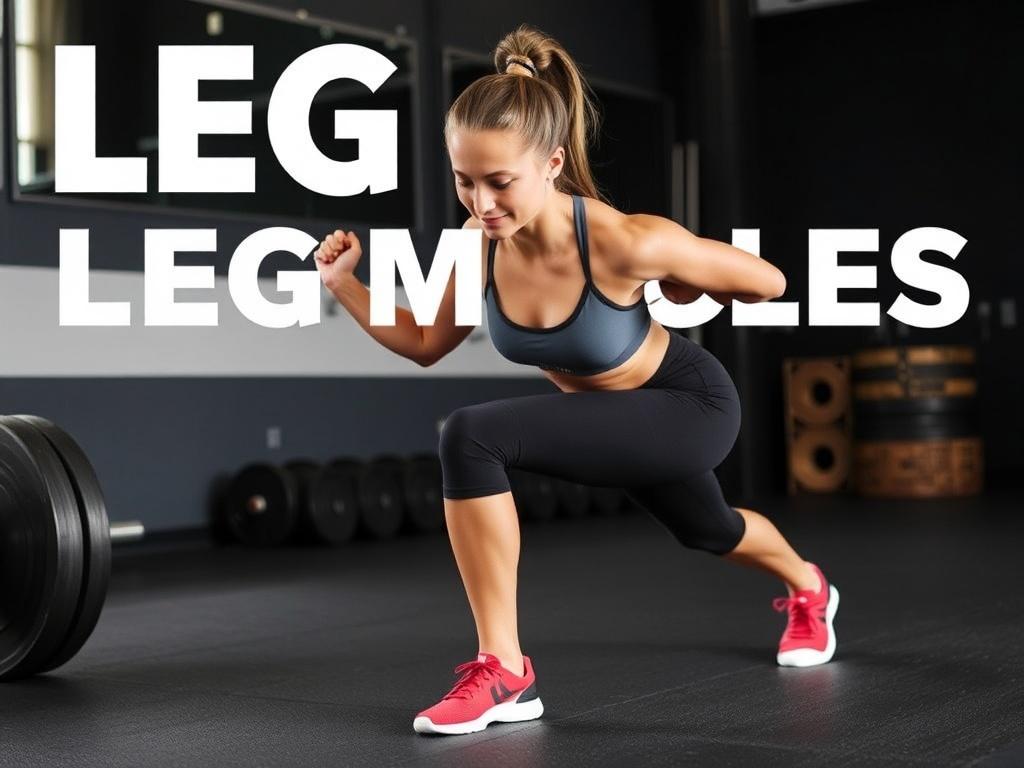
A purposeful warm-up raises core temperature, activates the glutes and hamstrings, and primes the nervous system for heavy lifts. Include dynamic movements like leg swings, hip circles, glute bridges, and light sets of your primary lift.
Mobility work for hips and ankles often unlocks deeper, safer squats and better lunges. Spend 5–10 minutes after training on targeted mobility and soft-tissue work to maintain range of motion and decrease soreness over time.
Prevent injuries with sensible load progression and attentive recovery. If a joint aches consistently, reduce load, check movement patterns, and consult a qualified coach or physiotherapist for persistent issues.
Cardio: how much and what kind
Cardio supports heart health and can help manage body composition, but too much can interfere with strength gains if not balanced with recovery. Short, intense sessions such as HIIT or sled work complement strength training well and can improve conditioning without excessive volume.
Low-intensity steady-state cardio (walking, cycling) is useful for active recovery and increasing daily energy expenditure. Schedule longer cardio sessions away from heavy leg days when possible to avoid compromising performance.
If your priority is leg hypertrophy and strength, let strength sessions come first and treat cardio as a supplementary tool. On days you do both, perform the most important training first based on your goals.
Tracking progress and adjusting the plan
Keep a training log. Note exercises, weights, sets, reps, and how you felt during the session. Tracking small increments helps you spot trends and ensures progressive overload instead of guessing progress.
Track measurements and photos every 3–4 weeks rather than daily. Strength increases usually precede visible changes, so be patient—consistency is what compounds into lasting results.
If progress stalls for multiple weeks, try increasing protein, adding a deload week, or changing exercise selection. Plateaus are normal; thoughtful tweaks—not radical overhauls—are the most effective response.
Avoiding common mistakes
One frequent error is favoring light cardio and high-rep isolation work while ignoring heavy compound movements. Squats and deadlifts produce the greatest returns in strength and muscle for the time invested.
Another mistake is poor recovery management: too much volume, inadequate sleep, and inconsistent nutrition. Training hard without recovery leads to fatigue and injury rather than gains.
Using improper form to lift heavier is a shortcut that often causes setbacks. Improve technique with lighter loads and coaching before chasing numbers.
Gym vs. home training: realistic options
Gyms offer machines, heavy barbells, and variety, which make progressive loading easier. If you have access to a gym, prioritize compound barbell work and use machines for controlled accessory volume.
Home training can be highly effective with a few pieces of equipment: adjustable dumbbells, a barbell and plates, resistance bands, and a bench. Unilateral work and high-volume dumbbell circuits can create significant stimulus without specialty machines.
My personal experience training both at home and in a busy commercial gym taught me the value of consistency over gear. When life restricts access, a sensible, progressive bodyweight-and-dumbbell plan still builds strength and shape.
Mental approach and motivation hacks

Set small, measurable goals: increase a squat by 10 pounds in six weeks, or hold a deeper Bulgarian split squat for three sets of eight. These milestones keep motivation high and provide frequent wins.
Train with a friend or hire a coach for accountability. Group classes can be motivating, but a coach ensures progress and reduces injury risk by correcting technique in real time.
Keep workouts varied enough to stay interested but consistent enough to produce change. Changing minor details—tempo, foot position, or accessory choice—refreshes sessions without derailing progress.
Case study: from hesitant to confident
One client started with no barbell experience and a worry about getting “bulky.” Over 12 weeks on a simple program—squat progressions, Romanian deadlifts, and split squats—she added 30 pounds to her back squat, gained noticeable muscle fullness in the glutes, and felt stronger climbing stairs. Strength gains translated into improved confidence and a new appreciation for heavy lifting.
We prioritized slow, consistent progress and education about how strength training affects female bodies. The visual changes followed strength, not the other way around, and her priorities shifted toward performance and health rather than chasing arbitrary aesthetics.
Practical tips to start this week
- Pick two leg days and mark them in your calendar for the next eight weeks.
- Choose one compound movement to improve (squat or deadlift) and practice it twice weekly with light to moderate loads focusing on form.
- Track every workout and increase load by the smallest practical increment each week.
- Eat enough protein and prioritize sleep for recovery.
Small, consistent actions add up. If you commit to the basics for a couple of months, you will see measurable changes in strength and shape.
When to seek professional help
Consider a coach if you struggle with technique, plateaus, or inconsistent progress. A good coach saves you months of trial-and-error by correcting weaknesses and building a plan tailored to your life and goals.
See a medical professional for persistent joint pain or unusual symptoms during training. Differentiating between normal training soreness and injury-related pain is important for long-term progress.
Physiotherapists and movement specialists can provide targeted rehab and mobility work to keep you training consistently and safely when issues arise.
Final practical checklist
Before your next workout: warm up, pick a primary compound lift, include one unilateral movement, add two accessories for weak points, finish with calf work if desired, and track everything. Prioritize sleep and protein and adjust every 4–8 weeks based on progress.
Training legs as a woman is not about extremes. It’s a process: plan, execute, recover, and repeat. With patience and consistency, the results are both visible and functional—stronger legs that support everything you want to do.