
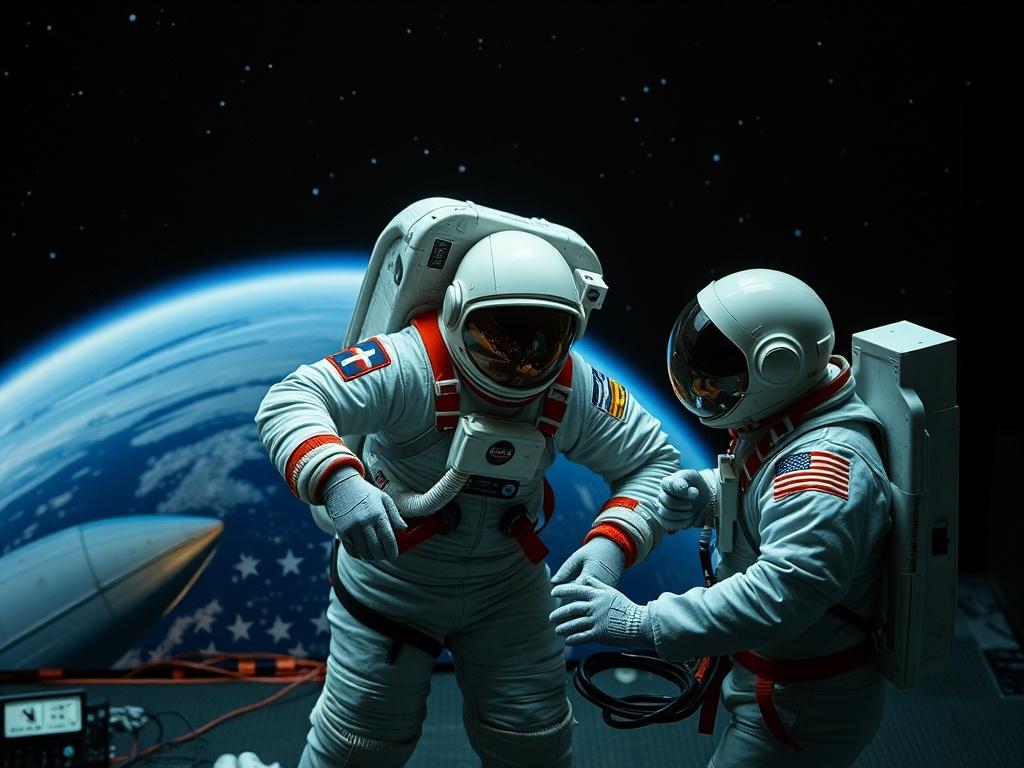
Stepping into a spacecraft is the end of a long, exacting process of preparation. Training shapes bodies, minds, and teams so that when doors close and the rockets roar, humans can perform reliably in an environment that refuses mistakes. This article walks through the methods, history, and innovations that define modern astronaut training, with occasional reference to the Russian tradition of Тренировки для космонавтов as one noteworthy thread in the global fabric.
Why training is more than exercise
Astronaut work is physical, but it transcends physical conditioning. Teams must master technical systems, emergency procedures, and the unique psychology of living and working in microgravity. Training blends simulation, repetition, and stress inoculation so crews behave predictably under pressure.
Every hour spent in a simulator or on a treadmill is an experiment in reliability: can an astronaut perform a complex task while tired, dehydrated, or disoriented? The goal is not to eliminate error entirely — that’s impossible — but to develop procedures and habits that keep risks low and responses fast.
Historical roots and changing priorities
Early space programs concentrated on survival and basic spacecraft control because missions were short and the technology unproven. Over decades, as missions grew longer and tasks more complex, training expanded into fields like robotics, geology, and long-duration physiology. The Cold War rivalry pushed innovations, but modern programs increasingly emphasize international cooperation and scientific return.
Programs in the United States, Russia, Europe, Japan, and elsewhere developed distinct traditions and strengths. Russian training emphasizes manual piloting skills and rugged redundancy, while Western programs historically focused more on systems integration and scientific operations. Today, these traditions blend as crews become multinational.
Selection: building the pool of candidates
Training begins before formal instruction: candidate selection screens for technical competence, health, and temperament. Medical exams rule out conditions that would be dangerous in space, and psychological assessments check for stress tolerance, adaptability, and teamwork. Physical fitness is necessary but not sufficient — cognitive skills and social compatibility matter as much.
Selection processes evolve with mission needs. Long-duration and deep-space missions require candidates who can remain resilient in isolation for months to years, while short flight participants may be evaluated differently. Agencies adapt their criteria to match the mission profile and the tools available to keep crews safe.
Foundational physical conditioning
Physical training is a constant through an astronaut’s career. Strength training, cardiovascular conditioning, and flexibility work help resist the deconditioning effects of microgravity and prepare crewmembers for launch and landing stresses. Resistance exercise becomes especially important for long-duration missions to preserve muscle mass and bone density.
Programs use individually tailored regimens, combining free weights, machines, and often specialized devices that mimic countermeasures used in space. Aerobic fitness supports cognitive function and cardiovascular health and reduces recovery time after strenuous tasks or emergency scenarios.
Resistance exercise and bone health
Without gravity, bone mineral density declines. Training protocols emphasize high-load resistance exercise to stimulate bone maintenance. Devices like advanced resistive exercise machines recreate axial loads that bones and muscles would normally experience on Earth.
Crew members work with exercise physiologists to monitor progress and adjust plans. Nutrition and supplementation are integrated with exercise because calcium, vitamin D, and protein status influence how well the skeleton responds to mechanical loading.
Simulating weightlessness: parabolic flights and neutral buoyancy
To learn how to move in microgravity, crews use two main methods: parabolic aircraft flights and underwater training. Parabolic flights create short periods of weightlessness that let trainees experience free-floating and test simple tasks in true microgravity. These flights are brief but invaluable for initial adaptation and sensory calibration.
For complex extravehicular activity (EVA) practice, neutral buoyancy in large pools is the workhorse. Suited astronauts train underwater to rehearse the choreography of spacewalks with realistic delays and resistance. Divers and engineers carefully manage buoyancy to approximate the inertia astronauts feel in orbit.
The neutral buoyancy lab: rehearsal at scale
Neutral buoyancy facilities house full-scale mockups of spacecraft and station modules. Astronauts perform EVA sequences while support divers manage tethers and emergency lines. The repetition builds muscle memory for tool handling, translation, and coordination with crewmates and ground teams.
Training underwater also reveals unforeseen challenges, like how loosely attached tools can drift or how harnessing strategies must account for different leverage. These insights feed back into procedure updates, suit redesigns, and safety protocols.
High-G and vestibular training: learning the body’s limits
Launch and reentry impose significant G-loads and vestibular stress that can disorient even experienced flyers. Centrifuge training exposes candidates to sustained Gs so they learn breathing, straining, and cognitive strategies to function under acceleration. The centrifuge also helps doctors spot cardiovascular vulnerabilities.
Vestibular training includes spinning chairs and other tools that provoke motion sickness in a controlled way. Learning to suppress or ride out nausea, or to rely on checklist-driven actions when senses fail, helps crews maintain performance when the inner ear conflicts with vision.
Simulators and mission rehearsal
Full-mission simulators recreate the spacecraft’s systems, interfaces, and failure modes. Crews practice nominal and off-nominal scenarios repeatedly until responses are immediate and coordinated. High-fidelity simulations allow ground controllers to rehearse with crews, refining timelines and communications.
Simulators also enable fault-injection training: instructors introduce hardware anomalies or software errors to observe problem-solving under pressure. These sessions teach priority-setting, checklist discipline, and creative troubleshooting within safety constraints.
Virtual reality and immersive training
Virtual reality (VR) has become an efficient supplement to physical simulators. VR offers quick iterations on procedural tasks, allows multiple crew members to train together remotely, and can simulate environments that would otherwise be costly to replicate. Immersive technologies also let engineers test new tool concepts in virtual space before committing to hardware.
Although VR cannot replicate the tactile feedback of real suits or the inertia of moving masses, it accelerates familiarization with complex procedures and layouts. Teams often combine VR sessions with physical practice to maximize learning retention.
Robotics and remote operations
Modern missions depend heavily on robotic systems, from Canadarm2 to robotic landers. Training covers teleoperation, payload handling, and coordination between human and robotic actors. Operators must understand robot kinematics, communication latency, and safe capture procedures.
Hands-on practice with mockups and remote-control consoles teaches fine motor control and situational awareness. Robot-centric training is essential for station resupply, satellite servicing, and planned deep-space missions where robots act as human surrogates in hazardous environments.
Science training and fieldwork
Astronauts are trained to be technicians and scientists: they must collect clean samples, operate analytical instruments, and follow complex experimental protocols. Training includes bench work, sterile technique, and instrument calibration so that data returned from orbit are reliable.
Fieldwork training, such as geology trips to volcanic or glacial sites, teaches observation and decision-making in unfamiliar terrain. These exercises sharpen the crew’s ability to identify scientifically valuable targets and to adjust plans on the fly.
Medical training and autonomy
Medical capability aboard spacecraft is limited, and crews must manage common illnesses, injuries, and some emergencies with onboard kits and telemedicine. Training covers suturing, dental emergency care, intravenous access, and basic anesthesia. Crewmembers often practice on mannequins and in simulation labs that mimic cramped spacecraft environments.
For deep-space missions with limited or delayed communications, medical autonomy becomes critical. Training programs are evolving to include protocols for triage, remote guidance, and psychological support when professional care is not immediately accessible.
Psychological resilience and group dynamics
Long missions put crews in close quarters for extended periods, where interpersonal friction can undermine performance. Training emphasizes conflict resolution, cultural competence, and routines that maintain morale. Teams practice structured problem-solving and regular debriefs to keep small issues from festering.
Mental resilience training includes stress management, sleep hygiene, and mindfulness. Programs use scenario-based exercises to expose candidates to isolation, communication delays, and ambiguous outcomes so they can develop coping strategies before real missions begin.
Analog missions and isolation studies
Analog habitats on Earth — in deserts, polar stations, or underwater habitats — provide controlled environments for testing human factors. Crews live under mission-like constraints for weeks or months to study adaptation, workload, and performance. The data inform scheduling, habitability design, and support systems for real missions.
These analogs also test how crews respond to time delays and limited supplies, which is especially relevant for journeys beyond low Earth orbit. Lessons learned often change even mundane policies, such as how personal items are secured or how chores are scheduled.
Emergency procedures and contingency drills
Rehearsing emergencies is central to astronaut readiness. Teams drill fire suppression, rapid depressurization, toxic leaks, and medical evacuation. Procedures must be precise, short, and rehearsable under duress so they can be executed without hesitation.
Drills combine physical rehearsal with cognitive training: checklists, call-outs, and decision trees that guide actions when information is incomplete. These rehearsals are evaluated and updated, creating a living body of procedures rather than a static manual.
Spacesuit training: mastering a second skin
Spacesuits are complex life-support systems that replace many human senses. Training covers donning and doffing, pressure checks, mobility limitations, and tool interface. Working in a suit requires patience and developed techniques to conserve energy and manage thermal load.
Simulations in neutral buoyancy, VR, and dry runs on land all contribute to proficiency. Crews practice contingency operations, like suit puncture response and umbilical management, to prepare for rare but critical situations.
International teamwork and cross-cultural skills
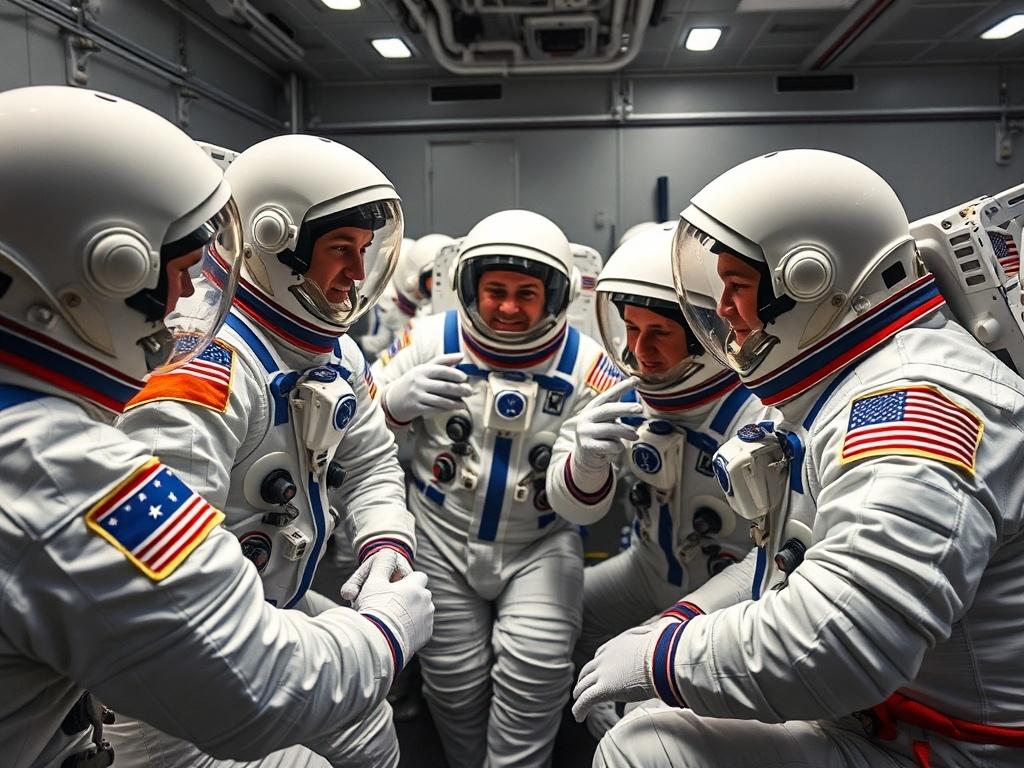
Multinational crews bring linguistic and cultural diversity that enriches missions but also adds complexity to coordination. Training includes language instruction, protocol familiarization, and cross-cultural communication exercises. Common procedures and shared checklists reduce ambiguity during joint operations.
Joint simulations with partner agencies help harmonize standards such as terminology, emergency actions, and hardware compatibility. These rehearsals are often where subtle differences in doctrine become apparent and are negotiated into common practice.
Case: joint training benefits
When crews from different nations train together for months, they build predictable rhythms and trust that survive the stress of flight. Shared humor, routine tasks, and repeated problem-solving forge cohesion more effectively than any formal exercise alone. These human bonds are mission-critical.
From a practical standpoint, joint training spreads costs and expertise. A simulator in one country can serve an international crew, and cross-training expands the operational bandwidth available on orbit.
Specifics from the Russian tradition
Russian programs have long emphasized rugged, hands-on training and a deep focus on manual flight skills. The phrase Тренировки для космонавтов evokes a legacy of simulators, centrifuges, and extensive time in vehicles learning to pilot craft under adverse conditions. This approach produced pilots who could react decisively when automated systems failed.
Russia’s training infrastructure, including long-standing facilities and experienced instructors, contributes practical knowledge that complements other approaches. Modern collaboration means Western and Russian trainees increasingly share techniques and lessons, creating a richer global repertoire of skills.
Preflight procedures and launch preparation
The days and hours before launch compress routine into ritual. Crew checklists, final system verifications, and psychological briefings keep focus sharp. Dress rehearsals and last-minute simulations ensure every member knows their role from the moment the countdown begins.
Final medical checks confirm fitness to fly, and mission control coordinates last updates to software and payloads. The preflight period is also a time for quiet reflection, where crews mentally rehearse key steps and visualize success — techniques borrowed from elite athletes and performers.
Living in space: day-to-day skills
Once in orbit, training shifts to operational tempo: experiment schedules, maintenance tasks, and housekeeping routines. Crews practice stowage, waste management, and the micro-skills of moving without bumping delicate equipment. Habitability design aims to reduce friction and cognitive load for routine actions.
Sleep, hygiene, and nutrition are structured to support performance. Even small inefficiencies in daily tasks can escalate into bigger problems, so astronauts train for streamlined workflows and disciplined time management.
Postflight rehabilitation and data collection
Returning to gravity requires careful rehabilitation to restore balance, cardiovascular capacity, and strength. Postflight programs include progressive exercise, vestibular retraining, and medical monitoring to track recovery. These data inform countermeasures for future missions.
Scientists study how different individuals respond to microgravity and reentry stresses to refine selection and training. The iterative loop between flight data and ground training is a primary driver of continuous improvement.
Training for deep-space missions: new challenges
Venturing beyond low Earth orbit introduces extended communication delays, limited resupply, and more severe environmental risks. Training adapts by building greater autonomy: crews learn advanced repair skills, comprehensive medical procedures, and decision frameworks for operating without immediate ground support.
Simulations incorporate long timelines, failure cascades, and resource scarcity. Designers also simulate the psychological effects of seeing Earth as a small disk in the distance, so crews can prepare for existential stressors they may encounter on journeys to the Moon, Mars, or beyond.
Emerging tools: AI, augmented reality, and remote tutoring
Artificial intelligence and augmented reality are becoming practical training adjuncts. AR can overlay procedures on hardware in real time, guiding trainees through complex tasks. AI tutors offer personalized feedback and can simulate realistic fault patterns that evolve with trainee performance.
These technologies increase training efficiency, enabling more repetitions at lower cost and with less wear on physical systems. However, they cannot replace the tactile and social learning that comes from hands-on practice and live teamwork.
Practical table: a rough comparison of agent emphases
| Agency or tradition | Emphasis | Representative training methods |
|---|---|---|
| Russian (historical) | Manual piloting, redundancy, ruggedness | Centrifuge, simulator sessions, hands-on vehicle time |
| NASA / U.S. | Systems integration, scientific mission ops | High-fidelity simulators, analog missions, neutral buoyancy |
| ESA / international | Scientific specialization, multinational teamwork | Field geology, multilingual simulations, robotics practice |
This table is a high-level snapshot rather than a comprehensive taxonomy. Training programs overlap heavily and increasingly borrow best practices from each other as international partnerships deepen.
Tools and facilities that make training possible
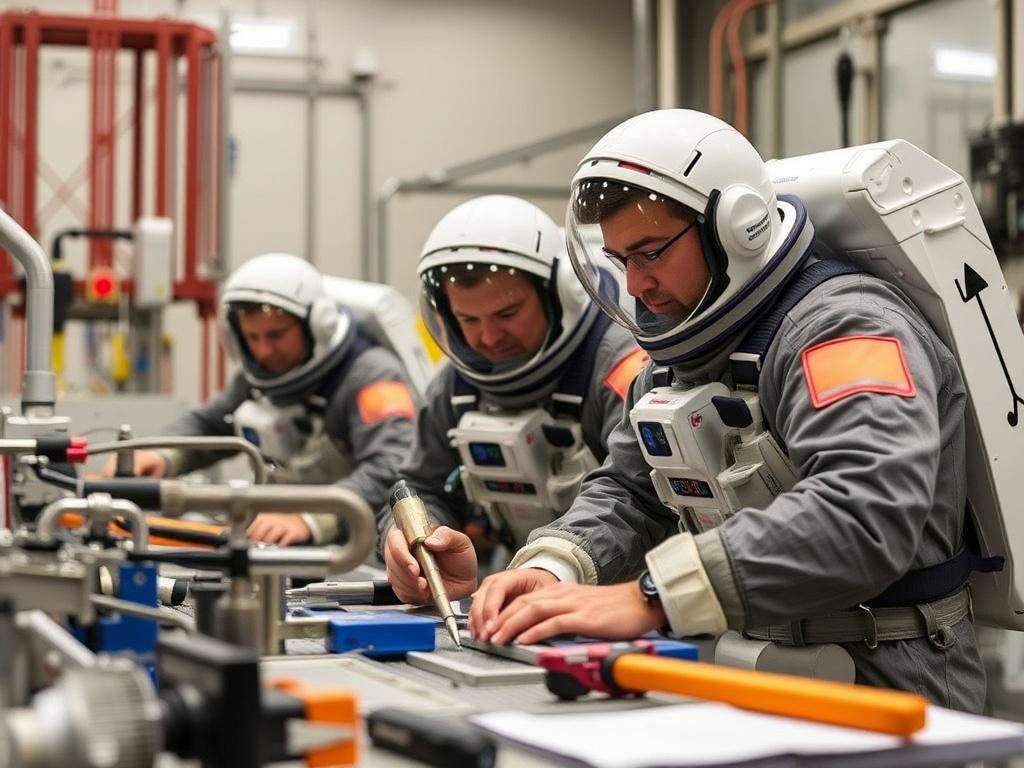
Signature facilities include centrifuges, neutral buoyancy labs, full-mission simulators, and analog habitats in remote terrestrial locations. Each offers a different fidelity of stress and realism, and together they create a layered training environment that builds competence incrementally.
Many agencies also run specialized workshops for robotics, suit servicing, and life-support system training. These workshops keep technical crews and astronauts aligned on hardware updates and maintenance protocols.
How training improves safety and science return
Well-designed training reduces human error and increases the amount of productive time crews can spend on research. When astronauts can execute complex tasks quickly and safely, mission planners can schedule more ambitious experiments and maintenance activities. Training thus directly multiplies the scientific yield of every hour spent in space.
Beyond immediate mission returns, training creates institutional memory. Lessons learned in one mission are codified into procedures and translated into improved hardware and training curricula for subsequent crews.
Personal perspective: what I learned watching a rehearsal
I once attended a public session at a training center where I watched astronauts rehearse a docking sequence in a simulator. The choreography looked calm and methodical, but the instructors paused constantly to correct tiny deviations — a reminder that expertise is a cascade of small decisions made consistently right. That precision is what separates a safe mission from a precarious one.
The human moments were striking too: between runs, crews joked, swapped notes, and reviewed checklists with surprising warmth. Those informal exchanges, I realized, were as much part of readiness as any formal drill. Trust and rapport are invisible training tools.
Common misconceptions about astronaut training
People often imagine astronaut training as nonstop physical hardship, but much of it is procedure, simulation, and mental practice. Strength and endurance matter, but so do patience, attention to detail, and the ability to communicate crisply. Training blends hard physical conditioning with long hours of careful repetition and study.
Another misconception is that training is identical for every astronaut. In reality, training is highly mission-specific. A crew assigned to robotics-heavy duties will spend more time at consoles, while a geology-focused mission will emphasize fieldwork and sample-handling techniques.
Lessons from analog failures and mistakes
Simulations sometimes reveal surprising failure modes: a tool that slides away under microgravity, an overlooked stowage strap that jams a hatch, or a checklist ambiguity that costs minutes in a crisis. These inconveniences can become serious hazards in space, so training tries to surface them early. When failures happen on the ground, they become invaluable learning opportunities.
Designers often rework hardware or procedures in direct response to training incidents, showing how rehearsal is an essential step in systems engineering, not merely human preparation.
Preparing civilians and space tourists
As commercial flights open space to non-career astronauts, training programs are adapting. Short training courses focus on safety, motion tolerance, and how to move in microgravity for brief periods. The emphasis is on ensuring passengers can enjoy the flight while not becoming a liability during nominal or off-nominal conditions.
Even brief suborbital flights require clear briefings on egress, seating restraints, and motion cues. Companies balance accessibility with the uncompromising need for a safety baseline.
Ethics, selection fairness, and accessibility
As programs expand, ethical considerations about selection and fairness come into play. Agencies and companies must balance the need for elite performance with equitable access to opportunities. Training pipelines that overemphasize certain backgrounds risk excluding talent with diverse and valuable perspectives.
Education and outreach programs help broaden the pool. Scholarship programs, internships, and international cooperation create pathways for people who might otherwise be shut out by narrow selection traditions.
Costs and logistical challenges of training
High-fidelity training is expensive: simulators, facilities, and instructor teams represent significant long-term investments. Scheduling conflicts, hardware availability, and travel logistics can complicate training plans, especially for international crews. Agencies coordinate years in advance to make sure facilities and personnel align with mission timetables.
These logistical constraints sometimes drive innovation, such as shared international simulators or increased use of virtual tools that reduce dependence on scarce physical infrastructure.
Preparing for the unknown: flexibility as a skill
One of the central virtues instilled by training is flexibility. Systems will fail in ways no one predicted, and crews must improvise within the constraints of safety and resource limits. Training that cultivates adaptive thinking, creative problem-solving, and calm under ambiguity pays dividends when unpredictable situations arise.
Exercises that purposefully withhold information or throw curveballs train crews to prioritize, triage, and iterate solutions rather than rigidly following a script that might no longer apply.
What future training will emphasize for Mars and beyond
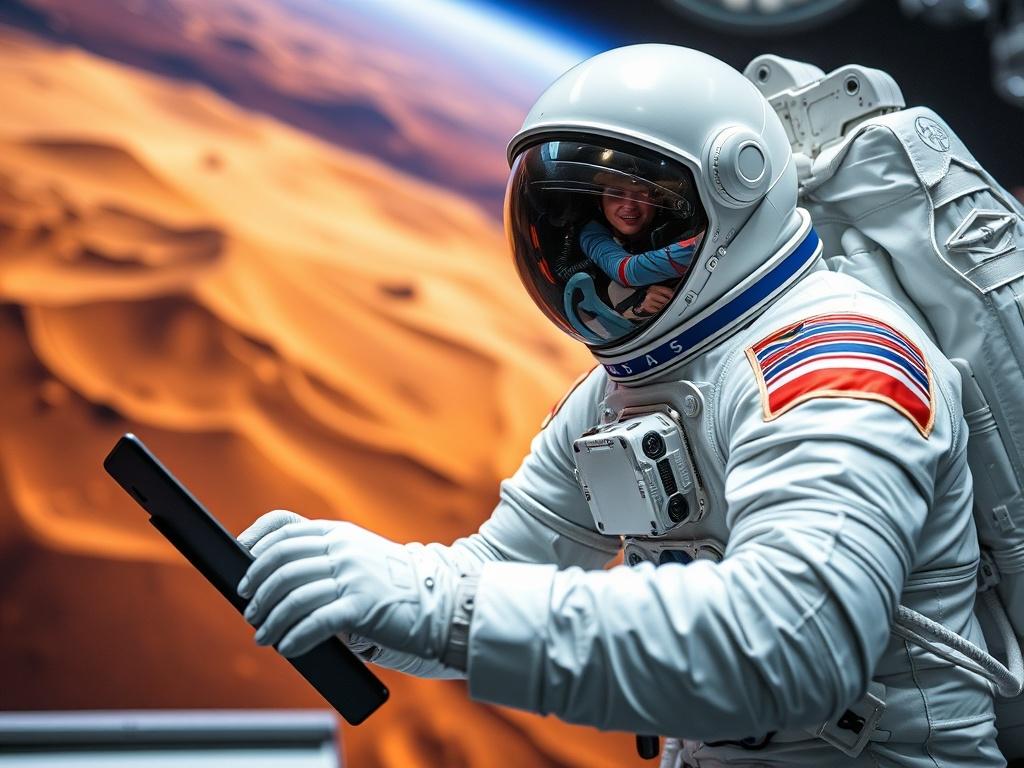
Long-duration interplanetary missions will stress autonomy, in-situ resource utilization, and multi-disciplinary skills. Crews will need to repair complex systems with limited spare parts, conduct medical procedures without quick evacuation, and manage psychological challenges far from Earth. Training will therefore focus on cross-training, modular repair techniques, and robust problem-solving frameworks.
Surface operations will add another layer: planetary geology, habitat construction, and extravehicular navigation in unknown terrain. Analog missions and advanced AR tools will be central to preparing astronauts for those tasks.
Practical takeaways for enthusiasts and aspiring spacefarers
If you’re inspired by astronaut training, focus on clear communication, disciplined practice, and physical fitness tailored to robust health rather than extreme performance. Learn to work in teams, manage stress, and approach problems methodically. These skills are valuable whether you pursue a space career or simply want to bring astronaut-level rigor to your own field.
Studying the methods of trained crews — checklists, rehearsals, and post-action reviews — can improve performance in any high-stakes environment. The essence of astronaut training is not heroism but preparation: planning, repetition, and constant learning.
How ongoing research shapes training curricula
Physiological and psychological studies from past missions supply evidence for refined countermeasures and curricula. Data on muscle loss, sleep disruption, and cognitive changes guide adjustments to exercise regimes, lighting schedules, and work-rest cycles. This empirical approach keeps training responsive to what actually happens in space.
Operational lessons also feed back: time-motion studies reveal which tasks take longer or need redesign, and incident analyses trigger changes in both hardware and human procedures. Training evolves with every mission, not independently of it.
Final perspectives on readiness and human adaptability
Training for space is a testament to human adaptability. It stitches together physiology, engineering, psychology, and teamwork into a capability that allows small groups to live and work where life cannot normally persist. The practices described here — from neutral buoyancy rehearsals to long isolation studies — are the practical artifacts of that adaptability.
As space activities diversify and destinations expand, the core lessons remain steady: train deliberately, rehearse for failure, and cultivate trust among teammates. Whether in the old halls of established training centers or in new virtual classrooms, the relentless attention to preparation is what ultimately makes exploration possible.