
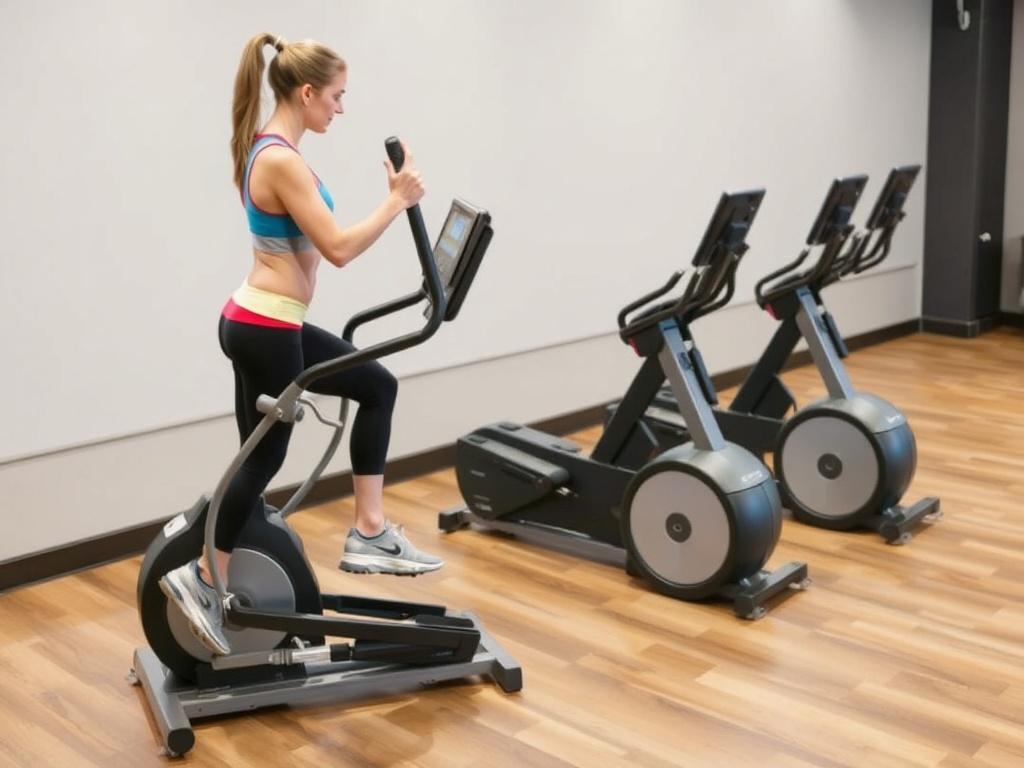
Elliptical machines sit at the intersection of convenience and effectiveness, offering a low-impact way to build aerobic fitness, protect joints, and burn calories. Whether you’re rehabbing an injury, trying to lose weight, or simply looking for a time-efficient cardio session, a thoughtfully structured routine on the elliptical delivers results without monotony.
In this article I’ll walk you through techniques, programming, heart rate guidance, and practical tips that transform 20 minutes on the machine into meaningful progress. You’ll find sample workouts, a 12-week plan, and real-world advice drawn from years of training clients and my own disciplined gym seasons.
Why choose the elliptical: benefits and realistic expectations
The elliptical combines stepping and gliding motions to lower impact forces on knees and hips compared with running. This makes it excellent for people with joint sensitivity, older adults, or anyone who wants effective cardio without pounding the pavement.
Beyond joint protection, the machine allows simultaneous upper- and lower-body engagement when using moving handles, which increases caloric demand and improves muscular endurance. The smooth, controlled motion also helps newer exercisers build confidence and coordination before advancing to higher-intensity modalities.
Expect steady improvements in aerobic capacity, calorie burn, and muscular endurance if you train consistently and progressively. That said, the elliptical is a tool: results depend on how you use it—intensity, duration, and variation matter more than simply “spinning” at one steady pace.
Technique and posture: small adjustments, big differences
Good posture on the elliptical prevents discomfort and improves efficiency. Keep a neutral spine, relax your shoulders, and maintain a slight forward lean from the ankles rather than rounding the upper back.
Grip the handles lightly; don’t hang on for dear life. Light contact aids rhythm and balance while heavy gripping reduces lower-body effort and can cause upper-body tension that wipes out efficiency.
Step length and foot placement also matter. Place your feet flat and centered on the pedals, and avoid pushing through your toes only. Aim for a smooth transfer of force through the whole foot to engage glutes and hamstrings as well as quads.
Adjusting resistance and incline for smart progress
Resistance and incline (or incline-like motion on some models) are your primary levers for increasing workout intensity. Resistance makes the pedal cycle harder to push, while incline shifts emphasis toward the posterior chain—glutes and hamstrings.
Start with a resistance you can maintain with good form for the prescribed time. Increase resistance in small increments—one setting at a time—until you’re challenged but not collapsing. For most models, gradual steps are more productive than big jumps.
Many people overemphasize incline or resistance separately; the best approach mixes them. During a single session, alternate between steeper incline with moderate resistance and higher resistance with flatter stride to stimulate a broader range of muscle fibers.
Designing progressive workouts: beginner to advanced templates
Progression is the backbone of any training plan. For beginners a conservative ramp-up prevents burnout and reduces injury risk: three sessions per week starting at 20 minutes with light to moderate resistance offers steady gains.
Intermediate users should add variety: a mix of one steady-state session, one interval or tempo session, and one endurance session per week increases fitness without crushing recovery. Increase session length, resistance, or interval intensity every one to two weeks.
Advanced athletes can use periodized blocks with higher frequency and targeted intensity—two interval sessions, one long endurance session, and a recovery session per week are common. Keep a deload week every fourth week to restore energy and avoid stagnation.
Interval training and HIIT on the elliptical
Intervals are the fastest way to raise aerobic capacity and improve calorie burn per minute. The elliptical is particularly well-suited to short, intense bursts because resistance and cadence adjustments are immediate and safe for joints.
Begin with simple work-rest structures: 30 seconds hard, 60–90 seconds easy, repeated 8–10 times. Hard means you’re near 85–90 percent of perceived max effort, while easy should allow recovery but keep movement steady.
For more advanced sessions, try 4 x 4-minute intervals at high intensity with 3-minute active recovery. These “threshold” intervals develop sustained power and are less punishing on the nervous system than all-out sprints when done properly.
Heart rate guidance: train smart, not just hard
Using heart rate zones helps you align effort with goals—whether fat loss, endurance, or performance. For general fitness, spend the majority of time in zone 2 (conversational pace), supplemented by zone 3 and occasional zone 4 work for growth.
Find your zones with a recent fitness test or estimate zones by percentage of maximum heart rate. A practical approach: easy workouts at 60–70 percent max HR, tempo/threshold work at 75–85 percent, and intervals pushing toward 90 percent.
Don’t treat heart rate as absolute truth; factors like hydration, caffeine, stress, and heat alter readings. Use it as a guide and pair it with perceived exertion for the best real-world results.
Warm-up, cooldown, and mobility routines
A short, purposeful warm-up primes the cardiovascular system and reduces injury risk. Spend five to ten minutes starting at an easy pace and gradually raise resistance and cadence to the session’s starting intensity.
After the main set, a 5–10 minute cooldown returning to easy cadence helps clear metabolites and speeds recovery. Finish with light mobility work for hips, hamstrings, and calves—areas that stiffen quickly with repetitive cardio.
Include one dedicated mobility session weekly if your schedule allows. Improving hip flexor and ankle mobility translates directly into smoother, more powerful strides and better posture on the machine.
Common mistakes and how to avoid them
A frequent error is letting cadence compensate for low resistance—spinning fast at a low load leads to less strength gain and can reduce cardiovascular efficiency over time. Aim for purposeful cadence with meaningful resistance.
Another mistake: ignoring upper-body engagement. Using the moving handles or holding light tension with the non-moving handles increases total calorie burn and balances muscular development. Don’t clench; coordinate breathing and movement instead.
Finally, many people forget to periodize and end up stuck. If your workouts never vary in length or intensity, adaptation stalls. Rotate volume and intensity in planned phases to keep progress consistent.
Cross-training and injury prevention

The elliptical is an excellent low-impact workhorse, but cross-training preserves long-term athleticism. Combine elliptical sessions with strength training twice per week to build muscle, correct imbalances, and enhance metabolic rate.
Include at least one session per week of a different cardio modality—swimming, cycling, or a brisk walk—to provide varied stimulus and reduce repetitive strain. Cross-training also keeps motivation fresh and reduces mental fatigue.
If you’ve had previous injuries, use the elliptical as a rehab-friendly option while integrating targeted strength and mobility work prescribed by a professional. Gradual load progression is the best route from rehab to robust performance.
Programming for weight loss and body composition
Weight loss hinges on energy balance more than any single machine, but the elliptical gives you a controllable, safe, and efficient way to increase calorie expenditure. Combine steady-state sessions with intervals for the best mix of fat oxidation and metabolic afterburn.
Frequency matters. Aim for at least 150 minutes of moderate aerobic activity weekly, or 75 minutes of vigorous activity, and increase from there based on your goals. Short daily sessions can be more sustainable for busy schedules than fewer long ones.
Pair training with a reliable nutrition plan—sufficient protein for muscle retention, moderate caloric deficit, and whole foods for satiety. Fitness without dietary attention rarely produces lasting body composition change.
Strength emphasis: using the elliptical as a complementary tool
The elliptical alone builds muscular endurance but doesn’t replace loaded strength work. To maximize fitness, schedule lower-body strength training two to three times per week focused on squats, deadlifts, lunges, and hip-hinge patterns.
Use the elliptical for active recovery days or as a finisher after strength workouts, keeping intensity low to moderate on those occasions. Alternatively, do high-intensity intervals on cardio days and preserve strength days for heavier lifts.
Over time, increasing resistance on the elliptical mimics some strength benefits by improving muscular endurance and stimulating the glutes. Consider pairing a heavy lift day with a steady 20-minute elliptical cooldown to boost circulation and recovery.
Choosing the right elliptical and maintenance basics
Ellipticals come in front-drive, rear-drive, and center-drive configurations, each offering a different feel. Rear-drive models tend to provide a longer stride and more natural running-like motion, while front-drive machines can be compact and stable.
Stride length matters. Aim for a stride that feels comfortable and natural; 20–22 inches suits most adults, while taller users may require 22–24 inches. Test machines in person if possible, and pay attention to handle height and console usability.
Simple maintenance—regular wiping, checking bolts, and lubricating moving parts per the manufacturer’s instructions—keeps a machine running smoothly. If you use a gym machine, note any odd noises and report them; small issues compound quickly with heavy use.
Sample 12-week elliptical training program

The following 12-week plan balances frequency, intensity, and progression with clear phases: base building, intensity, and consolidation. It assumes three to four sessions per week and includes one strength session twice weekly for optimal results.
Progress by increasing duration or intensity by about 5–10 percent every week, and take a lighter recovery week every fourth week where volume drops roughly 30–40 percent. Adjust based on how your body feels and life demands.
| Weeks | Focus | Weekly structure (example) |
|---|---|---|
| 1–4 | Base endurance | 3x weekly: 20–35 min steady zone 2; 1x mobility/strength |
| 5–8 | Build intensity | 1 interval session, 1 tempo, 1 long steady (40–50 min); 2x strength |
| 9–11 | Peak performance | 2 interval sessions (short & long formats), 1 endurance 60 min; maintain strength |
| 12 | Deload and test | Reduced volume week with 2 light sessions and one effort test (1K or 5K equivalent) |
Treat the table as a framework and tweak it to fit life: increase days if you’re recovering well or back off if stress and work pressure spike. The plan’s aim is steady, sustainable improvements rather than short-term extremes.
Sample workouts you can use immediately
Here are three ready-to-go sessions for different goals: fat loss, endurance, and speed. They’re intentionally scalable—alter duration, resistance, or rest to match fitness level.
- Fat-loss interval: 5-minute warm-up, 12 x (45s hard at high resistance / 75s easy), 5-minute cooldown.
- Endurance builder: 45 minutes steady at conversational pace, include 5 x 30s pickups at higher resistance mid-session.
- Speed/hill session: 6 x 3-minute efforts at high incline/resistance with 2-minute recovery, plus warm-up and cooldown.
Mix these templates into your week and rotate so that you’re not repeating the same session more than twice in a row. Variety fuels progress and keeps your brain engaged with training.
Practical tips from the trainer’s chair
From years coaching clients, I learned one simple truth: consistency beats perfection. Even a 20-minute focused session three times a week yields better results than sporadic double-long sessions that leave you wiped and demotivated.
Use small habits to make workouts unavoidable—pack your gym bag the night before, schedule sessions like meetings, and use a short pre-work ritual to prime your mind. These tiny rituals reduce friction and keep momentum alive.
Also, pay attention to music or guided audio. A well-curated playlist or interval coach turns minutes into a flight of focused work instead of a slog. I’ve seen shy clients who hated cardio become committed simply because a playlist made sessions fun.
Real-life examples: two client case studies
A 48-year-old client recovering from knee irritation used the elliptical as a primary cardio modality and paired it with twice-weekly strength work. Over six months she lost 18 pounds, regained full knee mobility, and ran a 5K comfortably off the machine.
Another client was a time-poor manager who did 25-minute HIIT elliptical sessions four times a week. He improved his VO2 max and dropped body fat while preserving lean mass because the intense intervals demanded more anaerobic and metabolic adaptation.
Both cases highlight the adaptability of the elliptical: it fits rehab, fat loss, and time-crunched fitness. The common thread was progressive overload and careful attention to recovery and nutrition.
Staying motivated and avoiding plateau
Boredom and plateaus are two of the biggest silent killers of fitness programs. Mental strategies work: set short-term process goals (complete 12 workouts this month) rather than only outcome goals like losing X pounds.
Track small wins—seconds added to interval efforts, resistance levels handled without form loss, or steady weeks of consistency. Visual proof of progress keeps motivation steady because the brain prefers frequent rewards.
If you sense a plateau, change the stimulus. Switch to different interval schemes, push the incline, or introduce a different cardio tool for a couple of weeks. Small shocks to the system restore progress without risking overtraining.
Troubleshooting discomfort and aches
Minor soreness is normal when you increase volume or intensity, but sharp pain, joint swelling, or persistent niggles require attention. Stop and assess: tweak resistance, shorten sessions, and work on mobility before escalating intensity.
If you feel low-back strain, check posture and core engagement. A weak or inactive core can let the pelvis tilt and load the lumbar spine improperly during repetitive motion. Add targeted stability exercises to your routine.
Persistent knee pain that doesn’t respond to load adjustments may need a professional assessment. Often the fix is simple—shoe changes, pedal positioning, or an alignment-focused strengthening program—but it’s worth ruling out more serious issues.
When to mix treadmill or outdoor runs with elliptical work
Many runners use the elliptical as supplementary training—great for recovery runs and low-impact aerobic conditioning without losing running-specific neuromuscular patterns. But it doesn’t fully replace the ground reaction forces of real running.
Alternate running and elliptical sessions strategically: elliptical for recovery, cross-training, or non-impact intervals, and keep one or two running sessions per week to preserve biomechanics. This hybrid approach lowers injury risk while maintaining running fitness.
If you’re preparing for a race, prioritize specific running workouts as the event approaches but keep the elliptical in the toolbox for maintenance and cross-training during heavy-run blocks or recovery phases.
Apps, consoles, and data: make tech work for you

Modern ellipticals and fitness apps provide metrics that are useful when interpreted wisely: cadence, resistance, calories, and heart rate tell a story about effort and adaptation. Focus on trends rather than single-session “numbers.”
Auto-programs can be helpful starting points but don’t let them dictate everything. Customize sessions to your goals, then use the app to log progress and stay accountable. A little personalization goes a long way.
For tech skeptics, a simple timer, notebook, or phone log keeps training honest. The most important data is consistency and gradual improvement—anything beyond that is icing, not the cake.
Nutrition timing and hydration around sessions
A light snack with carbs and a touch of protein 30–60 minutes before a hard session fuels performance. For short moderate workouts you don’t need much; for prolonged or high-intensity intervals, a small banana or toast with nut butter helps sustain effort.
Hydrate before and after sessions as a priority. Even mild dehydration raises perceived exertion and heart rate and reduces performance on intervals and long workouts. Keep a bottle nearby and sip routinely during longer sessions.
Post-workout, aim for a 3:1 to 4:1 ratio of carbs to protein for glycogen replenishment and muscle repair within the first hour if your training is frequent or intense. For lighter sessions, prioritize balanced meals and overall daily protein targets.
How to measure progress beyond the scale
Look for objective markers: improved interval speed at the same resistance, longer steady-state duration without fatigue, lower heart rate for the same effort, and better recovery between workouts. These metrics are more reliable than daily weight fluctuations.
Mood, energy levels, quality of sleep, and performance in strength workouts are excellent subjective indicators. If you sleep better and lift more, your conditioning is improving even if the scale stalls for weeks.
Periodically perform simple tests—timed 1K effort on the elliptical, a submaximal heart rate test, or a threshold interval—and compare results every four weeks. Small, measurable improvements accumulate into major fitness gains over months.
Final thoughts: building a habit you’ll keep
The elliptical is a remarkably versatile machine—useful for rehab, fat loss, endurance, and high-intensity work. Its low-impact nature and capacity for varied programming make it a smart long-term choice for many people.
Prioritize consistency, progressive overload, and balanced cross-training. Keep technique clean, respect recovery, and use heart rate or perceived exertion to steer intensity. Small, steady steps win over time.
Start with a plan that fits your life, refine it as you learn, and treat the process as a series of manageable experiments. With that approach, your elliptical sessions will stop being chores and become reliable, effective workouts that move you toward lasting fitness.