If you want rounder, stronger glutes but squats leave your knees or lower back protesting, there are plenty of powerful alternatives that deliver results. This article walks through the anatomy, training principles, a wide variety of exercises, and practical programs so you can build shape and strength without a single traditional squat. Expect clear technique cues, progressions for all levels, and a sample plan you can start this week.
Why choose glute work without squats?
Squats are effective, but they aren’t the only tool. People avoid them for many reasons: knee pain, hip issues, mobility limitations, equipment constraints, or simply a desire for variety. Removing squats doesn’t mean compromising results—good programming and the right exercises still produce hypertrophy and power.
Training without squats can also isolate the glutes more directly. Squats distribute load across quads, hamstrings, and the core, while certain hip hinge and unilateral movements emphasize the gluteus maximus and medius. If your goal is targeted glute development, non-squat movements can be a smarter choice.
Basic glute anatomy and why it matters
The glute complex is three muscles working together: gluteus maximus, medius, and minimus. The maximus is the largest and responsible for hip extension and shape, while the medius and minimus control hip abduction and stabilization during single-leg activities.
Understanding which movement targets which muscle helps you pick exercises that match your goals. Hip extension and horizontal thrust movements load the maximus, whereas lateral and rotational actions engage the medius and minimus—key for a rounded, stable posterior.
Training principles for effective glute development
Progressive overload remains the cornerstone: increase weight, reps, or time under tension over weeks. For glute hypertrophy, aim for a mix of moderate reps (8–15) with heavier sets and higher-rep activation work (15–30) to flood the muscle with metabolic stress.
Range of motion and muscle tension matter more than the specific movement name. A full hip extension with a pause at the top recruits more glute fibers than a shallow repetition done with momentum. Focus on controlled eccentric phases and deliberate contractions.
Mind-muscle connection improves recruitment. For many people, simply thinking about squeezing the glutes at the top of a lift increases firing dramatically. Use lighter activation sets with bands to cue the nervous system before heavy work.
Warm-up and activation: prime the glutes
A targeted warm-up wakes up dormant muscle fibers and reduces the risk of compensation. Start with dynamic movements that increase blood flow and prime the posterior chain, such as leg swings, hip circles, and a few minutes of light cardio if needed.
Glute-specific activation is a small investment that pays dividends. Perform 2–3 activation exercises like clamshells, banded lateral walks, and glute bridges for two sets of 12–20 reps before your main sets. These patterns reinforce proper movement and help you feel the glutes during heavier lifts.
Equipment options and how to substitute
You don’t need a fully loaded gym to build great glutes. Resistance bands, a single dumbbell or kettlebell, and a bench or sturdy chair cover most of the exercises you’ll use. Bands are especially useful for activation, tempo work, and adding variable resistance.
If you have access to a barbell, hip thrusts and heavier deadlifts are excellent; if not, use a single heavy dumbbell, kettlebell, or double-up bands. Cable machines and straps open up pull-throughs and single-leg cable variations, but bodyweight progressions still work well for beginners.
Essential equipment list
- Resistance bands (mini and looped)
- Dumbbells or kettlebells
- A bench or elevated surface
- Optional: barbell for hip thrusts, cable machine
Key exercises: glute bridges and hip thrusts
Glute bridges and hip thrusts are foundational if you want maximum glute activation without squatting. Both emphasize hip extension, which directly targets the gluteus maximus and builds shape and strength effectively.
Start with bodyweight bridges to groove the pattern: lie on your back, feet hip-width, drive through the heels, lift hips until a straight line from shoulders to knees, squeeze and lower slowly. Add a pause at the top to increase time under tension and improve mind-muscle connection.
Progress to single-leg bridges and barbell hip thrusts as strength increases. With hip thrusts, the back rests on a bench and the load sits across the hips; drive the hips up, squeeze the glutes hard, and avoid hyperextending the lumbar spine at the top.
Common errors and corrections: bridges and thrusts
People often use their lower back instead of the glutes by overextending at the top. Cue a neutral spine and imagine closing your ribcage toward your pelvis while squeezing the glutes. If you still feel your lower back, reduce the load and reinforce the movement with lighter, controlled reps.
Another common issue is using the toes instead of the heels to drive the movement, which shifts emphasis to the quads. Press through the heels and think of pushing the floor away to better recruit the posterior chain.
Key exercises: Romanian and single-leg deadlifts
The hip hinge pattern is central to serious posterior development. Romanian deadlifts (RDLs) load the glutes and hamstrings while teaching hip mobility and control without loading the knees like squats do. Maintain a slight knee bend, push hips back, and slide the weight down the thighs with a long spine.
Single-leg RDLs add balance and unilateral demand, forcing the glute medius and stabilizers to work hard. They also reveal side-to-side imbalances you might not notice with double-leg lifts. Use bodyweight initially, then add dumbbells, kettlebells, or a barbell as balance improves.
Technique cues for RDLs
Keep the chest proud and shoulders back, hinge from the hips rather than folding through the lumbar spine, and focus on a slow eccentric descent. Think of moving the hips back toward the wall behind you, which keeps tension in the posterior chain and reduces stress on the lower back.
Limit range if hamstring flexibility is restricted; a shorter range with strict form trumps floppy, overreaching reps. Over time your hip hinge will deepen and the glutes will take more load at the top of each rep.
Key exercises: lunges, step-ups, and split variations
Unilateral leg movements like reverse lunges, walking lunges, and step-ups provide heavy, targeted glute work without traditional squatting mechanics. They emphasize hip extension and single-leg control, and they’re easy to scale by changing step height or loading.
Step-ups are underrated for glute emphasis—especially when the focus is on driving through the heel of the stepping foot. Pick a bench height that allows a 90-degree or slightly less knee bend at the top, and step up with intent rather than pushing off the back leg.
Reverse lunges generally place more load on the glutes and hamstrings than forward lunges because the rearward step increases hip extension. Keep torso upright, chest lifted, and take the step back far enough that the glute of the front leg must do the work to return to standing.
Progressions and regressions for unilateral work
Beginners can start with split-stance bodyweight step-ups or holds, then add a dumbbell in each hand. Progress to weighted reverse lunges, walking lunges with a controlled tempo, and elevated step-ups with heavier loads to increase glute engagement.
For clients with balance issues, hold onto a stable surface and focus on shorter ranges before increasing step height. Eccentric emphasis—slowly lowering into the lunge—can increase time under tension without adding weight.
Key exercises: kettlebell swings and hip hinge power work
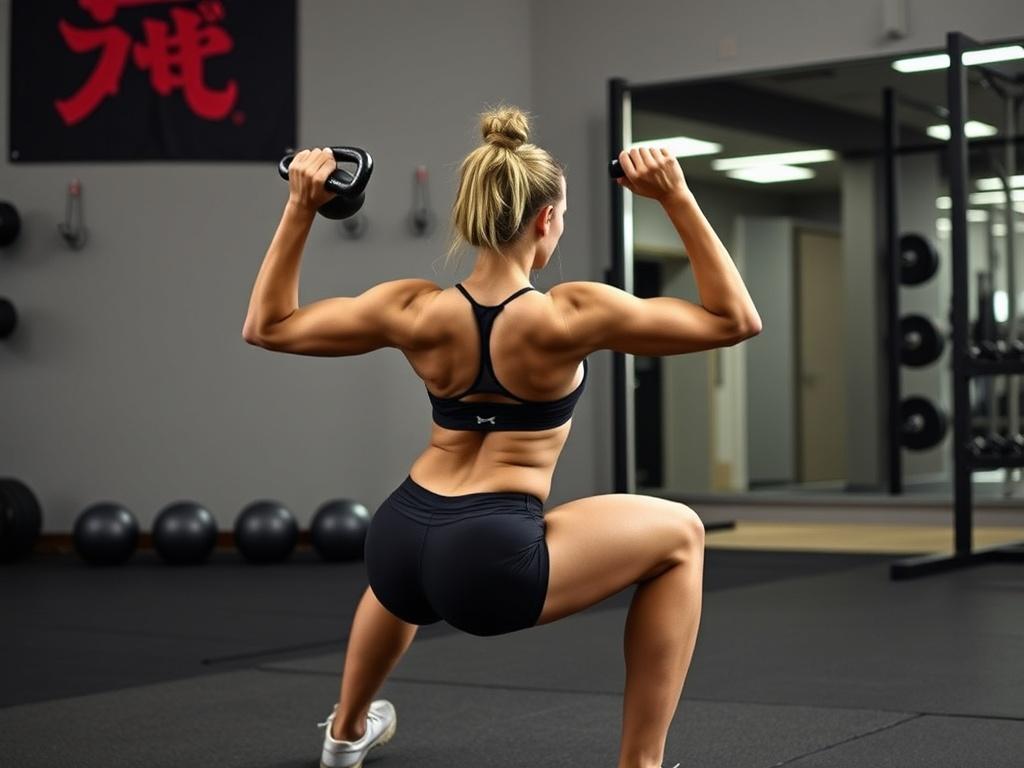
Kettlebell swings are a dynamic, powerful way to develop hip extension speed and glute power. The ballistic nature creates strong posterior chain recruitment and improves intermuscular coordination, which supports athleticism and practical strength.
Focus on the hip snap: the legs provide a stable base, the hips drive forward aggressively, and the glutes contract at the top. Avoid squatting down—swinging should be a fluid hinge with minimal knee flexion compared to a squat.
Safety cues for swings
Keep a neutral spine and shoulder position; the movement is powered by the hips rather than pulling with the arms. Start with lighter kettlebell weights to master timing and progression before moving to heavy swings for conditioning or strength.
If you have lower back concerns, begin with hip hinge drills and lighter loads. As technique becomes consistent, the explosive nature of swings will translate into stronger and more responsive glutes.
Key exercises: cable pull-throughs and banded good mornings
Cable pull-throughs mimic the hip hinge while allowing a unique line of pull that places emphasis on the posterior chain with minimal spinal loading. They’re especially useful when you want to isolate hip extension without stabilizing a heavy barbell.
Banded good mornings offer a portable, joint-friendly option to challenge the glutes through tension on the posterior chain. Place a band under your feet and across the upper back, hinge forward slowly, and control the return to vertical while maintaining a neutral spine.
Programming these movements
Use pull-throughs and banded good mornings as supplemental work in your programming to add volume and reinforce the hinge pattern. They’re excellent for higher-rep sets aimed at hypertrophy and for pre-fatigue before heavier unilateral or thrust work.
Be mindful of breath and bracing: implement a consistent breathing pattern and a light, engaged brace through the core to protect the lower back during loaded hinge repetitions.
Glute isolation moves for activation and burnout
Small, targeted moves like donkey kicks, fire hydrants, and clamshells are not primary strength builders, but they play a valuable role in activation and metabolic finishing sets. These exercises stimulate the medius and minimus, improving hip stability and the side profile of the glutes.
Perform these movements with a band for extra resistance, aiming for crisp contractions and full range. They’re perfect at the end of workouts to flush blood into the muscle and reinforce neuromuscular patterns learned earlier in the session.
How to use isolation moves effectively
Include them as two to three sets of 12–25 reps as part of the warm-up or finisher. Keep them crisp and controlled—avoid letting momentum do the work. If you’re rehabbing or retraining movement, prioritize slow, deliberate sets focused on muscle activation rather than high rep volume.
These exercises also serve well on active recovery days to maintain muscle engagement without heavy loading, especially when paired with mobility work and foam rolling.
How to sequence exercises in a workout
Start with a general warm-up, follow with glute activation, and place the most technically demanding or heavy movements early in the session. For example, do hip thrusts or RDLs before lunges and finish with isolation moves. This sequencing preserves strength for heavy lifts and optimizes learning and technique.
A couple of examples: a strength-focused day might begin with heavy single-leg RDLs, then hip thrusts for volume, and finish with banded side steps. A hypertrophy day could open with higher-rep hip thrusts, proceed to step-ups and cable pull-throughs, and end with clamshells and donkey kicks.
Sample weekly plan: three levels
Below is a practical weekly template you can adapt. It balances heavy hip hinge work, unilateral strength, and targeted isolation to build shape and function without squats. Rotate two to three sessions per week depending on your recovery.
| Level | Session A | Session B | Session C |
|---|---|---|---|
| Beginner | Glute bridges 3×12, RDL 3×8, band lateral walks 3×20 | Step-ups 3×10 each, donkey kicks 3×15, clamshells 3×15 | Kettlebell swings 3×15, reverse lunges 3×8 each, banded good mornings 3×12 |
| Intermediate | Barbell hip thrusts 4×8, single-leg RDL 3×10, cable pull-throughs 3×12 | Bulgarian split squats (rear elevated) 4×8, banded side steps 3×25, clamshells 3×20 | Kettlebell swings 5×12, step-ups weighted 4×8 each, glute bridge holds 3x30s |
| Advanced | Heavy hip thrusts 5×5, deficit RDL 4×6, single-leg hip thrusts 3×10 | Elevated step-ups heavy 4×6, walking lunges with tempo 4×10, banded frog pumps 3×30 | Heavy kettlebell swings 6×8, cable single-leg pull-throughs 4×12, isolation finisher 4×20 |
Programming specifics: sets, reps, and frequency
For hypertrophy, aim for 10–20 total sets per week for the glutes, spread across two to three workouts. Use a blend of heavier sets (4–6 sets of 6–10 reps) and higher-rep volume sets (3–4 sets of 12–20+ reps) to stimulate both myofibrillar and sarcoplasmic growth.
Strength-focused phases should include lower-rep, higher-load sets with adequate rest of 2–3 minutes between heavy sets. Hypertrophy sessions benefit from shorter rest (30–90 seconds) and tempo control to increase metabolic stress and time under tension.
Progression strategies
Progress by increasing load, adding sets, improving tempo (slower eccentrics), reducing rest, or increasing range of motion. Track a simple variable—weight, reps, or set completion—so you can aim to beat it week to week. Small, consistent increments add up faster than sporadic, large jumps.
Periodize your training in 4–8 week blocks: focus on strength for a few weeks, then switch to a hypertrophy block to translate strength into muscle size. Recovery weeks with reduced volume every 4–6 weeks help prevent overuse and promote adaptation.
Mobility and flexibility to support glute training
Good hip mobility allows fuller hip extension under load and reduces compensation elsewhere. Spend time on dynamic stretches like leg swings and bodyweight hip hinges before sessions and gentle static work after training to maintain range without overstretching active tissue.
Thoracic mobility and ankle dorsiflexion also influence how well you can adopt positions for RDLs and step-ups. A simple mobility routine targeting hips, thoracic spine, and ankles improves technique and reduces injury risk across many non-squat glute exercises.
Recovery, sleep, and soreness management
Muscle growth happens between sessions. Prioritize 7–9 hours of sleep for hormonal balance and recovery, and include light activity—walking, cycling, or mobility work—on off days to promote blood flow. Foam rolling and targeted mobility help with persistent tight spots but shouldn’t replace good programming.
DOMS (delayed onset muscle soreness) is normal when introducing new patterns or increasing load. If soreness interferes with training quality for more than a few days, reduce volume or intensity and use active recovery to maintain movement without compounding fatigue.
Nutrition basics for glute hypertrophy
To build muscle, consume a slight calorie surplus combined with adequate protein—roughly 0.7–1.0 grams per pound of body weight daily depending on your activity level. Protein timing isn’t critical down to the minute, but aim to distribute protein evenly across meals to support recovery and synthesis.
Carbohydrates fuel higher-quality training sessions and help you train hard enough to stimulate growth. Don’t obsess over exact macro ratios; prioritize whole foods, consistent protein intake, and enough calories to support progressive overload.
How to tailor work for special populations
If you’re older, returning from injury, or managing chronic joint pain, emphasize low-impact versions such as banded bridges, supported single-leg RDLs, and step-ups to a low height. Focus on slow tempo and high-quality movement rather than heavy loading early on.
Pregnant or postpartum individuals should consult a healthcare provider before loading the pelvis or performing certain bracing maneuvers. Modified bridges and side-lying clams are often safe and effective when cleared by a professional.
Common mistakes and how to fix them
A common mistake is treating the glutes like an afterthought: doing one set of bridges and calling it a day. Glute development requires intentional volume and progressive loading, so program multiple glute-dominant movements each week with varied tempo and resistance.
Another issue is poor cueing—many lifters fail to actually engage the glutes and rely on quads or lumbar extension. Use tactile feedback (a band, a light tap at the glute) and slow activation sets to retrain the nervous system and ensure correct recruitment during heavier sets.
Real-life examples: how clients improved without squats
I coached a client with chronic knee tendinopathy who couldn’t tolerate squatting. We shifted to a program of hip thrusts, single-leg RDLs, and step-ups and saw visible shape changes and a 20% increase in single-leg thrust strength over 12 weeks. Knee pain decreased significantly while hip extension strength rose.
Another case was a recreational runner who wanted a rounder posterior and fewer imbalances. After 8 weeks of banded activation, kettlebell swings, and elevated step-ups, she reported improved running economy and fewer IT-band flare-ups. Small targeted changes had outsized impact on her performance and comfort.
Sample workout: one full session (detailed)
Warm-up: 5 minutes of light cardio, 2 sets of 15 banded lateral walks, 2 sets of 12 clamshells per side. This establishes blood flow and primes the glute medius before heavier hip extension work.
Main work: Barbell hip thrusts 4×8 (2–3 minutes rest), single-leg RDL 3×10 each (90 seconds rest), step-ups 3×10 each with deliberate heel drive (60–90 seconds rest). Finish with banded donkey kicks 3×15 and clamshells 3×20 as a metabolic finisher.
Cool-down: gentle hamstring and hip flexor stretches and a short walk to normalize breathing and reduce tension in adjacent muscles. Focus on breathing diaphragmatically to support parasympathetic recovery.
How to track progress without a scale
Beyond bodyweight, track key performance metrics: max weight or reps for hip thrusts and RDLs, step-up height and load, single-leg balance time, and how your clothes fit. Take progress photos every 4 weeks under consistent lighting and posture to assess visual changes.
Keep a simple training log noting sets, reps, weight, and notes on form or perceived exertion. This lets you identify trends and make objective adjustments rather than relying on feelings alone.
When to seek professional help
If you have ongoing pain during movements—even with regressions—or a history of significant injury, consult a physical therapist or qualified strength coach. They can assess movement patterns, identify limiting factors, and prescribe safe, progressive alternatives that still target the glutes.
A coach can also help fine-tune loading schemes and provide hands-on cues that accelerate learning, especially for technically demanding lifts like heavy hip thrusts or single-leg RDLs.
Frequently asked questions
How quickly will I see glute growth? Expect visible changes in 6–12 weeks with consistent training, adequate nutrition, and progressive overload. Everyone responds at a different rate, but sticking to a well-structured plan yields measurable improvements within a few months.
Can I replace squats permanently? Yes, for many people non-squat programming works perfectly well. Keep in mind that squats have benefits for overall leg development and athletic transfer, so consider including them if and when your body tolerates them; otherwise, the alternatives here achieve comparable glute outcomes.
Are bands enough? Bands are very effective for activation and can create meaningful resistance for higher-rep hypertrophy work. For maximal strength, gradually add external loads like dumbbells or barbells. A blend of bands and free weights provides the most versatility.
Final tips to get the most from your training
Consistency beats sporadic intensity. Regular sessions with increasing load and smart recovery deliver far better results than occasional heavy sessions followed by long breaks. Commit to a plan and track simple metrics to ensure you’re progressing.
Prioritize technique over ego. Moving heavy with poor form invites injury and reduces long-term gains. Start lighter to learn the patterns, especially hip hinge mechanics, then stack progressive overload safely once the movement is reliable.
Variety plus focus is your friend. Rotate primary movements every 4–8 weeks to avoid plateaus while keeping core patterns—hip thrusts, RDLs, unilateral work—in each phase. This keeps your training fresh, effective, and enjoyable.
Training the glutes without squats is both practical and powerful: pick a few primary hip-extension and unilateral movements, support them with activation and isolation work, and follow a progressive program that fits your life. Whether you’re a beginner, an athlete, or someone managing joint issues, the right sequence of exercises and consistent effort will translate into stronger, shapelier, and more resilient glutes.