Sitting is the default posture for millions of people, and a sore, stiff back often follows. This article walks through practical, evidence-informed movements you can do at your desk or beside it to reduce pain, restore mobility, and build resilience. I also include routines, progressions, and real-world tips so you can turn short bursts of movement into lasting change.
Why sitting often creates back problems
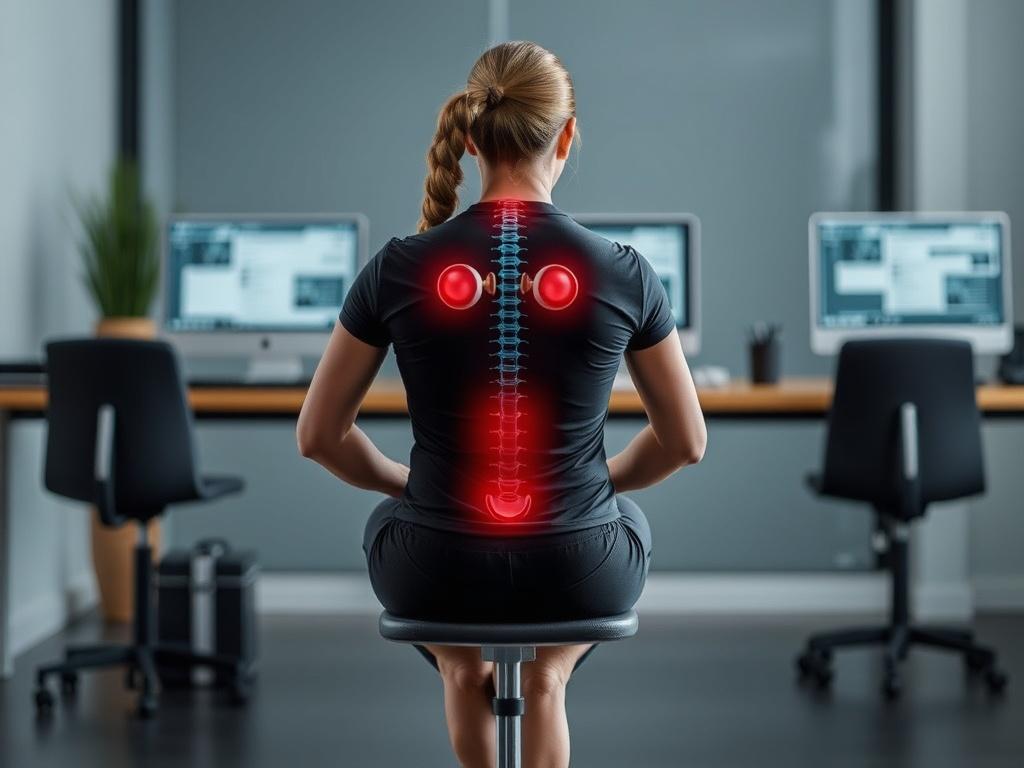
Long periods of sitting change the loading on your spine and surrounding tissues. When you remain in a flexed or slouched position, the discs and posterior ligaments take more compressive stress while hip flexors and chest muscles shorten.
Muscles adapt to the positions we hold most: some become inhibited and weak, others become tight and overactive. That imbalance alters movement patterns and increases the risk of pain with everyday tasks like standing up, carrying a bag, or bending to pick something up.
Principles behind effective desk exercises
Good office-friendly back work has three aims: increase mobility, restore muscle balance, and improve endurance. Mobility means restoring range through controlled motion; balance means strengthening underused muscles; endurance means building the capacity to hold better postures without fatigue.
Short, frequent doses beat one long session done rarely. Micro-breaks of two to five minutes every 30–60 minutes interrupt the harmful effects of prolonged sitting and maintain blood flow to spinal tissues. You don’t need fancy equipment—consistent, well-executed movements will deliver results.
How to approach exercise safely
Start by checking how your back responds to simple movements: bending, arching, sidebending, and rotating. If certain movements cause sharp, new, or worsening pain, stop and consult a clinician before progressing. Mild, familiar discomfort during movement can be normal, but pain that radiates or changes your ability to walk or control the bladder or bowels requires urgent attention.
Move deliberately. Use slow tempo and pay attention to quality: control the motion, maintain comfortable breathing, and avoid jerky accelerations. Over time, increase repetitions, add resistance, or combine movements into a flow as your tolerance improves.
Quick desk-friendly moves to try right now

These exercises are chosen because they can be done in a small space and require no equipment. Perform them gently for 8–15 repetitions each, two to three times a day to start. Always prioritize form over quantity—better to do fewer clean reps than many sloppy ones.
I’ve grouped the moves into mobility, activation, and strength. Mix and match based on how much time you have and what feels tight or weak.
Seated cat–cow (spinal mobility)
Sit near the edge of your chair with feet flat and hands on your knees. Inhale, lift your chest and arch the upper back gently (cow); exhale, round your spine and tuck your chin toward your chest (cat). Move slowly, syncing breath with motion.
This sequence restores thoracic mobility and reduces stiffness through the mid-back, which often compensates when the lower back is guarded. Aim for 8–12 smooth cycles and repeat several times throughout the day.
Hip hinge to chair (safe lumbar control)
Stand a few inches from your chair, feet hip-width apart. Keeping a neutral spine and slightly bent knees, push your hips back as if closing a car trunk, then return to standing. Use the chair as a safety buffer—tap it lightly with your buttocks before standing back up.
The hip hinge recruits the glutes and hamstrings while teaching your pelvis to move from the hips not the lower back. Practice 10–12 reps, focusing on the sensation in the hips rather than rounding the low back.
Thoracic rotation seated (upper back mobility)
Sit tall, cross your arms over your chest, and rotate your torso to the right until you feel a comfortable stretch through the mid-back. Hold briefly and return to center, then rotate left. Keep the pelvis stable and lead the motion with your chest.
This drill improves rotational range often lost from hours of forward-facing work. Perform 10 rotations each side, and breathe into the area you’re trying to mobilize to help relax tight muscles.
Desk pec stretch (chest opener)
Stand beside your desk and place your forearm on the edge at a 90-degree angle. Gently rotate away from the desk until you feel a stretch across the front of the shoulder and chest. Hold for 20–30 seconds and repeat on the other side.
Opening the chest reduces forward shoulder rounding and allows the shoulder blades to sit more naturally—this helps the upper back retract and decreases strain on the cervical and thoracic spine during phone or keyboard work.
Standing lumbar extension (gentle decompression)
Stand with your hands on the small of your back and gently lean backward a few degrees, creating a comfortable extension at the lower spine. Hold briefly and return to neutral. Perform 6–10 repetitions, moving slowly and stopping if you feel sharp pain.
This classic movement eases certain types of low back stiffness caused by prolonged flexion. It’s not appropriate for everyone, so use it as a test: if your symptoms centralize or decrease, it’s likely to be helpful; if they worsen or radiate, discontinue and seek guidance.
Glute squeeze (activation)
Sitting or standing, contract your glute muscles as if pinching a coin between your cheeks. Hold 5–8 seconds then release slowly. Perform 10–15 reps for two or three sets throughout the day.
Weak glutes shift load to the lower back during standing and walking. Brief activation breaks help keep the hips ready for movement and reduce compensatory lumbar activity.
Prone back extension (floor-based strengthening)
Lie face down with hands by your ears or gently under your forehead. Lift your chest slightly off the floor by squeezing the shoulder blades together and engaging the lower back, keeping your neck in line with your spine. Lower with control and repeat 8–12 times.
Prone extensions strengthen the lumbar extensors without heavy loading. Keep the motion small at first—this is about endurance and control, not maximal lifting.
Bird-dog (core stability)
Begin on hands and knees with a neutral spine. Extend your right arm forward and left leg back simultaneously, keeping hips level and belly drawn in. Hold for a breath or two, then switch sides. Aim for 8–10 reps each side.
Bird-dog trains coordinated stability across the shoulders, hips, and trunk, which helps prevent rotational or shear stress on the lower back when you move during the workday.
Wall slides (scapular control)
Stand with your back against a wall, arms in a goalpost or “W” position. Slide your hands up the wall to extend the arms overhead while maintaining contact of the head, middle back, and hips with the wall. Return slowly down and repeat 8–12 times.
This move teaches the shoulder blades to move properly, reducing upper back strain and improving posture sustainability while seated.
Hamstring microstretch (ease posterior chain tightness)
Sit on the edge of your chair and extend one leg forward with heel on the floor and toes up. Keeping a soft bend in the standing knee, hinge from the hips to feel a gentle stretch in the back of the thigh. Hold for 20–30 seconds, then switch legs.
Tight hamstrings can tilt the pelvis posteriorly or limit hip motion, both of which influence low back mechanics. Regular short stretches keep the posterior chain supple without compromising performance.
Sample exercise table: quick reference
Below is a compact table you can use as a cheat sheet. It summarizes each exercise, the target area, and recommended reps. Keep it on your desk or phone for quick reference between meetings.
| Exercise | Primary focus | Suggested reps/hold |
|---|---|---|
| Seated cat–cow | Thoracic mobility | 8–12 cycles |
| Hip hinge to chair | Glute/hamstring activation | 10–12 reps |
| Thoracic rotation | Upper back rotation | 10 each side |
| Desk pec stretch | Chest opening | 20–30 sec hold |
| Standing lumbar extension | Low back mobility | 6–10 reps |
| Glute squeeze | Glute activation | 10–15 reps, 5–8s holds |
| Bird-dog | Core stability | 8–10 per side |
Short routines you can fit into a workday

Here are three compact sequences depending on how much time you have. Each sequence blends mobility and activation so you leave your desk feeling more upright and less stiff. Use them as mini-retreats: set a timer, step away for the routine, and return refreshed.
If you’re managing low-level pain or stiffness, start with the 5-minute sequence and do it more often. As tolerance builds, add the 15- and 30-minute options on heavier days.
Five-minute reset
Perform this mini routine every 60 minutes when possible. Begin with seated cat–cow for 60 seconds, then two sets of glute squeezes (10 reps each), followed by thoracic rotations (5 each side). Finish with a 30-second pec stretch on each side.
The short reset rapidly restores mobility and interrupts prolonged static load. It’s also discreet—perfect for an open-plan office or while waiting for a meeting to start.
Fifteen-minute mobility and activation
Start with two minutes of dynamic standing hip hinges (10 reps), then move to three rounds of bird-dog (8 reps per side). Add three sets of wall slides (10 reps) and finish with prone back extensions (8–10 reps). Take controlled breathing breaks between sets.
This session balances movement quality and muscle activation, which helps correct postural drift and prepares your body for the remainder of the day.
Thirty-minute strengthening flow
Begin with a five-minute warm-up of gentle walking or marching in place, then do two sets of the hip hinge to chair (12 reps), two sets of bird-dog (10 per side), and three sets of glute bridges (12–15 reps). Add side planks or modified planks for core endurance—three 20–40 second holds each side.
Thirty minutes allows you to progress intensity and load safely. Schedule this block before or after work, or split it into two shorter sessions during the day for the same cumulative benefit.
Progressions for strength and endurance
Once basic movement quality is solid, you can gradually increase challenge through resistance, longer holds, or reduced rest. Progressions should be small and purposeful to avoid flaring symptoms. Track one or two metrics—more reps, longer holds, or heavier resistance—and increase them slowly over weeks.
Examples: add a light resistance band to wall slides to increase scapular demand; perform single-leg hip bridges to intensify glute work; or extend bird-dog holds to five seconds per rep. Monitor your response and back off if stiffness increases for several hours after training.
Ergonomics that amplify your work with movement
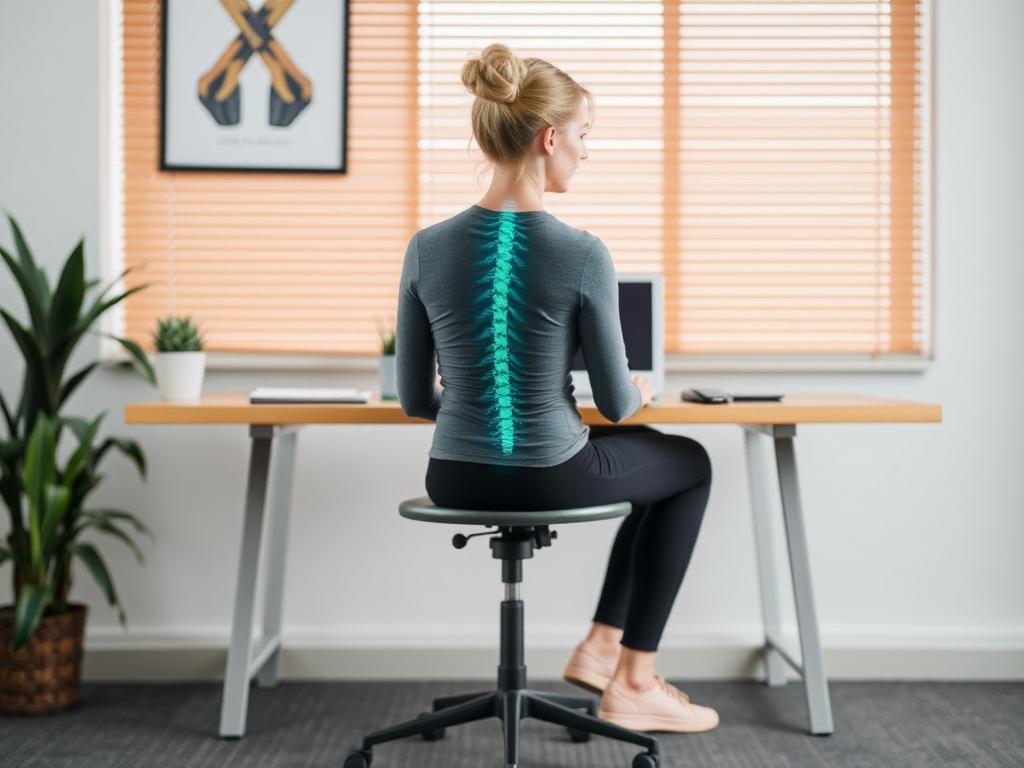
Exercise helps, but your chair, desk height, monitor position, and keyboard setup determine whether gains stick. Aim for hips slightly higher than knees, screen at eye level, and keyboard close enough to keep elbows at roughly 90 degrees. Small adjustments reduce load so your back doesn’t have to compensate constantly.
Remember the rule of variability: alternate between sitting and standing, change task posture, and walk during phone calls. Movement diversity—the simple act of shifting positions—offers big dividends for spinal health.
Breathing, core engagement, and spinal support
Breath and core control are often overlooked in office routines. Breathing diaphragmatically stabilizes the trunk and reduces unwanted tension in the neck and shoulders. Practice taking slow inhalations into the belly and exhaling fully during movement drills to enhance control.
Engage your deep core—imagine a gentle corset around the lower abdomen—during standing tasks and when lifting. This low-level tension supports the spine without creating rigid bracing that drives other muscles to overwork.
Common mistakes to avoid
One frequent error is relying solely on stretching tight areas without strengthening the opposing muscles. Stretching chest muscles helps, but if the mid-back and scapular retractors remain weak, posture will revert quickly. Balance mobility work with targeted activation and strength.
Another misstep is doing too much too soon. Intense sessions followed by prolonged rest lead to setbacks. Build consistency: short, daily work usually yields better long-term change than sporadic high-intensity bouts.
Modifications and when to seek help
Modify movements based on pain and functional limitations. If kneeling is uncomfortable, perform bird-dog from a tabletop on a folded mat or do standing variants. Use a chair for balance during single-leg exercises, and reduce range of motion until stability improves.
If you experience numbness, weakness in the legs, progressive neurological symptoms, or severe pain that doesn’t respond to conservative measures, seek evaluation from a physiotherapist, physician, or spine specialist. A tailored plan can identify red flags and speed recovery.
Putting these practices into a realistic workday
Start by scheduling movement into your calendar like any meeting. Block two- to five-minute cues every 45–60 minutes and a longer 15–30 minute session once a day. Treat these appointments as non-negotiable work tools that enhance productivity and reduce painful interruptions later.
Use technology to support you: set timers, use apps that prompt micro-breaks, or pick a wearable that vibrates when you’ve been sitting too long. Small, consistent actions compound into meaningful improvements in posture and comfort.
Equipment and small aids that help
You don’t need a home gym, but a few inexpensive items can make exercises easier and more effective. A resistance band allows progressive loading for rows and glute work. A small lumbar roll or cushion supports low-back curvature during longer sitting spells. An adjustable laptop stand and external keyboard transform a laptop into an ergonomic workstation.
Standing mats reduce discomfort when you alternate to standing, and a stability cushion offers low-level core challenges while seated. Invest in one or two items that you’ll actually use and store them where they’re visible—out of sight often means out of mind.
Real-world examples and my own experience
Early in my desk-job years I ignored a nagging ache in the lower back until it interfered with sleep and weekend hikes. I started a simple ritual: seated cat–cows every hour, three daily sets of glute bridges, and a brisk 15-minute walk after lunch. Within a few weeks the pain shrank and my energy improved.
I’ve coached colleagues who overcame chronic stiffness by pairing movement with small ergonomic changes: raising monitors, adding a lumbar roll, and setting reminders to stand. One team member replaced two afternoon coffees with a 10-minute mobility circuit and reported fewer headaches and less neck tightness after three months.
Sample four-week progression plan
Below is a realistic ramp you can follow. The aim is consistency: days with lighter work are still wins. Stay aware of how your body responds and adjust volume if symptoms increase.
- Week 1: Micro-breaks every 60 minutes with a 5-minute reset three times a day. Focus on mobility only.
- Week 2: Add activation exercises (glute squeezes, bird-dogs) two sets daily and one 15-minute routine midweek.
- Week 3: Introduce strengthening (prone extensions, glute bridges) and increase hold times for core work. Aim for three 15–30 minute sessions this week.
- Week 4: Assess tolerance and increase intensity slightly—single-leg bridges, band-resisted rows, or longer holds. Maintain at least three micro-breaks daily.
This gradual build helps the nervous system and tissues adapt without flaring symptoms, and it cements the habit of moving regularly while working.
Measuring progress and staying motivated
Keep a simple log: note daily whether you completed micro-breaks, how pain felt on waking and after work, and any functional wins—like easier stair climbing or longer walks. Small measurable changes are encouraging and help you refine what works.
Pair movement with a professional goal—think of it as optimizing your instrument for work performance. Improved mobility and endurance often translate to better concentration and fewer breaks caused by discomfort.
When movement alone isn’t enough
Sometimes exercises are part of a broader solution. Sleep quality, hydration, stress, and systemic inflammation influence back health. Addressing these factors—improving sleep, managing stress, and staying hydrated—can amplify the benefits of your physical routine.
If pain persists despite consistent self-care, a targeted evaluation from a physical therapist can reveal movement patterns or diagnoses that need a more individualized program. Don’t let stubborn pain dissuade you from seeking the help that could speed recovery.
Making small, purposeful movement choices during the day is one of the most effective ways to protect your back from the demands of desk work. Start with brief exercises, be patient with progress, and gradually build strength and mobility so your body serves your work instead of resisting it.
Remember: consistency matters more than intensity. A few well-chosen exercises done daily will take you much farther than occasional heroic sessions. Try a routine this week and notice how your back, your mood, and your productivity respond.
For those specifically searching for Упражнения для спины при сидячей работе, the movements and plans above provide practical, evidence-aligned options you can implement immediately without special equipment. Keep them simple, do them often, and let your body tell you what to increase or modify.