
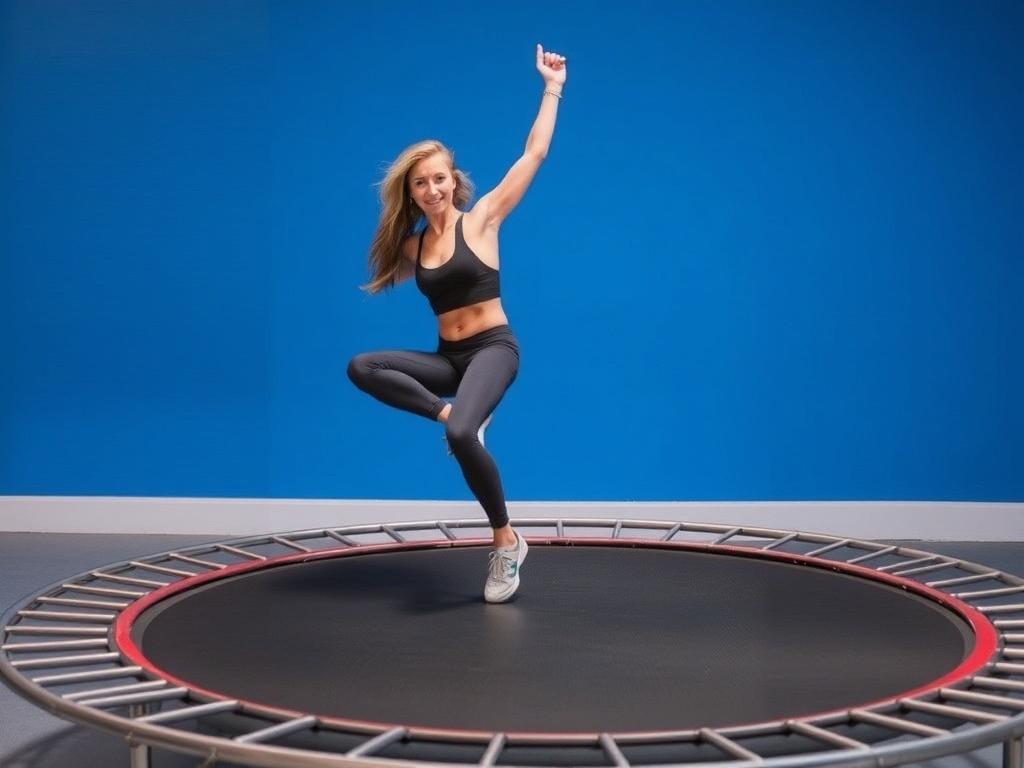
Trampoline workouts offer an unexpected path to fat loss that feels more like play than punishment. Also known in Russian as Тренировки на батуте для похудения, this approach combines cardiovascular demand, full-body engagement, and low-impact movement in a way that suits many fitness levels.
In the sections that follow I’ll explain why bouncing burns fat, how to structure sessions, what equipment you actually need, and practical plans you can start this week. Expect clear technique cues, sample workouts, and real-life examples drawn from my own practice training clients and experimenting with rebounders over several years.
Why bouncing burns fat
On the surface, jumping seems simple: you push and the mat pushes you back. Under the skin, a trampoline forces your body to recruit muscles, stabilize the core, and accelerate and decelerate the mass of your limbs repeatedly, which increases energy demand more than steady walking.
The repeated eccentric and concentric muscle actions create micro-challenges for your neuromuscular system. Those micro-challenges raise metabolic cost, which — paired with consistent sessions and sensible nutrition — contributes to fat loss over time.
Calorie burn and intensity
How many calories you burn on a trampoline depends on your weight, workout intensity, and session length. Light bouncing feels effortless but still burns more than sitting; vigorous intervals raise heart rate into aerobic and anaerobic zones, increasing afterburn.
Below is an approximate guide to calories burned per 30 minutes on a rebounder. These figures are estimates and vary by individual.
| Intensity | Approx. calories (130 lb / 59 kg) | Approx. calories (160 lb / 73 kg) | Approx. calories (200 lb / 91 kg) |
|---|---|---|---|
| Gentle bounce (recovery) | 120 | 140 | 170 |
| Moderate continuous | 210 | 250 | 300 |
| Vigorous intervals / HIIT | 300+ | 360+ | 420+ |
Those numbers show that a 30-minute HIIT-style rebound session can rival or exceed many common cardio forms for calorie expenditure. Even moderate sessions add up when done consistently.
Low impact, high benefit
One of the biggest advantages of trampoline training is the reduced joint stress. The mat absorbs a portion of landing forces, lowering impact compared to running on pavement. That makes rebounders attractive for people with knee or hip concerns who still want dynamic, aerobic work.
Reduced impact doesn’t mean low effectiveness. The instability of the surface demands more from stabilizing muscles, which improves coordination and balance while you work toward fat loss goals.
Lymphatic and metabolic effects
Bouncing stimulates lymphatic flow because the gentle up-and-down motion moves lymph fluid without the need for a pump like the heart. Improved lymphatic circulation supports recovery and may reduce bloating and stiffness, making it a useful complement to other recovery practices.
Additionally, the metabolic response to intermittent, high-intensity efforts on a rebounder includes elevated post-exercise oxygen consumption. That “afterburn” increases total daily energy expenditure beyond the minutes you spend on the mat.
Types of trampoline workouts
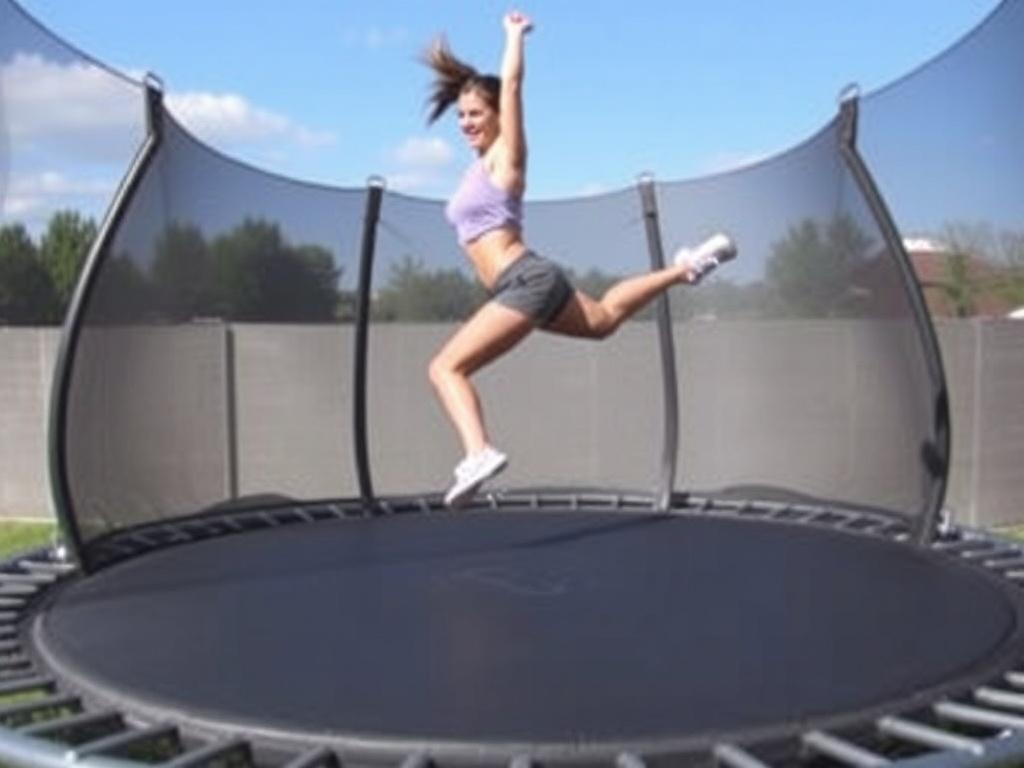
Not all trampoline sessions are the same. You can design workouts for steady-state cardio, interval training, strength and plyometrics, dance and coordination, or active recovery. Each style produces different adaptations and enjoyable variety keeps you consistent.
Below are the primary formats I use with clients and in my own routines, with quick descriptions to help you choose.
- Recovery bounce: Low intensity, focus on breathing and joint mobility.
- Steady-state cardio: Sustained, moderate effort for endurance and fat oxidation.
- HIIT (High-intensity interval training): Short bursts of max effort with recovery, excellent for calorie burn.
- Strength circuits: Combine trampolining with bodyweight or resistance moves for muscle retention.
- Plyometric work: Focused jumps for power, useful for athletic development and high calorie cost.
- Dance/flow sessions: Choreography-based to keep heart rate up while improving coordination.
Rebounding basics
Begin with posture: chest lifted, knees soft, hips engaged and a neutral spine. Arms should move naturally to help drive momentum; you don’t need to tense shoulders or clutch the handle (if your rebounder has one).
Start with three sets of five minutes of light bouncing with one minute of rest between. That fragmenting reduces perceived difficulty while teaching balance and timing before you progress to more complex drills.
HIIT on a trampoline
HIIT on a rebounder uses short explosive efforts like tuck jumps, star jumps, or sprint bounces followed by active recovery. A common structure is 20 seconds of hard work and 40 seconds of easy bounce, repeated for 10–20 rounds.
Because the surface allows quick recovery of the joints, you can push intensity safely while still minimizing repetitive impact. This pattern produces steep calorie burn and improves anaerobic capacity.
Strength-focused routines
Combining resistance moves with bouncing yields a potent metabolic cocktail. Try circuits that alternate a minute of moderate bouncing with 30–45 seconds of bodyweight work: push-ups, single-leg Romanian deadlifts, or plank variations.
Using the rebounder for stability work — for example, standing on one leg while performing slow knee bends — forces muscles to engage differently than stable ground, which increases functional strength and calorie use.
Cardio dance and flow sessions
If you enjoy music, choreograph short sequences that keep you moving and smiling. Dance sessions are less about maximum output and more about sustained moderate intensity, which burns calories and improves coordination.
I’ve seen clients adhere longer to a weekly plan when dance sessions are included. The mental benefit of fun workouts often translates into better long-term results than pure intensity alone.
Practical training plans
Structure matters. A plan gives you a progression to prevent plateaus and a framework that makes consistent effort less mentally taxing. Below are three sample plans for different levels.
Adapt times to your schedule, but keep progression: increase session duration or intensity gradually, and include at least one recovery day each week.
Beginner 4-week plan
Weeks 1–2 focus on building comfort and balance: 3 sessions per week, 20–25 minutes each. Start with 10 minutes of light bouncing, add 5 minutes of moderate continuous work, then cool down with 5 minutes of gentle mobility bounces.
Weeks 3–4 increase frequency to 4 sessions per week, and introduce 2 sessions with short intervals: 15 minutes steady plus 5–8 rounds of 20s hard/40s easy. Listen to your body and prioritize technique over speed.
Intermediate 6-week plan
For someone who already exercises, alternate HIIT and steady sessions: 4–5 workouts weekly, with 2 shorter HIIT days (20–30 minutes) and 2 longer moderate days (30–40 minutes). Include one strength circuit day incorporating resistance bands or dumbbells alongside bouncing.
Progress by increasing HIIT rounds, adding weighted moves to circuits, or lengthening continuous sessions. Track efforts with perceived exertion or heart-rate zones to avoid overreach.
Advanced sessions and variations
Advanced trainees can use complex periodization: 3 weeks higher intensity with two recovery weeks that emphasize mobility and technical drills. Incorporate plyometrics, unilateral strength work, and long endurance bounces exceeding 45 minutes for metabolic variety.
Advanced athletes should also test pacing frequently — measure performance on a fixed test (for example, max jump count in 60 seconds) to ensure adaptations are still happening.
Sample weekly schedule
The table below offers a compact sample week for an intermediate exerciser who wants balanced progress toward fat loss and fitness gains.
| Day | Session | Duration |
|---|---|---|
| Monday | HIIT: 8 x (30s hard / 30s easy) | 25 min |
| Tuesday | Active recovery: light bounce + mobility | 20–30 min |
| Wednesday | Strength circuit: bounce intervals + resistance band work | 40 min |
| Thursday | Steady-state cardio: continuous moderate bounce | 35–45 min |
| Friday | Dance/coordination flow | 30 min |
| Saturday | Plyometric short session: jumps and sprints | 20–30 min |
| Sunday | Rest or gentle stretching | — |
Technique and form
Good form on a rebounder is less rigid than on a barbell. Still, some consistent cues will save energy and protect your joints: land softly on the balls of your feet, maintain a slight knee bend, and keep your pelvis neutral. Avoid clenching your neck and shoulders.
Breathing rhythm matters. Use nose inhalations and mouth exhalations on harder efforts, and sync breath to movement during intervals. That simple attention prevents early fatigue and improves oxygen delivery to working muscles.
Common technique drills
Practice single-leg bounces for 30–60 seconds to develop balance. Work on controlled tuck jumps where you focus on a compact center of mass rather than maximum height. These drills translate to more efficient movement and safer intensity increases.
Also include short mobility flows off the rebounder: hip circles, ankle mobility drills, and thoracic rotations. Mobility outside of jumping sessions keeps range of motion available and reduces compensatory movement patterns.
Equipment, setup and safety
Choosing the right rebounder makes workouts more effective and enjoyable. Mini rebounders for indoor use are common and affordable for most people, while larger outdoor trampolines are less suitable for structured workouts because they are designed for freestyle jumping and can be harder to control.
Always place the rebounder on a flat, non-slip surface and keep a meter or more of clear space around it. If you live in an apartment, consider a model with thicker padding and a stability handle to reduce noise and improve balance during early sessions.
- Choose a rebounder with a sturdy frame and high-quality mat.
- Consider a handlebar if you’re new to balance or have stability concerns.
- Wear supportive cross-trainers or go barefoot if your model and flooring permit it.
- Keep a water bottle nearby and schedule short rest breaks.
Safety practices include warming up five to ten minutes before a harder session, avoiding abrupt maximal jumps if you have low back or knee pain, and consulting a medical provider when you have a history of cardiovascular issues. Proper progress and consistency trump dramatic jumps that risk injury.
Nutritional support and recovery
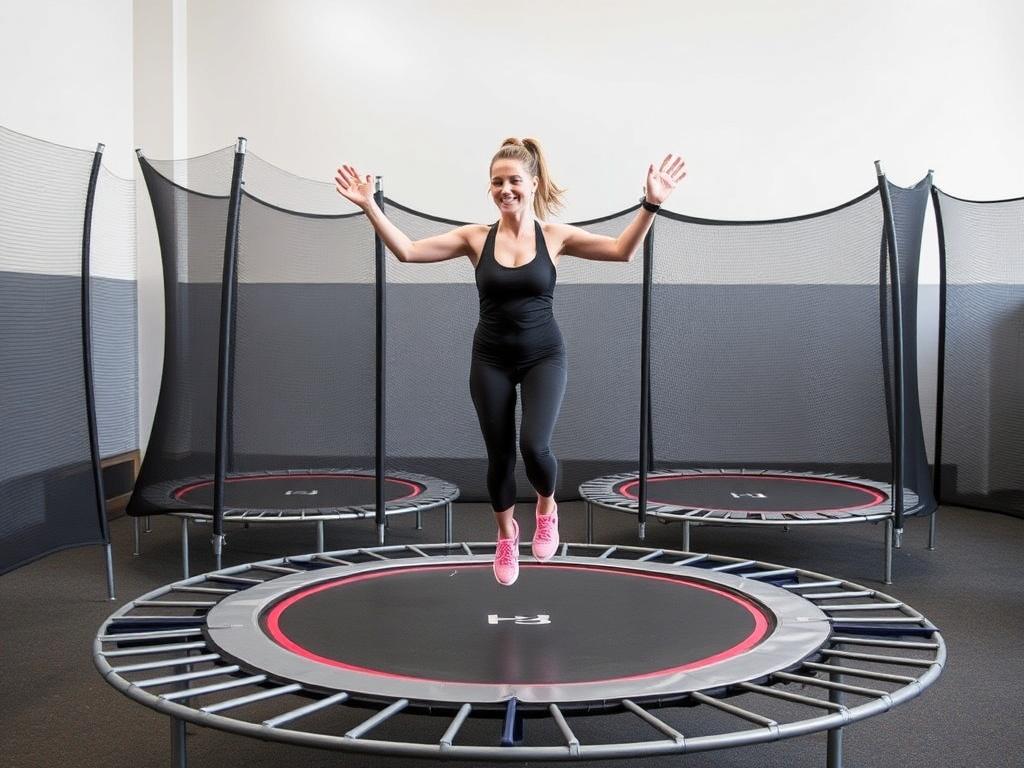
Exercise alone rarely produces sustainable fat loss without attention to nutrition. Aim for a modest calorie deficit, prioritize protein for muscle maintenance, and distribute carbohydrates around your busiest or most intense sessions to fuel performance.
Hydration matters with rebounder sessions because repeated motion can accelerate sweat rates, and staying hydrated supports lymphatic flow. Also plan recovery days with good sleep, foam rolling, and active mobility to help tissue repair and hormonal balance.
Simple nutritional rules to follow
Start with a rough calorie target that supports weight loss without extreme restriction — typically a 300–500 kcal daily deficit from maintenance for most people. Ensure 0.7–1.0 grams of protein per pound of bodyweight to preserve lean mass during weight loss.
Include whole food carbohydrates from vegetables, fruits, and whole grains around intense sessions, and choose healthy fats for satiety. Consistency in eating patterns supports adherence just as consistency in training does.
Tracking progress beyond the scale
Weight alone can mislead because muscle gain and fluid shifts obscure fat loss. Track multiple metrics to get a fuller picture: body measurements, how your clothes fit, performance markers, and energy levels. Photos taken every 2–4 weeks are particularly honest and motivating.
Log workout performance: number of HIIT rounds completed at target intensity, duration of steady bounces, or complexity of choreographed sequences. Improvements in these metrics indicate rising fitness even when the scale stalls.
Common mistakes and how to avoid them
One frequent mistake is overemphasizing session duration while ignoring intensity and progression. Two 20-minute progressive sessions per week with focused intensity beats four unfocused sessions for many busy people.
Another error is poor recovery management. If soreness and fatigue persist, reduce frequency, and emphasize sleep and nutrition. Trampolining is demanding in its own way, and adequate rest is part of an effective fat-loss program.
Real-life stories and my experience
When I first started using a rebounder years ago, I expected novelty to wear off quickly. Instead, it became my most consistent form of cardio because it was quick, portable, and genuinely fun. I noticed improved hip stability and less joint ache compared with my previous running routine.
I also coached a client in her 40s who struggled with knee pain from long-distance running. She switched to three trampoline sessions per week combined with dietary adjustments. After eight weeks she reported a five-pound loss, decreased knee discomfort, and regained confidence in exercise — benefits that kept her coming back.
Another client used rebounder dance sessions to break through a plateau. By adding two weekly 30-minute dance sessions in place of steady-state treadmill work, she rediscovered enjoyment in movement and lost an additional four pounds over six weeks while improving coordination.
How to fit trampoline workouts into a busy life
One of the strengths of rebounder training is its time efficiency. A 20–30 minute interval session can replace a longer, less intense workout and deliver comparable or greater metabolic impact. Keep a rebounder in a visible spot at home to reduce friction to starting sessions.
Schedule workouts like meetings. Block consistent times — early morning, lunch, or after work — and protect them. Short sessions stacked throughout the day (two 10–15 minute bursts) can be as effective as a single 30-minute session for calorie burn and metabolism stimulation.
Progressing sensibly
Progression should come from either more intensity, more volume, or greater complexity, but not all at once. Increase one variable at a time: add rounds to your HIIT, lengthen continuous bounces by five minutes, or learn a new jump pattern each week.
Keep a simple log to record perceived exertion and session details. If you see diminishing returns or fatigue, step back for a recovery week where volume drops by 30–50% while you maintain light movement and mobility.
Who should approach trampoline workouts with caution
People with certain medical conditions — uncontrolled hypertension, recent heart events, severe balance disorders, or acute joint injuries — should consult a healthcare provider before jumping into a rebounding program. A rebounder can be adapted with a handle and conservative progressions, but medical clearance is prudent.
Pregnant individuals should follow guidance from their care provider; many find gentle rebound sessions beneficial early on, but intensity and motion require tailored adjustments and supervision when necessary.
Equipment checklist and shopping tips
When choosing a rebounder, prioritize stability, frame strength, and mat quality. Handles are helpful for beginners and those rehabbing balance. Check weight limits and user reviews that mention noise, bounce quality, and durability.
Accessories that add value include a small exercise mat for off-trampoline mobility, resistance bands for circuit work, and a heart rate monitor if you want precise intensity control. If space allows, a slightly larger model improves movement range for dance or plyometric variations.
Sample exercise bank
Here is a concise list of exercises to rotate through your sessions. Each can be modified in intensity and is usable in circuits, HIIT, or steady-state flow. Use these to build variety and avoid boredom.
- Basic bounce — gentle vertical movement, feet hip-width.
- High knees — drive knees toward chest for tempo work.
- Tuck jumps — compact jumps focusing on core engagement.
- Star jumps — full-body explosive movement for power.
- Single-leg balance bounces — balance and stability work.
- Side-to-side hops — lateral movement for coordination.
- Butt kicks — posterior chain activation and cardio mix.
- Squat pulses (on rebounder) — controlled lower-body strength.
- Jumping jacks — classic cardio with rhythm and coordination.
- Plank variations off the rebounder — core stabilization between sets.
Behavioral tips to make it stick
Consistency beats intensity when starting. Aim for small, repeatable habits: three 20-minute sessions a week for the first month. Make your intention visible — a calendar checkmark after each workout builds momentum faster than waiting for motivation.
Pair trampoline time with something enjoyable — a podcast, an album you love, or a favorite instructor-led video. Enjoyment is a silent lever in habit formation that often determines long-term success more than the precise training plan.
When results stall
Plateaus are normal. If weight loss slows, examine sleep, stress, and caloric intake before adding more cardio. Sometimes sleep debt or a small untracked increase in calories explains the stall. Other times a short training phase emphasizing strength can reset metabolism and help body composition change.
Consider rotating training emphases every 6–8 weeks: a high-intensity phase followed by a strength-building phase, then a mixed-activity phase. This variety keeps hormonal and neuromuscular systems responsive and reduces mental burnout.
Resources and further learning
Look for reputable instructors who specialize in rebounder protocols if you prefer guided sessions. Many fitness platforms now include trampoline-based classes that combine structure with music and progression. Local trainers can also integrate rebounder work into a comprehensive program tailored to your goals.
For those who love reading, search for peer-reviewed studies on rebounding and lymphatic health, attention to joint impact, and interval training effects. Armed with evidence and sensible programming, you’ll build an efficient path toward your goals.
Next steps you can take today
Set a small, specific goal: for example, “I will complete three 20-minute rebound sessions this week.” Place the rebounder in a visible spot, pick three playlists, and schedule the sessions in your calendar right now.
Review the beginner plan above and commit to one measurable action: order a rebounder, clear a 2-foot zone, or book one introductory class. Small, specific steps accumulate into meaningful change.
Parting thoughts
Trampoline training is an adaptable, time-efficient, and enjoyable way to pursue fat loss while protecting joints and improving coordination. Whether you choose gentle bounces for recovery or hard-packed intervals for intense calorie burn, the rebounder offers a surprisingly deep toolkit for long-term success.
I’ve used it to keep exercise interesting through travel, to rehabilitate clients from running-related knee pain, and to help people reclaim confidence in movement. If you’re curious, try a short, structured program for six to eight weeks and measure progress with photos, performance markers, and how your clothes fit rather than the scale alone.
Make your sessions consistent, gradually more challenging, and supported by sensible nutrition and recovery. With that blend, trampoline workouts become more than a novelty — they become a sustainable part of a healthier life.