

Тренировки в зрелом возрасте: особенности is a concise way to frame a big truth — training remains essential as we age, but it must be tailored. For many people, the shift from “push harder” to “train smarter” happens gradually and often reluctantly. This article walks through the physiological changes, practical programming, safety steps, and daily habits that make movement sustainable and rewarding for decades.
The aging body: what changes and why they matter
Aging is not a sudden drop-off but a steady shift in how the body responds to stress, recovers, and uses energy. Muscle mass declines slowly (sarcopenia), bone density decreases, joint cartilage becomes thinner, and aerobic capacity often falls if not maintained. Hormonal shifts—lower testosterone, estrogen, and growth hormone—alter fat distribution and recovery ability, so both training and nutrition need adjustments.
Neuromuscular changes are subtle but significant: reaction times lengthen, coordination can become less precise, and the brain’s control of fine motor tasks may decline. These changes increase fall risk and can make complex multi-joint movements feel unstable at first. Recognizing these shifts allows us to prioritize balance, proprioception, and movement quality rather than chasing maximal loads or extreme cardio volumes.
Vascular health and metabolism also change with age. Blood vessels stiffen and insulin sensitivity can diminish, which affects energy levels and cardiovascular risk. The good news is that regular, appropriately programmed exercise improves endothelial function, glucose handling, and lipid profiles, making targeted training one of the most powerful preventive tools available.
Why staying active pays bigger dividends after midlife
Exercise in later life reduces risk of chronic disease, preserves independence, and supports mental health. Research consistently links regular strength and aerobic training with lower rates of type 2 diabetes, heart disease, dementia, and depression. Beyond disease metrics, the practical return is enormous: maintaining the strength to carry groceries, climb stairs without fatigue, and avoid frailty.
Functional benefits are immediate and tangible. Building or preserving lower-body strength protects against falls, while upper-body strength supports self-care tasks. Flexibility and mobility work preserve joint range, helping with posture and reducing pain. Those improvements translate directly into daily freedom and quality of life.
Mental health and social aspects also deserve emphasis. Group classes, walking clubs, or regular sessions with a trainer create social contact and routine, which buffer against isolation and cognitive decline. The hormone-like benefits of activity—better sleep, mood regulation, and stress resilience—amplify over time when exercise becomes a consistent habit.
Assessment and medical considerations before you start

Begin with a realistic appraisal of health status: current activity level, chronic conditions, recent injuries, medications, and any functional limitations. A baseline visit to your primary care provider is prudent if you have cardiac risk factors, uncontrolled hypertension, or complex chronic disease. Often a simple review and a few basic tests suffice to clear most people for activity with sensible precautions.
Functional assessments provide practical direction. Timed up-and-go, single-leg balance, sit-to-stand counts, and a simple walking test reveal strengths and weaknesses that guide exercise selection. These measures are more informative than age alone; two people of the same age can present radically different functional profiles, and programs should match the individual, not the birthday.
Medication interactions and medical devices matter. Beta-blockers, for example, blunt heart rate response, so perceived exertion scales become more reliable than heart rate targets for cardio prescription. Blood thinners, diabetes medications, and certain antihypertensives all require nuanced planning. Communicate openly with healthcare providers and track how you feel during and after sessions.
Key principles for designing a mature-age training program
Prioritize movement quality over quantity. In practice that means mastering technique with lighter loads and controlled tempo before progressing to heavier weights or higher intensities. Clean movement patterns reduce injury risk and allow safer progression, so invest time in movement prep and form coaching early on.
Balance the training equation: strength, aerobic capacity, mobility, balance, and recovery all deserve attention. Avoid fetishizing one mode of exercise; a mixed program that addresses multiple domains yields the biggest functional gains. For older trainees, a modest amount of diverse stimulus each week outperforms an all-or-nothing approach focused solely on one type of work.
Progress is slower but still meaningful. Expect less dramatic week-to-week jumps than in youth, but steady, small increments compound. Use microprogressions—adding a few pounds, an extra rep, or a minute of cardio—for long-term gains. Patience combined with consistency beats intermittent extremes.
Progressive overload with caution
Progressive overload remains central: muscles need increased demand over time to adapt. The key adjustment is slower progression and more recovery. Incorporate deload weeks, monitor soreness and sleep quality, and use objective markers like improvements in daily activities rather than chasing gym numbers alone.
Auto-regulation helps: if a planned heavy session feels unusually hard, scale it down to preserve form and reduce injury risk. Conversely, when you feel strong and rested, take the opportunity to push a bit further. This flexible approach keeps stimulus consistent without sacrificing safety.
Function over aesthetics: training for life, not just looks
Shift goals toward function: climbing stairs, carrying laundry, maintaining play with grandchildren, and reducing fall risk. Functional training prioritizes multi-joint strength, balance under load, and hip/ankle mobility—attributes that translate directly into everyday independence. This pragmatic focus keeps motivation high and reduces the frustration that comes from comparing oneself to younger gym-goers.
Functional improvements are measurable and meaningful. For example, adding strength to the posterior chain often results in easier rising from a chair and better gait mechanics. Those wins compound into fewer assistive devices, lower caregiving needs, and a stronger sense of autonomy.
Strength training: the cornerstone of mature-age fitness
Strength training combats sarcopenia and preserves bone density, which reduces fracture risk. Target the major muscle groups—legs, hips, back, chest, shoulders, and core—two to three times per week with adequate intensity to stimulate adaptation. Compound movements like squats, deadlifts, rows, and presses deserve priority because they produce functional gains quickly.
Intensity should be individualized. For many, working in the 6–12 rep range with controlled tempo strikes a good balance between strength and hypertrophy. Beginners or those returning after a long break may start with higher reps and lighter loads to ingrain movement patterns. When strength increases, slowly reduce reps and increase load to maintain stimulus.
Include single-leg and unilateral work to address asymmetries and improve balance. Exercises such as split squats, step-ups, and single-leg Romanian deadlifts target the coordination and strength needed for safe locomotion. These movements often expose and correct imbalances that lead to pain or compensations in everyday life.
Cardiovascular training: keep the heart and lungs resilient
Cardio remains essential for metabolic health and endurance. For mature trainees, blend steady-state sessions with shorter intervals to balance joint stress and cardiovascular stimulus. Walking, cycling, swimming, and elliptical machines are joint-friendly choices; choose modalities that feel sustainable and enjoyable.
Intensity prescription can rely on perceived exertion, talk test, or power/speed rather than strict heart rate zones if medication interferes with heart rate response. Aim for at least 150 minutes of moderate-intensity or 75 minutes of vigorous-intensity activity weekly, adjusting based on individual tolerance and recovery. Breaking that into shorter sessions across the week often improves adherence and reduces injury risk.
Intervals need not be explosive. Short, brisk intervals—30 seconds to 2 minutes at a higher effort followed by adequate recovery—build aerobic power without excessive joint impact. The goal is consistent cardiovascular stress that can be increased gradually as fitness improves.
Flexibility and mobility: the unsung pillars
Mobility work preserves joint range and supports better movement patterns under load. Regular dynamic warm-ups before sessions and dedicated mobility sessions two to three times per week keep stiffness at bay. Focus on thoracic rotation, hip flexor length, ankle dorsiflexion, and shoulder mobility—areas that commonly limit older adults.
Static stretching after workouts can complement mobility drills, especially for tight hamstrings, calves, and chest muscles. Incorporating foam rolling or self-massage techniques helps reduce tissue tension and improve comfort. Mobility is not optional; it’s the lubrication that lets strength and cardio translate into better function.
Yoga and Pilates-like classes often combine flexibility, core stability, and balance in a single session, offering a low-impact way to enhance mobility while improving body awareness. These modalities also have restorative and mental benefits, making them valuable adjuncts to a balanced program.
Balance and fall prevention: small investments, big returns
Balance diminishes with age, but targeted practice reverses much of that decline. Integrate balance work into daily routines: standing on one leg while brushing teeth, controlled heel-to-toe walking, or single-leg deadlifts under supervision. These exercises strengthen stabilizers and retrain neural control that supports safe movement.
Progress balance challenges gradually—add soft surfaces, close eyes, or incorporate dual-tasking like carrying an object while stepping. Training under slight instability is beneficial, but avoid risky scenarios where a fall is likely. Even modest improvements in balance significantly reduce fall incidence and the downstream consequences of injury.
Real-life balance training includes practicing transitions—standing from chairs without using hands, stepping up and down curbs, and turning quickly but safely. The more training mirrors everyday tasks, the faster those improvements translate into independence.
Warm-up, cooldown, and session structure
A short, purposeful warm-up reduces injury risk and improves performance. Start with light cardio to raise core temperature, then move through mobility-specific movements and activation drills targeting muscles you’ll use in the session. Five to ten minutes of quality warm-up is usually sufficient for most mature trainees.
Cooldowns help transition the body back toward rest and facilitate recovery. Gentle aerobic work, static stretching, and diaphragmatic breathing lower heart rate and promote parasympathetic activation. A deliberate cooldown also provides a moment to assess soreness and plan adjustments for the next session.
Structure each session around a clear priority: whether it’s strength, endurance, mobility, or balance. Keep total session time realistic—30 to 60 minutes is ideal for many people—and remember that frequency over intensity often wins in the long run.
Recovery, sleep, and nutrition: the behind-the-scenes work
Recovery becomes a performance factor you can’t ignore. Older adults often need more sleep and longer recovery between intense sessions. Prioritize high-quality sleep and use active recovery days—walking, gentle yoga, or light cycling—to promote circulation without adding stress.
Nutrition supports adaptation. Protein intake in particular is critical: aim for roughly 1.2–1.6 g/kg of body weight daily, distributed across meals to maximize muscle protein synthesis. Timing matters less than consistency, but including a protein-rich meal or snack after strength sessions helps recovery.
Hydration and micronutrient attention are also important. Vitamin D and calcium influence bone health, while attention to sodium, potassium, and magnesium supports muscle function. Discuss supplementation with a clinician if deficiencies are suspected or if dietary intake is limited.
Protein needs and practical tips
Older muscles respond less robustly to protein alone, so higher per-meal doses are beneficial. Target 25–40 grams of high-quality protein at each main meal, and consider a small protein-rich snack after training. Lean meats, dairy, legumes, and high-quality plant proteins can all serve this purpose.
Real-food strategies work: a Greek yogurt parfait, an omelet with vegetables, or a tuna salad sandwich are convenient ways to hit targets. If appetite is low, liquid options like smoothies with milk or plant-based milk, protein powder, fruit, and nut butter provide concentrated nutrition with less effort.
Training around chronic conditions: practical adjustments

Chronic conditions require individualized plans but rarely mean exercise is off-limits. For osteoarthritis, emphasize strength around affected joints and low-impact cardio like cycling or pool work. For hypertension, steady-state aerobic activity and moderate resistance training improve vascular health—monitor blood pressure and avoid breath-holding during heavy lifts.
Diabetes management benefits from consistent exercise that improves insulin sensitivity. Coordinate workouts with meal timing and medication schedules to avoid hypoglycemia. Short, frequent sessions often work well, and blood glucose monitoring around new training routines is a prudent step.
Cardiac conditions call for collaboration with medical teams. Many people with coronary disease or heart failure can safely exercise under guidance, starting with supervised cardiac rehab or graded walking programs. Progression tends to be conservative but still yields meaningful functional and quality-of-life improvements.
Medications and exercise interactions to watch
Several medications alter exercise response. Beta-blockers reduce maximal heart rate, so use perceived exertion or power output for intensity control. Statins can increase muscle soreness in some individuals; adjust training intensity and monitor symptoms if unexplained myalgia appears.
Anticoagulants raise bleeding risk, making contact sports or high-risk balance work less desirable without precautions. Diuretics and some antihypertensives can affect hydration and electrolyte balance; stay attentive to cramping or dizziness. Always inform trainers and activity partners about relevant medications.
Sample weekly program: balanced and adaptable
The following table shows a flexible example suitable for many healthy mature trainees. Adjust volume, intensity, and exercise selection based on individual ability, goals, and medical considerations. This template assumes prior clearance for exercise and basic movement competency.
| Day | Main focus | Example session |
|---|---|---|
| Monday | Strength (lower body emphasis) | Warm-up + squats or box squats 3×8, Romanian deadlifts 3×8, step-ups 3×10, core work, cooldown |
| Tuesday | Cardio + mobility | 30–40 min brisk walk or cycling + 15 min mobility flow (hips, thoracic, shoulders) |
| Wednesday | Strength (upper body emphasis) | Warm-up + rows 3×10, push-ups or incline press 3×8–10, single-arm dumbbell work, balance drills, cooldown |
| Thursday | Active recovery / balance | Gentle yoga, balance progressions, light walk 20–30 min |
| Friday | Mixed moderate-intensity day | Interval walk/cycle 6 x (1 min harder : 2 min easy) + mobility and core |
| Saturday | Functional and social activity | Group class, long walk with friends, or recreational sport at an easy pace |
| Sunday | Rest | Rest or light stretching and short walk |
This plan balances stimulus with recovery and can be scaled down to three sessions per week by combining elements or extended to more days by reducing session length. Listen to recovery signals and modify accordingly.
Monitoring progress and safety cues
Track functional markers: can you carry heavier grocery bags, climb stairs with less effort, or get up from a chair faster? These practical gains matter more than vanity metrics. Use simple tests monthly and adjust programming when progress plateaus or discomfort appears.
Warning signs that require attention include persistent joint pain beyond 72 hours, increasing instability, unusual breathlessness, chest pain, or dizziness. If symptoms like these occur, pause the program and consult a healthcare provider before resuming. Minor setbacks are normal; persistent problems are not and deserve swift evaluation.
Keep a training log for weights, reps, perceived exertion, and sleep quality. Over weeks, patterns emerge that help fine-tune load and recovery. Small, measurable improvements compound into significant functional resilience over time.
Motivation and habit strategies that work
Motivation fluctuates; structure and identity carry you through low-motivation periods. I encourage clients to tether workouts to existing routines (train right after breakfast or before a regular appointment) so the activity becomes a non-negotiable part of the day. Ritualizing a short pre-workout routine simplifies adherence and reduces decision fatigue.
Social accountability often beats lone resolve. Walking partners, group classes, and small coaching groups create external commitments that keep people consistent. In my experience working with older adults, those who pair movement with social connection stay active far longer than those who rely solely on willpower.
Set outcome-based and behavior-based goals. Outcome goals like “lower blood pressure” are meaningful, but behavior goals—three resistance sessions weekly—are actionable and under direct control. Celebrate steady behavior change rather than an arbitrary number on the scale; those everyday choices are what produce lasting results.
At-home and minimal-equipment options
Not everyone wants or needs a gym membership. A few basic tools—adjustable dumbbells, a sturdy chair, resistance bands, and a yoga mat—support a comprehensive program. Bodyweight exercises scaled for difficulty (elevated push-ups, split squats, single-leg stands) are highly effective when performed consistently.
Pool-based training provides low-impact resistance and cardiovascular stimulus for those with joint pain. Walking apps and online classes allow structured progression from home. The critical ingredient is consistency, not exotic equipment.
- Essential items: resistance bands, dumbbells, kettle bell or sandbag, sturdy chair
- Nice-to-have: adjustable bench, suspension trainer, stationary bike
- Low-cost alternative: weighted backpack for loaded carries and step-ups
Common mistakes and how to avoid them
Mistake one: chasing intensity without addressing technique. Faster progression increases injury risk, so prioritize movement mastery. Reduce load and slow tempo to cement form, then build back volume gradually.
Mistake two: neglecting balance and mobility. Many programs emphasize strength and cardio and overlook the smaller, high-leverage interventions that reduce falls and joint pain. Integrate balance and mobility drills as non-negotiable elements of weekly work.
Mistake three: insufficient recovery and nutrition. Older trainees often underestimate the need for sleep, protein, and recovery days. Plan them into the program as intentionally as workouts—rest and nutrition are the invisible training that produce visible results.
Working with professionals: when and how
Hire a trainer or physical therapist when you have pain that limits function, are recovering from surgery, or need guided progression after a long layoff. A skilled professional can identify compensations, correct movement flaws, and prescribe modifications that speed safe progress. Look for credentials, experience with older populations, and a collaborative communication style.
Group classes led by qualified instructors are a cost-effective option for many. Seek small classes where the instructor can offer modifications and give feedback. If possible, schedule an initial private session to ensure movements and loads are appropriate before joining group settings.
Adapting training across decades: 50s, 60s, 70s, and beyond
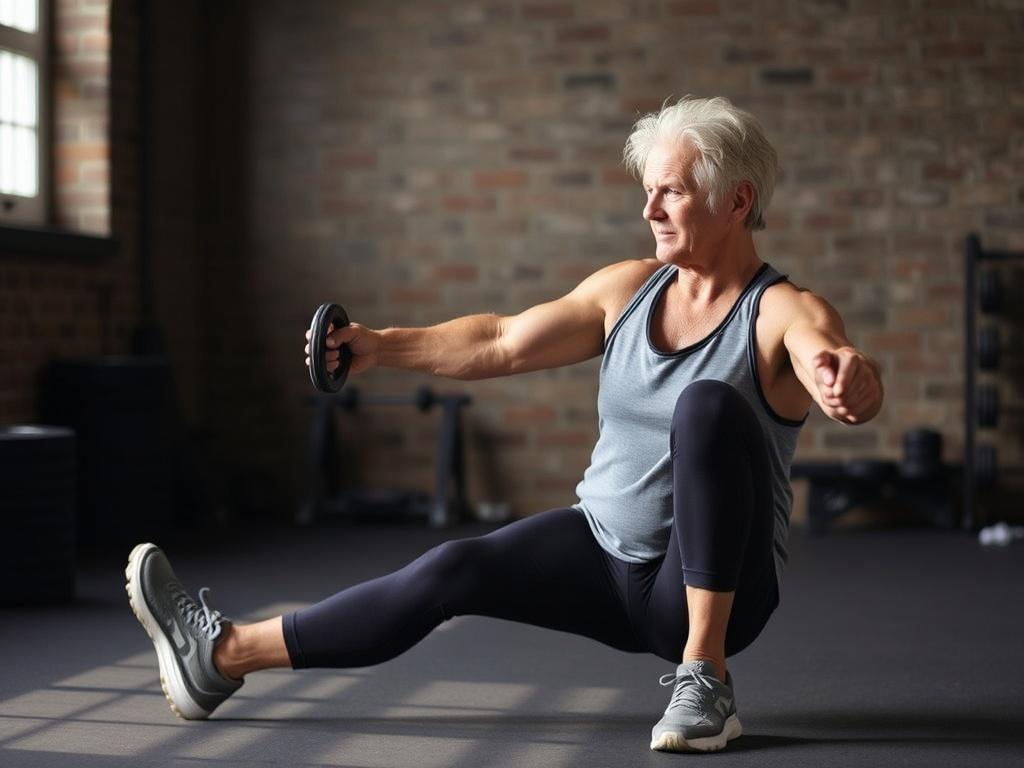
The focus shifts gradually across decades. In your 50s, you can still pursue strength goals aggressively with sensible auto-regulation. In your 60s, the emphasis often becomes preserving bone density, maintaining balance, and safeguarding joints while still building and maintaining strength. As you move into the 70s and beyond, volume and intensity often reduce further, while function, mobility, and fall prevention become primary objectives.
Each stage requires honest assessment and adjustment. For example, someone training heavy compound lifts in their 50s may transition to lower-impact but highly functional work in later decades—think split squats, hip hinges, loaded carries, and water-based cardio. The goal remains the same: retain independence and minimize pain while maximizing quality of life.
Intergenerational examples are inspiring: I’ve seen clients in their late 70s regain the ability to garden all afternoon without back pain by combining targeted posterior-chain work, mobility training, and consistent walking. Age changes the how, but seldom the why: people train to stay active and engaged in life.
Real-life examples: small changes, big impact
One client, a 68-year-old librarian, came to me after several falls and persistent knee pain. We focused on unilateral leg strength, balance progressions, and hip mobility while reducing high-impact cardio. Within three months she reported fewer stumbles, easier stair negotiation, and renewed confidence walking to work—outcomes that mattered far more than any number on a scale.
Another example: a 55-year-old man with prediabetes shifted from long, sporadic runs to consistent mixed training—resistance work three times per week plus brisk walking—and cut his fasting glucose into a healthier range within six months. He felt stronger, slept better, and appreciated how regular, manageable sessions fit into his schedule.
Practical checklist to start safely
Before launching a program, run through this quick checklist: get medical clearance if indicated, perform a functional screen, set realistic goals, pick a balanced weekly plan, and schedule recovery days. Share medication lists with trainers and monitor how you feel during and after sessions. These steps reduce risk and accelerate meaningful progress.
- Medical review if you have chronic disease or new symptoms
- Baseline functional tests (sit-to-stand, single-leg balance)
- Realistic, behavior-oriented goals
- Structured plan with strength, cardio, mobility, balance
- Recovery strategy: sleep, nutrition, active recovery
Final thoughts on long-term consistency
Training through midlife and beyond is less about chasing youth and more about investing in continued capability. The returns compound in ways that ripple through daily life—more energy, fewer limitations, and a stronger sense of control over aging. Small, consistent actions matter more than occasional bursts of enthusiasm.
Begin with modest changes, emphasize safety and quality, and celebrate functional wins. Whether you prefer quiet home sessions, a neighborhood walking group, or a small gym with a knowledgeable coach, the right program is the one you can sustain. Over time, those choices create the resilience that defines healthy aging.
Take the first step today: choose one small, specific action—add one strength session, swap one sedentary hour for a walk, or commit to nightly mobility. The path to stronger aging is built one sensible session at a time, and the best time to start is now.