
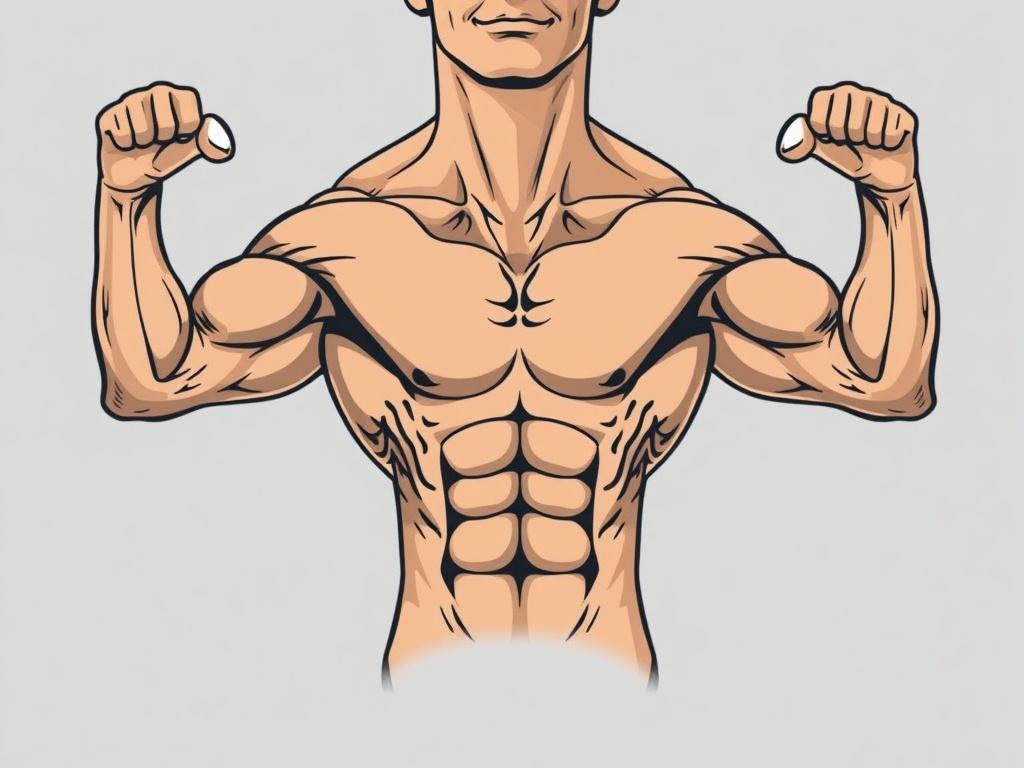
If you’ve ever looked in the mirror and wondered how to develop that rounded upper chest that completes the torso, you’re in the right place. This article covers anatomy, technique, programming, and realistic timelines so you can target that area effectively without wasting effort on vanity moves that don’t work.
Throughout the guide I’ll use the Russian phrase Как накачать верхнюю часть груди once to anchor the topic for clarity, then focus on practical, evidence-based advice you can apply at the gym or at home. Expect clear exercise choices, programming templates, and troubleshooting tips based on years of training and coaching experience.
Anatomy: what exactly is the upper chest?
The chest, or pectoralis major, is a large fan-shaped muscle with two primary heads: the clavicular (upper) portion and the sternal (middle and lower) portion. The clavicular head sits higher on the chest and contributes most to the appearance of a “full” upper chest when developed.
Functionally, the clavicular head assists with shoulder flexion and internal rotation and becomes especially active when the arms move upward in front of the body, such as during incline pressing or low-to-high fly patterns. Understanding this helps pick exercises that put that part of the muscle on stretch and under tension.
Accessory muscles like the anterior deltoids and serratus anterior also participate during many upper-chest movements. Because of this, technique matters: proper shoulder positioning and elbow path help emphasize the clavicular fibers instead of letting the delts dominate.
Principles of upper chest growth
To build muscle in any specific area, you need three things: mechanical tension, metabolic stress, and adequate recovery. For the upper chest, mechanical tension is achieved by lifting with a path and angle that target the clavicular fibers, while metabolic stress comes from moderate to high-rep work and controlled tempo.
Progressive overload remains the single most important long-term driver of growth. That means gradually increasing weight, reps, or total set volume over weeks and months. Small, consistent increments matter more than occasional heavy sessions that deviate from an otherwise steady plan.
Another principle is exercise specificity. To maximize development of the clavicular head you want to prioritize incline movement patterns and upper-chest isolation variations. Frequency matters too: training the upper chest directly two to three times per week often yields better results than once-a-week blast sessions.
Choosing the right angles: the incline debate
The incline bench is the classic tool for targeting the upper chest, but angle selection matters. A moderate incline—typically 20 to 35 degrees—tends to produce the best balance between upper chest activation and minimizing excessive anterior deltoid involvement.
Very steep inclines (45 degrees and above) shift more load to the shoulders and reduce upper chest emphasis, while flat or decline benches fail to sufficiently load the clavicular head. Experiment within that 20–35 degree window to find the feel that emphasizes your upper chest without painful shoulder strain.
Keep in mind individual anatomy changes how angles feel. Your clavicle length, chest depth, and shoulder mobility all influence which incline angle gives you the best muscle stretch and contraction. Treat the angle as a personal setting to be optimized over a few sessions.
Best compound exercises for the upper chest
Compound pressing variants allow you to move heavier loads and create greater mechanical tension—both key for growth. The incline barbell press and incline dumbbell press are foundational choices because they place the clavicular fibers under direct, heavy load.
The incline dumbbell press often gives a slightly better stretch and range of motion than a barbell because each arm moves independently and can find an optimal path. Barbell pressing lets you load more and can be useful for strength phases, but add dumbbells if your goal is targeted upper-chest hypertrophy.
Other multi-joint options include the reverse-grip bench press and landmine press. Reverse-grip bench press shifts emphasis upward on the chest, while landmine presses offer a natural upward trajectory that favors the clavicular head with less shoulder stress.
Isolation and finishing moves that actually help
Isolation movements refine shape and add metabolic stress, which supports growth when used after heavy compound work. Low-to-high cable flyes are excellent for finishing the upper chest because the cable path maintains tension through the entire range and mimics the upward line of pull of the clavicular fibers.
Incline dumbbell flyes, performed slowly with a controlled stretch and strong mind-muscle connection, create tension near end-range where muscle fibers respond well. Avoid dropping the elbows too far below the bench level; a moderate stretch is enough and protects the shoulder capsule.
Incline push-up variations, including feet-elevated push-ups or push-ups with bands, are practical isolation-style movements you can use for higher reps, burnouts, or when you lack gym equipment.
Exercises at a glance
Here’s a compact table to compare popular choices so you can pick the right tools for your situation. Use it to assemble workouts whether you’re training around a busy schedule or designing a focused upper-chest block.
| Exercise | Equipment | Primary target | Notes |
|---|---|---|---|
| Incline barbell press | Barbell, incline bench | Upper chest, anterior deltoid | Great for heavy loading and strength |
| Incline dumbbell press | Dumbbells, incline bench | Upper chest | Better ROM and unilateral balance |
| Reverse-grip bench press | Barbell | Upper chest emphasis | Requires wrist mobility; safer spotter |
| Low-to-high cable fly | Cable machine | Upper chest isolation | Constant tension, great finishers |
| Landmine press | Barbell, landmine | Upper chest, shoulders | Good for shoulder-friendly pressing |
Detailed technique: small cues that make a big difference
Begin every incline pressing set with a firm scapular retraction and slightly tucked shoulder blades. That stabilizes your base and concentrates the load on the chest rather than letting the shoulders and traps take over.
Keep elbows at roughly 30 to 45 degrees from your torso during incline pressing. This elbow path gives the clavicular head a favorable line of pull while protecting the rotator cuff and creating a strong pressing lever.
Use a controlled descent (eccentric) of one to three seconds and a controlled but powerful concentric. Pausing briefly at the bottom on heavy sets can increase muscle tension, but avoid bouncing the weight off your chest—controlled tension produces growth, not momentum.
Mind-muscle connection and tempo

Developing a reliable mind-muscle connection with the upper chest is often what turns adequate training into real visible gains. Slow, deliberate reps where you visualize the clavicular fibers shortening make it easier to recruit the intended area.
Tempo manipulation—such as a 3-second eccentric followed by a 1-second concentric—can increase time under tension and metabolic stress. Use slower tempos for isolation moves and moderate tempos for heavier compound presses to balance tension and load.
When fatigue kicks in, switch to slightly higher reps and focus on squeezing the chest at the top of each rep. Short, deliberate sets focused on contraction can finish a workout better than chasing extra weight with sloppy form.
Programming: frequency, volume, and intensity
To build the upper chest, aim to train it two to three times per week. Frequency allows you to spread volume across the week and avoid overly fatiguing one session, which tends to compromise technique and muscle activation.
Weekly volume in sets per muscle group is a key parameter. For hypertrophy, target roughly 10 to 20 total working sets per week for the chest, with 6 to 12 of those sets emphasizing incline or upper-chest focused movements. Beginners can start at the lower end; intermediates and advanced lifters often benefit from higher volumes.
Intensity should vary across the week: one heavier session focused on 4–6 reps, one moderate session in the 8–12 rep range, and one lighter session with 12–20 reps or technique work for best overall stimulus and recovery balance.
Sample workout templates
Below are three sample sessions tailored to different experience levels. Each session targets the upper chest explicitly while balancing accessory work for the whole torso and posterior chain.
- Beginner (2×/week upper chest focus): Incline dumbbell press 3×8–10; Low-to-high cable fly 3×12–15; Push-ups 3×AMRAP. Keep weight moderate and focus on form.
- Intermediate (3×/week): Heavy day: Incline barbell press 5×5; Incline dumbbell fly 3×10. Volume day: Incline dumbbell press 4×8–12; Cable low-to-high fly 4×12. Light/technique day: Incline push-ups 4×15–20; Landmine press 3×10.
- Advanced (3–4×/week with specialization): Day A heavy: Reverse-grip bench 6×4–6; Day B volume: Incline dumbbell press 5×8; Day C finishers: Superset cable flyes and push-ups 4 rounds. Rotate intensity weekly.
Program each block for 6–12 weeks, then reassess. Short specialization blocks of 6–8 weeks focusing on upper-chest volume can add shape without disrupting long-term strength cycles.
Progression strategies that actually work
Small, measurable progressions beat sporadic intensity. Increase reps within your target range before adding weight, or add a set each week until you reach a planned cap. These microprogressions accumulate into meaningful growth over months.
Periodize by alternating strength-focused blocks (lower reps, heavier loads) with hypertrophy blocks (higher reps, moderate loads) to maintain neural strength while driving muscle growth. A 4–8 week strength block followed by a 6–8 week hypertrophy block is a practical template.
Keep a training log. Recording weights, set-rep schemes, and subjective difficulty helps prevent stalled progress and allows for timely adjustments like deloads or increased volume when you can handle it.
Nutrition for muscle and shape

Muscle growth requires calories and protein. Aim for a modest calorie surplus—about 200–300 calories daily—for steady gains while minimizing fat gain. If you prefer to avoid a formal surplus, prioritize protein and strength training to at least maintain muscle while leaning out slowly.
Protein intake should be roughly 0.7 to 1.0 grams per pound of body weight per day for people focused on hypertrophy. Distribute protein evenly across meals to support recovery and muscle protein synthesis across the day.
Carbohydrates are important for fueling intense workouts that create the stimulus for growth. Time higher-carb meals around training sessions to maximize performance and recovery, especially when training the upper chest multiple times per week.
Recovery, sleep, and non-training stress
Quality sleep is a non-negotiable part of the growth equation. Aim for 7–9 hours per night; fragmented or insufficient sleep impairs recovery, hormonal balance, and your capacity to train hard over weeks and months.
Active recovery and mobility work help maintain shoulder health and restore readiness between upper-chest sessions. Include light band work, thoracic mobility drills, and gentle posterior chain activation on off days to counterbalance frequent pressing.
Manage life stressors where possible. Chronic stress elevates cortisol and impairs muscle-building processes. Small, sustainable lifestyle changes—short walks, consistent sleep times, and planned deloads—go a long way toward keeping progress steady.
Common mistakes I see and how to fix them
Relying solely on heavy flat pressing and expecting the upper chest to catch up is a frequent error. Flat bench presses predominantly load the sternal head; if the upper chest is the priority, program incline work first in your session when energy is highest.
Another mistake is using too steep an incline, which simply turns the movement into a shoulder press. Drop the bench angle and monitor how the load feels in the chest versus the front delts, adjusting until the clavicular fibers are engaged.
Finally, chasing ego-loads at the expense of form kills long-term gains and invites injury. If you can’t control the bar path or maintain scapular stability, reduce weight and rebuild your technique—this makes future heavier loads meaningful and safe.
Training at home: effective upper-chest options
If you train without a gym, you can still prioritize the upper chest. Feet-elevated push-ups, incline push-ups using a bench or sturdy table edge, and single-arm landmine-style presses with a barbell wedged into a corner are all effective.
Bands are surprisingly useful for upper-chest work; place them low and perform high-to-low or low-to-high fly-like patterns. Slow eccentric reps and increased sets compensate for the lighter resistance bands provide compared to heavy gym plates.
Dumbbells are versatile—perform incline dumbbell presses on a stable surface like an adjustable bench or a stack of secure, non-slip supports. If you have limited dumbbell weight, increase reps, use paused reps, or add slow eccentrics to increase the stimulus.
Keeping shoulders healthy while targeting the upper chest
Shoulder health matters more when you prioritize incline work because the joint experiences a different load angle. Regular rotator cuff activation and scapular stability drills reduce injury risk and improve pressing performance.
Include face pulls, band pull-aparts, and prone Y/T/W movements 2–3 times per week to maintain balance between the anterior and posterior shoulder musculature. These exercises are quick preventive measures with a big payoff for pressing longevity.
Respect pain signals. A mild, transient ache that resolves with joint prep is normal; sharp or persistent pain during incline pressing warrants immediate regression and, if needed, professional assessment. Fixing technique and reducing incline often resolve issues without stopping training entirely.
How long before you see visible changes?
Visible changes in muscle shape depend on training history, genetics, nutrition, and how targeted your program is. For most people, meaningful upper-chest improvements become noticeable after 8–12 weeks of consistent, well-designed work. Early changes are often due to improved muscle tone and neuromuscular coordination.
Substantial transformations typically take longer—several months to a year—especially if you’re building muscle while minimizing fat gain. Patience is part of the process: consistent small gains add up into a noticeably fuller chest over time.
From personal experience, when I shifted from primarily flat pressing to a structured incline-focused block, I noticed better upper-chest fullness in about ten weeks. The key was a steady progression and deliberately choosing inclines that felt right for my shoulders.
Tracking and testing progress
Use more than one metric to judge progress. Strength increases on incline variations, improved rep counts, and visible fullness in the upper chest are all useful indicators. Track at least one compound movement and one isolation finisher across weeks.
Photographic progress checks are helpful. Take consistent photos every four weeks under similar lighting and posture to objectively assess where shape is changing. Combine that with logged weights and subjective notes on how exercises feel.
If progress stalls, adjust one variable at a time: increase weekly volume, tweak incline angles, or rotate exercises. Sudden comprehensive changes make it hard to identify what actually produced the improvement.
Advanced techniques and when to use them
Advanced training methods—drop sets, rest-pause, pre-exhaust—can be powerful finishers in short bursts. Use them sparingly, for example during a 4–6 week specialization phase, to drive metabolic stress and breakthrough plateaus.
Pre-exhausting the upper chest with a light fly variation before pressing can increase time under tension for the clavicular fibers on subsequent compound sets. However, avoid pre-exhaust before very heavy compound efforts if your goal is maximal strength output.
Tempo manipulation and partials near failure can also add targeted stimulus. The key is not to overuse these tactics; they’re tools to be integrated thoughtfully, not default settings every workout.
Putting it all together: a 8-week upper-chest specialty block
Here’s a compact 8-week plan you can slot into your training calendar. It keeps frequency high, balances intensity, and focuses volume on incline-based movements while preserving overall chest and shoulder health.
- Weeks 1–4: Build a base. Train upper chest twice per week. Session A: 4×6–8 incline barbell/dumbbell press + 3×10 cable fly. Session B: 4×10–12 incline dumbbell press + 3×15 push-ups.
- Weeks 5–6: Increase intensity. Move a session to heavier loads, 4×4–6, and keep the other as a volume session at 4×8–10. Add a finishing superset of cable flyes and push-ups.
- Weeks 7–8: Peak and consolidate. Emphasize quality reps and reduce overall weekly volume by ~10–20% in week 8 to allow consolidation and recovery.
After the block, assess progress and either repeat with incremental increases or return to a balanced program that maintains newfound upper-chest strength and shape while addressing other weaknesses.
Final practical tips and habits

Prioritize incline movements early in the workout when your energy and focus are highest. That ensures you’re applying your best effort where you want the most growth instead of leaving it to the tail end after exhausting your pressing capacity on flats.
Be consistent, track your work, and adjust deliberately. Small, regular increases in volume or weight, combined with proper nutrition and recovery, are what create lasting upper-chest development—not flashy one-off sessions.
Finally, enjoy the process. Training for specific shape is part technique, part science, and part art. Stay curious, listen to your body, and tweak the plan until your upper chest responds positively; the results will follow when the work is steady and smart.