
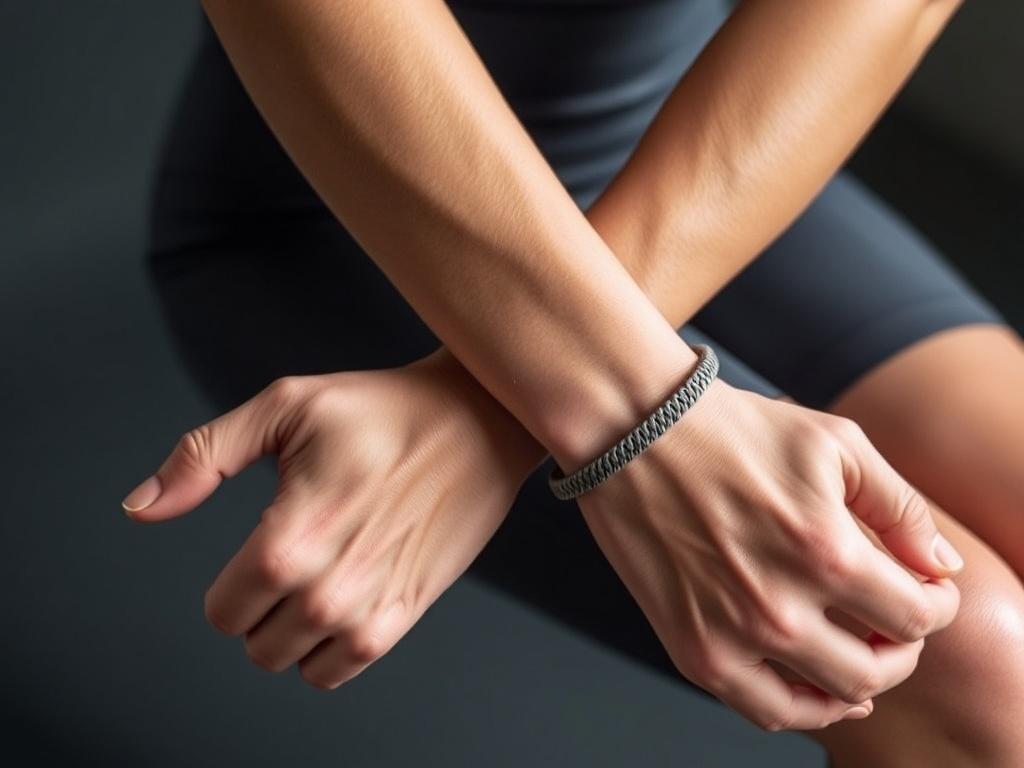
If you’ve ever wondered whether wrists can lose fat like other body parts, you’re not alone. The question “Как убрать жир с запястий” surfaces in fitness chats and forums because wrists are a visible feature that can affect how sleeves sit and how leaned or bulky your hands look. This article walks through anatomy, realistic expectations, nutrition, targeted strengthening, and safe medical options so you can act with information rather than hope.
Why wrist size varies: anatomy, genetics, and fat distribution
Your wrist is a compact bundle of bone, tendon, ligament, and a thin layer of fat sitting just beneath the skin. Unlike larger limbs, forearms and wrists have less soft tissue, so small changes in fat or muscle show up more clearly. Bone width and the size of the carpals vary by person and largely come down to genetics and lifetime development rather than anything you can change quickly.
Fat distribution is governed by hormones, genetics, sex, and age. Some people naturally store more subcutaneous fat around wrists and hands, often influenced by estrogen levels in women and other genetic patterns. That’s why two people at the same body weight and overall body fat can have different-looking wrists.
Spot reduction: why squeezing your wrists isn’t a shortcut
The idea that you can target fat loss from a specific small area by exercising it is one of fitness’s most persistent myths. Controlled studies consistently show that while you can strengthen and build muscle in a localized area, fat is lost systemically: your body decides where to draw stored fat from based on genetics and hormonal signals. In short, doing thousands of wrist curls alone isn’t going to selectively melt wrist fat.
That doesn’t mean wrist-focused work is pointless. Building forearm muscles can improve definition, reduce the appearance of a soft wrist, and strengthen tendons. But any visible decrease in wrist circumference will usually occur alongside general fat loss across the entire body.
What you can realistically change about your wrists
When people ask how to reduce wrist fat, the realistic levers are threefold: reduce overall body fat, increase local muscle tone and definition, and manage short-term factors like swelling and water retention. Each of these contributes differently and on different timelines. Fat loss takes weeks to months at a caloric deficit; muscle tone can improve in a matter of weeks with consistent work; fluid shifts can change measurements in days.
Changing posture and hand positioning can also alter how broad your wrists look in photos or clothing. For example, relaxing shoulders and rotating hands slightly can make wrists look narrower. While this isn’t a permanent anatomical change, it’s a practical way to influence appearance in the short term.
Nutrition: the foundation of reducing body fat
If your goal is to slim wrists by losing fat, the single most effective strategy is a modest, sustained calorie deficit. That means consuming fewer calories than you expend, usually by combining slightly reduced intake with increased activity. Aim for a deficit that produces slow, steady weight loss — roughly 0.5 to 1 percent of body weight per week for many people — so you preserve muscle and avoid metabolic slowdown.
Macronutrients matter. Prioritize protein to support muscle maintenance: about 0.7 to 1.0 grams per pound of body weight is a good range for many active adults. A higher protein intake helps retain lean tissue as you lose weight and also increases satiety, making a calorie deficit easier to maintain. Balance the rest of your calories between healthy fats and complex carbohydrates, focusing on whole foods like lean meats, legumes, whole grains, vegetables, nuts, and seeds.
Quality and timing are secondary to total intake but still useful. Fiber-rich vegetables and whole grains help fullness and nutrient density, and spacing protein across meals supports muscle repair. Avoid crash diets that promise rapid localized results; they often lead to muscle loss and rebound weight gain.
Simple dietary adjustments that have big impact
Small changes that are easy to stick with often outperform dramatic but short-lived diets. Start with logging your intake for a week to see typical calories and where sugar, refined carbs, or alcohol may be adding empty calories. Reducing sugary drinks, minimizing late-night snacking, and choosing whole-food snacks instead of processed options can shave hundreds of calories a day without feeling punishing.
Hydration and sodium matter for wrist appearance. High sodium intake and dehydration can make tissues retain fluid and look puffier; drinking adequate water and moderating salt, processed foods, and alcohol can reduce transient swelling. This is not fat loss but can change wrist measurements quickly and noticeably.
Cardio and metabolic work for fat loss
<p(Cardio) exercise increases energy expenditure and contributes to a caloric deficit when combined with dietary control. Both steady-state cardio and high-intensity interval training (HIIT) are effective; the choice depends on preference, fitness level, and recovery. HIIT burns significant calories in short sessions and boosts post-exercise metabolic rate, while moderate steady-state cardio is easier to recover from and can be sustained longer for calorie burn.
Include activities you enjoy so they become consistent parts of life. Brisk walking, cycling, rowing, swimming, dancing, and hiking are all valid. Aim for at least 150 minutes of moderate aerobic activity or 75 minutes of vigorous activity per week as a baseline, then scale up for additional calorie expenditure if needed.
Strength training: why forearm and overall strength matter
Resistance training builds muscle, increases resting metabolic rate, and improves body composition. For wrists specifically, training the forearms and grip increases tendon strength and muscle definition, which can visually narrow the appearance of soft tissue. But it’s important to place this work within a full-body resistance program so you don’t lose overall balance or neglect large muscle groups that drive calorie use.
Compound lifts such as deadlifts, rows, pull-ups, and farmer carries recruit forearm muscles as part of their movement, offering a two-for-one benefit: whole-body strength and forearm conditioning. Include direct forearm work a couple of times a week in addition to these compound movements.
Practical forearm and wrist exercises
Below is a compact table of targeted exercises you can include that strengthen wrists and add definition. Use moderate loads and controlled movements; quality beats quantity. Perform 2–4 sets of each movement with 8–20 reps depending on the exercise and your goals.
| Exercise | Primary target | How to do it |
|---|---|---|
| Wrist curls (palms up) | Wrist flexors | Sit with forearm on thigh or bench, curl a dumbbell with wrist only |
| Reverse wrist curls (palms down) | Wrist extensors | Same setup as wrist curls but with palms down; lift the back of the hand |
| Farmer’s carry | Grip strength, forearms, shoulders | Walk holding heavy dumbbells at your sides for distance or time |
| Plate pinches | Finger and thumb strength | Pinch two plates together and hold for time |
| Wrist rotations | Small stabilizers and mobility | Hold a light weight and rotate the wrist slowly through full range |
| Grip squeezes (trainer or ball) | Hand and forearm | Squeeze a grip trainer or stress ball for timed sets |
Programming forearm work effectively
Do forearm-specific movements at the end of a workout a couple of times per week to avoid pre-fatiguing your hands for compound lifts. Use varied rep ranges: heavier holds and carries for strength (3–8 reps or timed holds), moderate reps (8–15) for hypertrophy, and higher-rep endurance work (15–30) for conditioning. Be mindful of tendon load; increase volume gradually to prevent overuse injuries.
If your day job or hobbies already require a lot of hand use, consider lighter conditioning rather than heavy, repetitive loading to avoid aggravating the wrists. Periodize — that is, cycle intensity and volume — so you get stronger without chronic inflammation.
Mobility, flexibility, and preventing wrist pain
Mobility work keeps the joint healthy and can improve how the wrist looks in different positions. Gentle stretches for wrist flexors and extensors, nerve glides for median nerve mobility, and shoulder/neck mobility all contribute because the wrist doesn’t operate in isolation. Tight shoulders or poor elbow mechanics can increase strain on the wrist and alter posture in a way that magnifies wrist width.
Incorporate short mobility sessions after warm-ups or at the end of workouts. For people with past wrist injuries or chronic pain, consult a physical therapist for a tailored plan before adding heavy forearm work. Proper progression and technique are your best defenses against flare-ups.
Short-term tactics: reduce puffiness and swelling
If the concern is temporary puffiness rather than fat, a few tactics can make a noticeable difference quickly. Reduce sodium and alcohol for a few days, sleep more consistently, elevate hands for short periods, and increase water intake to reduce fluid retention. Simple lymphatic self-massage along the forearm toward the elbow can help some people with transient swelling.
These tactics change water balance and tissue fluid, not fat. They’re useful for meeting a snapshot aesthetic goal — for an event or photo — but won’t alter long-term wrist girth unless paired with broader body fat loss strategies.
When to consider cosmetic methods and what to expect
There are medical procedures that can modify localized fat, but the wrist is an unconventional and delicate area. Liposuction removes subcutaneous fat surgically, but it’s typically used on areas with more fat and softer tissue. Some clinics may offer liposuction in small areas, but results depend on anatomy, and scarring or contour irregularities are risks.
Non-surgical fat-reduction techniques (laser, cryolipolysis) target small pockets of fat elsewhere on the body more commonly and may be impractical for wrists. Injectable lipolysis agents are approved for certain areas like the submental region (under the chin) but not widely for wrists. Always consult a board-certified plastic surgeon or dermatologist for personalized medical advice and evaluate benefits versus risks carefully.
Health and safety considerations
Persistent wrist swelling, pain, numbness, or loss of function should prompt medical evaluation. Conditions such as arthritis, tendonitis, carpal tunnel syndrome, and lymphedema can change wrist appearance and require treatment that’s very different from fat loss strategies. Don’t assume all enlargement is fatty tissue; rule out underlying medical causes first.
If you pursue cosmetic procedures, get second opinions, ask to see before-and-after cases with similar anatomy, and confirm credentials and facility accreditation. Recovery time, potential for uneven results, and cost should all factor into your decision.
Tracking progress without obsessing over every millimeter
Use a combination of objective and subjective measures to track changes. Circumference measurements at a consistent location, photos from different angles and consistent lighting, and how rings and sleeves fit are all useful. Measure wrists once a week under similar conditions (same time of day, posture, and hydration status) to avoid misleading day-to-day variability.
Expect gradual change. If you’re losing overall body fat at a healthy rate, wrist changes may lag or may not be dramatic depending on genetics. Celebrate improvements in strength, range of motion, and how clothing fits as equally valid signs of progress.
A realistic 8-week plan to get started
Below is a practical plan that combines diet, cardio, and wrist/forearm strengthening. Adapt intensity and volume to your fitness level and consult a physician if you have medical concerns. The plan emphasizes consistency and progressive overload rather than extreme measures.
- Weeks 1–2: Establish a 300–500 calorie daily deficit, log food, and include 3 full-body strength sessions plus 3 moderate cardio sessions (20–30 minutes).
- Weeks 3–4: Increase one cardio session to HIIT (10–15 minutes of intervals), add 2 targeted wrist/forearm circuits at the end of strength days (10–12 minutes each), and keep protein intake high.
- Weeks 5–6: Progress weights on compound lifts, increase farmer’s carry weight or time, and add one longer cardio day (40–60 minutes moderate pace).
- Weeks 7–8: Reassess calories, adjust for continued progress, add variety to forearm exercises (plate pinches, reverse wrist curls), and focus on recovery (sleep and mobility).
Example weekly template
Here’s a sample week that balances all elements. Warm up before sessions and cool down after. Adjust rest days to match recovery needs and life schedule.
- Monday: Full-body strength (focus: deadlifts, rows) + 10 minutes forearm circuit
- Tuesday: Brisk 30–40 minute walk or bike
- Wednesday: HIIT 12–15 minutes + shoulder/upper-body work
- Thursday: Rest or light mobility and stretching
- Friday: Full-body strength (focus: squats, presses) + farmer’s carries
- Saturday: Longer moderate cardio (45–60 minutes) or active recreation
- Sunday: Mobility work, gentle forearm stretching, and preparation for the week
Common pitfalls and how to avoid them
Chasing quick fixes, overtraining the wrists, and ignoring nutrition are common mistakes. Overdoing direct wrist loading can provoke tendonitis. Likewise, obsessing over wrist measurements while neglecting sleep, stress management, and overall diet will slow progress. Treat wrists as one piece of a broader body-composition strategy rather than an isolated project.
Another pitfall is unrealistic expectations: if wrist width is largely bone or tendon, no amount of dieting will make wrists match a different skeletal frame. Set goals that include strength, mobility, and overall fat loss, not just circumference numbers.
Real-life example from my coaching experience
I once worked with a client who wanted thinner-looking wrists to feel more comfortable in tailored shirts. She was already lean for her body type, which meant dramatic fat loss wasn’t appropriate. We focused on building forearm strength, improving posture, and adjusting sleeve styles, and she also made small dietary improvements that lowered water retention. Over six weeks her wrists looked more defined and sleeves fit more cleanly, even though her scale weight changed minimally.
This case illustrates how small, targeted changes and realistic expectations can produce the visual improvements people seek without resorting to risky procedures or extreme dieting. The psychological benefit of feeling in control is large and legitimate here.
When to consult a professional
See a registered dietitian if you need help establishing a sustainable calorie deficit or if medical conditions make nutrition complex. Consult a certified strength coach for programming that balances forearm work with whole-body development. If you have pain, numbness, or a sudden change in wrist size, see a physician or hand specialist to rule out pathology first.
If you’re considering cosmetic procedures, schedule consultations with board-certified surgeons and ask about outcomes for people with similar anatomy. Bring questions about scarring, recovery, expected contour changes, and alternatives such as targeted strength work or compression garments to manage appearance temporarily.
Practical gear and tools that help
A few simple tools can support training and daily life: adjustable dumbbells for wrist curls and carries, a spring grip trainer for incremental strength, and a pair of heavy-duty towels for friction-friendly holds. Compression sleeves can reduce puffiness after workouts or during travel and can help clothing fit more smoothly without permanent change. Use gear to assist progress, not as a substitute for consistent training and nutrition.
Good shoes for cardio, ergonomic adjustments at your desk to reduce wrist strain, and a quality lunchbox with nutrient-dense foods can all indirectly support your goals by making healthy choices easier to sustain.
How to keep motivated and realistic over months
Set process goals instead of obsessing only over millimeter changes: number of workouts per week, protein targets, consistent sleep, and weekly steps are all controllable metrics. Celebrate small wins like added weight on farmer carries or a more comfortable fit in a favorite bracelet. Those wins compound and keep motivation steady.
Remember that meaningful body-composition change takes time. If you commit to a sensible plan for 12–16 weeks, you’ll either see measurable results in wrist appearance or get a clear signal that your anatomy limits further visual change, allowing you to redirect effort to new goals like strength, mobility, or clothing changes.
Final practical checklist

Here’s a short checklist to take away: maintain a modest calorie deficit with adequate protein; include whole-body strength training plus specific forearm work; add cardio you enjoy; manage sodium and hydration for short-term puffiness; prioritize sleep and stress management; and consult professionals for pain or cosmetic procedures. Track progress consistently and adjust gradually.
If your interest started with the question Как убрать жир с запястий, remember that the route to slimmer-looking wrists is rarely quick or purely local. With steady nutrition habits, consistent strength and cardio, and sensible expectations, you can influence how your wrists look and feel while improving overall health and function.