Good posture in childhood sets the stage for a lifetime of movement that feels strong and comfortable. Whether your child is an energetic preschooler who prefers climbing to sitting still, or a teenager bent over screens, small daily habits and targeted movement can make a big difference.
This article offers practical, age-appropriate guidance and a toolbox of safe activities — from quick warm-ups to playful games — designed to help parents and caregivers support healthy spine alignment. You’ll also find a sample weekly plan and tips for when to seek professional help.
I’ll include a few examples of Упражнения для улучшения осанки у детей inside routines and explain how to adapt them for different ages and abilities. The goal is improvement that feels natural, not forced.
Why posture matters in childhood
Posture isn’t only about how someone looks standing still; it’s a reflection of muscle balance, movement patterns, and daily habits. Strong, well-coordinated muscles help the spine and joints carry loads efficiently, reducing fatigue and the risk of strain.
Children with better posture usually move with more confidence and less discomfort during play, sports, and sitting for schoolwork. Early intervention is practical: habits and movement patterns are easier to influence when kids are growing and their neuromuscular systems are adaptable.
Improved posture can also support breathing and attention. When the chest is open and the torso aligned, the diaphragm has more space to work, which can aid calm breathing and focus during class or homework.
Common causes of poor posture in children
Poor posture typically arises from a mix of factors: prolonged sitting, heavy or improperly worn backpacks, muscle imbalances, and too little varied movement. Sedentary hobbies and long stretches with devices encourage rounded shoulders and a forward head position.
Developmental stages matter. Rapid growth spurts can temporarily alter coordination and balance, leaving kids slouching until strength catches up. Similarly, children who avoid certain movements because they feel awkward may miss important opportunities to develop stabilizing muscles.
Underlying medical issues — such as leg length differences, scoliosis, or neuromuscular conditions — can also influence posture. These are less common but important to recognize, because they change the approach to exercise and may need professional assessment.
How to assess your child’s posture at home
A simple, gentle observation is the first step. Have your child stand naturally facing sideways, front, and back while you note alignment: ears over shoulders, shoulders over hips, and hips over ankles is the general idea. Keep this check relaxed and nonjudgmental.
Look for asymmetries — one shoulder higher than the other, an obvious curve in the spine, or a prominent rib on one side. Watch them walk and sit; posture that looks fine standing can break down when tired or when carrying a backpack.
If you want a clearer picture, take photos from the front and side while your child stands in comfortable clothes. Comparing images over weeks can reveal small but meaningful improvements that might be hard to notice day to day.
Principles for safe and effective exercises
Prioritize enjoyment and consistency over intensity. Children respond best to short, frequent practice sessions and activities that feel like play rather than drill work. Aim for a few minutes several times a day rather than a single long session.
Focus on whole-body movement patterns. Posture depends on coordinated action among the feet, hips, core, shoulders, and neck. Strengthen and mobilize across those regions rather than isolating one muscle in isolation.
Keep cues simple and visual. Rather than complex anatomical descriptions, try simple images: “zip up your jacket tall,” “reach the ceiling,” or “make your head float up like a balloon.” These cues are easier for kids to remember and act on.
Warm-up and mobility: preparing the body
Start every session with gentle movement to wake up muscles and joints. Five minutes of dynamic play increases blood flow and reduces the chance of stiffness during strengthening work.
Try animal walks, arm circles, and gentle twists. These mimic natural movement patterns and are fun for children while addressing the spine, shoulders, and hips.
- Arm circles: small to large, forward and backward for 30–60 seconds.
- Cat-cow on hands and knees: slow, exaggerated arching and rounding, 8–10 reps.
- Walking lunges or high-knee marches across a room to activate hips and core.
These activities double as a brief game: time how many spots they reach in a minute, or race a sibling in “slow-motion animal walk.” The goal is to prime movement with fun.
Core and back strengthening exercises
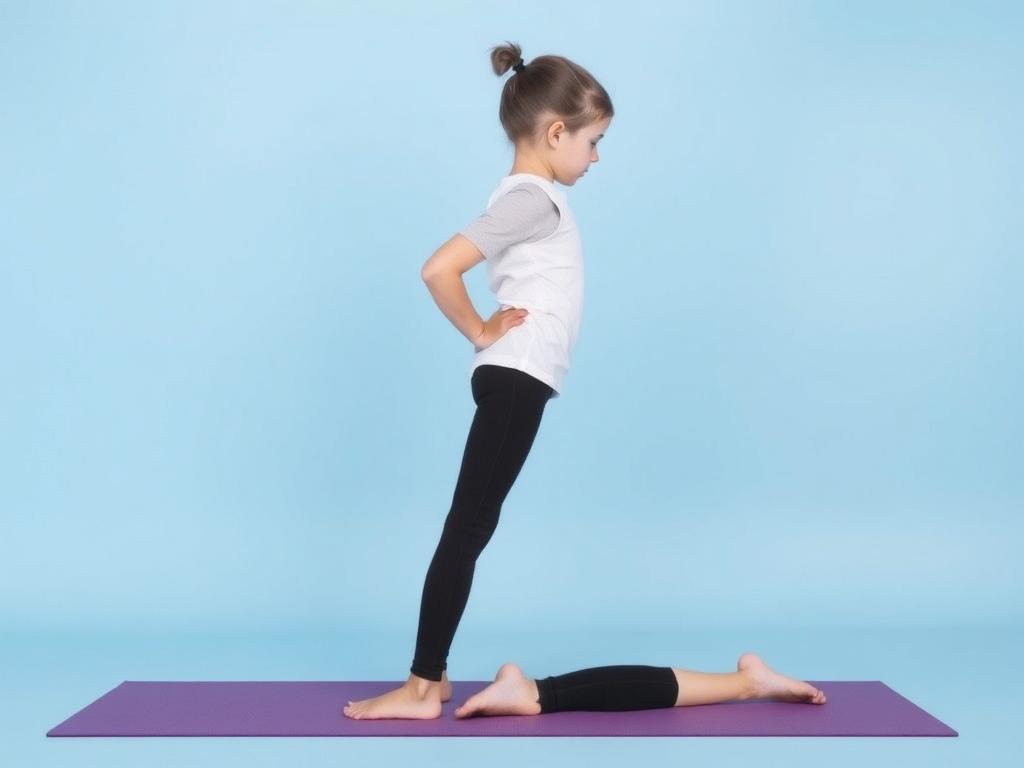
Core strength stabilizes the spine during movement and sitting, so include exercises that train deep and superficial trunk muscles. Many effective moves are low-impact and easy to adapt.
Rotate exercises to keep things fresh. Introduce one or two new moves per week and repeat favorites, adjusting reps or adding playful challenges to maintain interest.
Bird-dog
The bird-dog builds coordination between the opposite arm and leg while training the low back and deep core. Begin on hands and knees with a neutral spine and reach one arm forward while extending the opposite leg back.
Hold each reach for 3–5 seconds, then switch sides. Aim for 6–10 controlled repetitions per side, fewer for younger children and more for older kids.
To make it playful, have the child pretend to be a tightrope walker reaching to balance a toy or keep a stuffed animal on their back while they move.
Bridge
The bridge strengthens the glutes and posterior chain, helping counteract prolonged sitting that tightens the hips and weakens back muscles. Lie on the back with knees bent, press through the heels, and lift the hips until the body forms a straight line.
Hold for 3–8 seconds, lower with control, and repeat for 8–12 reps. Progress by lifting one leg briefly while holding the bridge for older children.
Offer a theme: “make a bridge for the toy car” or “be a strong bridge for ten seconds” to add an element of imagination.
Plank variations
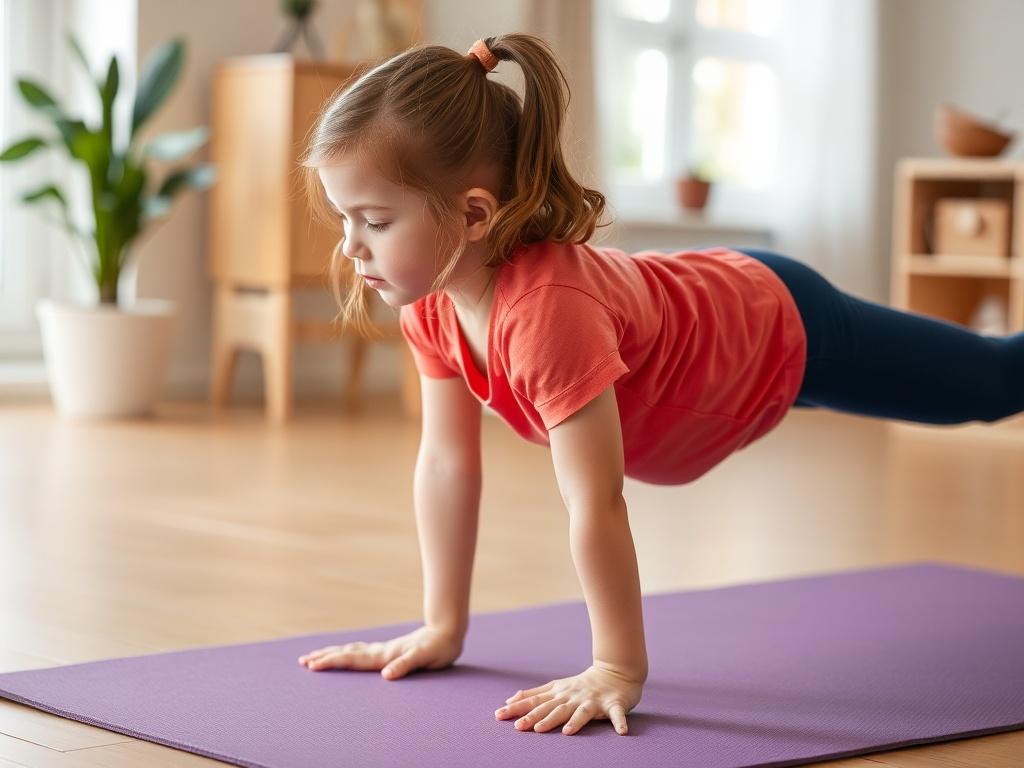
Planks train the front and side core muscles and build endurance for upright posture. Start with a modified plank on knees for beginners and move to full forearm or high planks as strength improves.
Keep sets short for kids — 15–30 seconds per rep is meaningful. Side planks, with knees bent for younger children, target the obliques and help resist lateral collapse.
Turn planks into a game by timing how long they can hold a plank while reciting a simple rhyme or keeping a feather balanced on their back.
Wall angels
Wall angels address rounded shoulders and stiff upper backs. Stand with back and hips against a wall, feet a few inches away, and slide arms up and down like making a snow angel while keeping contact points on the wall.
Perform 8–12 slow repetitions focusing on scapular control and breathing. If contact is difficult, bend the knees slightly or work just on shoulder blade retraction until mobility improves.
This is an excellent daily practice — five minutes in the morning or before school can make shoulder mobility feel easier over time.
Flexibility and thoracic mobility
Stretching the chest and mobilizing the thoracic spine counteract forward-slumping positions. Gentle mobility helps restore range of motion without forcing painful positions.
Include a couple of short stretches after strengthening exercises or at the end of the day to release tension and promote restful posture during sleep.
Chest opener on a doorway
Have the child stand in a doorway with forearms on the frame at about shoulder height, then step forward until a gentle stretch is felt across the chest. Hold 15–30 seconds and repeat 2–3 times.
Remind them to keep the neck relaxed and breathe evenly. Avoid overstretching; the sensation should be mild and pleasant, not painful.
Thoracic extension over a foam roller or rolled towel
Place a foam roller or a rolled towel horizontally under the upper back, support the head with hands, and gently arch over the roller. Keep the lower back stable and move slowly to avoid overextension.
Perform 6–10 gentle repetitions, pausing where movement feels easiest or most helpful. For younger children, do a modified version with a soft pillow and supervisor assistance.
Hip flexor stretch
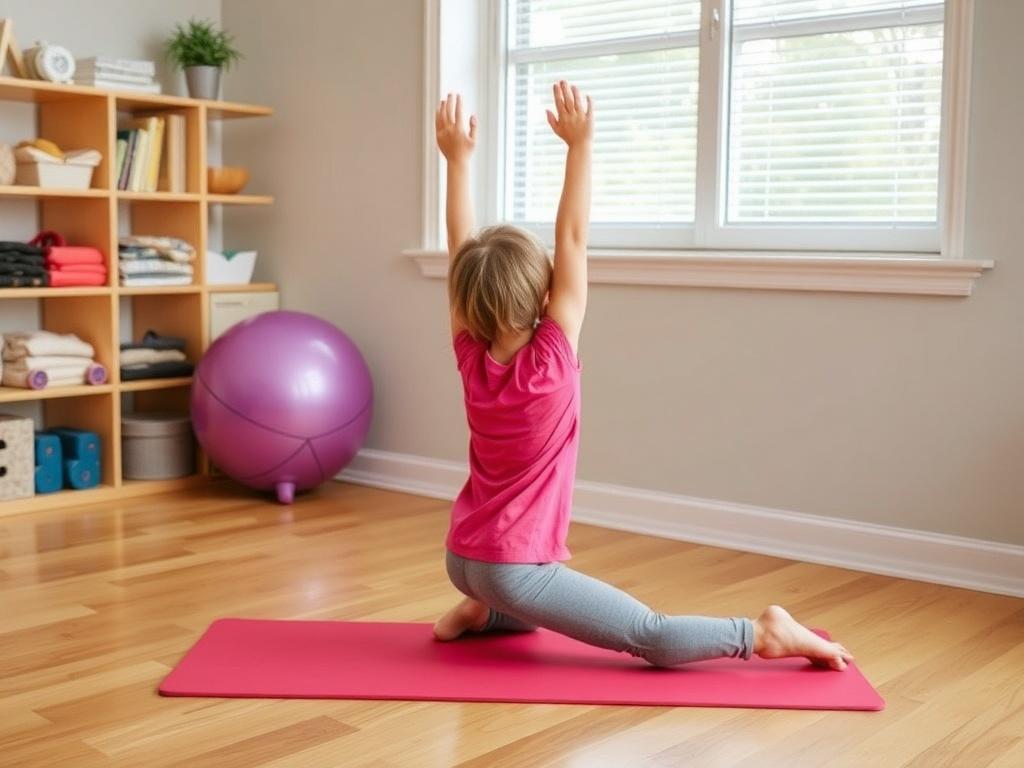
Tight hip flexors can tilt the pelvis and affect lumbar curve; a kneeling lunge stretch helps lengthen them. Keep the torso upright and tuck the tailbone under slightly to feel the stretch in the front of the hip.
Hold for 20–30 seconds per side and repeat twice. Encourage mindful breathing to help relax into the position rather than forcing the stretch.
Balance, coordination, and proprioception
Balance work teaches the nervous system to sense where the body is in space and to make small adjustments that support upright alignment. This foundation is especially important for younger children whose bodies are rapidly changing.
These activities are brief, safe, and fun; they can be sprinkled throughout the day — while brushing teeth, during a commercial break, or as transitions between homework subjects.
Single-leg stand
Ask the child to balance on one foot for 10–20 seconds, then switch sides. Increase difficulty by closing the eyes briefly, marching in place, or standing on a soft cushion.
Challenge older kids with timed holds or by adding arm movements. Single-leg balance improves ankle stability and the muscles that support the hips and pelvis.
Heel-to-toe walking
Set a line on the floor and have the child walk placing the heel directly in front of the toes of the other foot, like a tightrope. This improves coordination and postural control.
Progress by having them carry a light object on their head to encourage upright torso alignment. Keep the walk short and playful so they don’t lose interest.
Making posture work fun: games and activities
Children stick with activities that feel like play. Embed posture-focused exercises into games, obstacle courses, and imaginative play so strengthening happens naturally.
Use timers, small rewards, or stickers to mark participation rather than perfection. Celebrate consistency and effort to build lifelong habits.
- “Statue game”: hold different upright poses for 10–20 seconds while music plays.
- “Balloon breath”: take deep belly breaths and keep a balloon (or hairband) floating by exhaling slowly — great for chest opening and breathing control.
- Obstacle course: include bridges to crawl under, beams to walk on, and spots to hold a plank.
Changing the scenery — backyard, living room, or park — keeps activities novel and engages different muscle groups.
Routines by age: tailoring exercises to developmental stages
Children of different ages benefit from different emphases. Young children need lots of gross motor play that naturally builds posture, while school-age kids respond well to short, guided exercises mixed with games.
Adolescents benefit from progressive strength and mobility work and education about ergonomics as they take on more responsibility for their own health.
Preschoolers (3–5 years)
Focus on play that encourages varied movement: climbing, crawling, hopping, and carrying light objects. These activities develop balance, coordination, and the playful core work that underpins posture.
Short bursts — a few minutes at a time — are ideal. Create simple games like “build-a-tower” where they carry blocks using good posture or “animal walks” that target different muscle groups.
Early school age (6–9 years)
Introduce simple structured exercises alongside play. Teach basic forms like bridges, wall angels, and balance tasks with clear, fun cues. Keep sessions brief but frequent.
Encourage them to notice comfort: ask whether sitting or a certain activity makes them feel tired in a particular way. This awareness helps them self-correct later.
Preteens and teens (10–18 years)
At this stage, kids can handle more complex strengthening, longer planks, and guided resistance exercises using body weight or light bands. Emphasize posture education, ergonomics, and consistent practice.
If they play sports, tailor exercises to support athletic demands — stronger posterior chain for runners, scapular stability for swimmers. Balance key strengthening with flexibility and recovery work.
Ergonomics and daily habits that support posture
Exercise alone won’t fix posture if daily habits work against it. Check the child’s school backpack, study setup, and device usage to reduce strain during everyday activities.
Simple changes often produce the biggest gains: an adjustable chair that allows feet to touch the floor, a screen at eye level, and regular breaks from sitting can all help maintain upright alignment throughout the day.
| Item | Practical guideline |
|---|---|
| Backpack weight | Generally recommended to be less than 10–15% of the child’s body weight; use both straps and a hip belt when available. |
| Chair height | Feet flat on the floor, knees at about 90°, and a lumbar support to maintain natural curve. |
| Screen height | Top of the screen at or slightly below eye level to avoid forward head posture. |
Encourage active breaks every 20–30 minutes during homework or screen time. Five minutes of standing, walking, or simple stretches is enough to reset posture and attention.
Equipment and simple tools that help
You don’t need elaborate gear to support posture improvements. A few inexpensive tools — a foam roller, a small exercise ball, and a posture-friendly chair — can make practice easier and more engaging.
Foam rollers are useful for gentle thoracic mobility, stability balls can replace a chair for short periods to challenge balance and engage core muscles, and elastic bands add light resistance for shoulder and back exercises.
Always supervise equipment use and choose sizes appropriate to the child’s age and size. Safety and fun go hand in hand.
When to consult a pediatrician or physical therapist
If you notice persistent asymmetry, pain, difficulty performing age-appropriate activities, or a pronounced spinal curve, consult a pediatrician for evaluation. These signs warrant professional attention rather than home exercise alone.
A pediatric physical therapist can provide a tailored program, evaluate movement patterns, and suggest modifications for underlying issues like leg length discrepancies or neuromuscular concerns. Early referral often leads to faster, more comfortable improvements.
If a doctor advises imaging or specialist referral, follow their recommendations. Most cases of poor posture in otherwise healthy children improve with guided exercise and ergonomic changes, but some conditions require specific treatment.
Tracking progress and keeping kids motivated
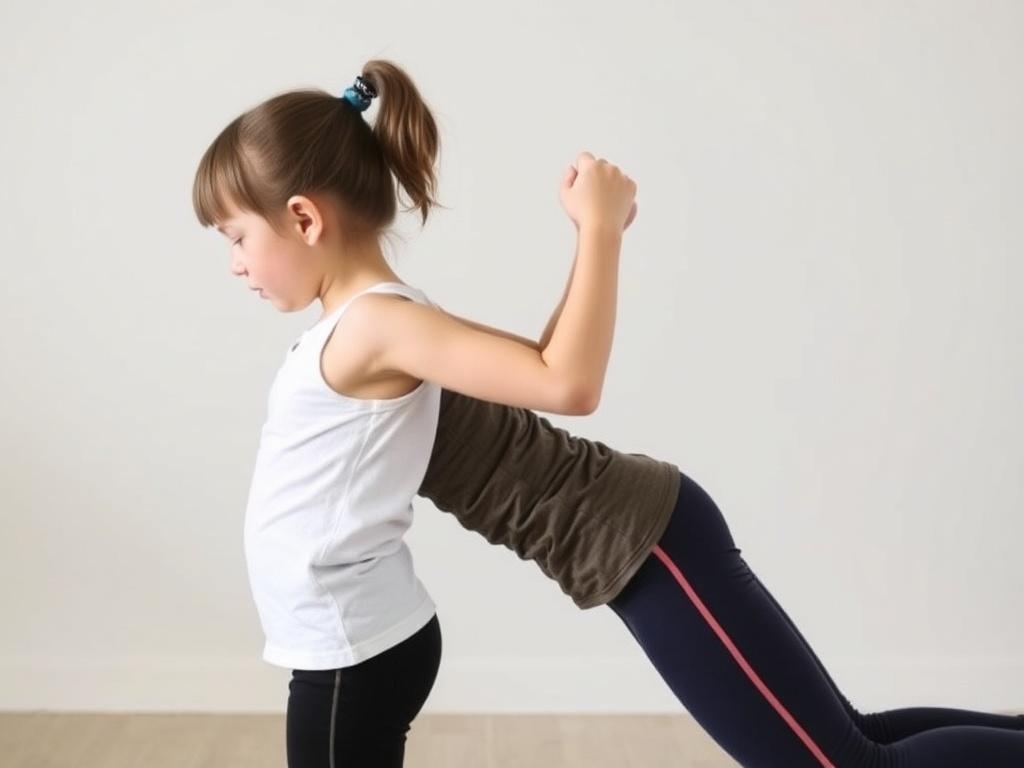
Track small wins rather than waiting for a perfect posture photo. Celebrate increased hold times, improved balance, or reports of less fatigue during sports or sitting at school.
Use a simple chart or sticker system to mark consistency. Offer choices — let the child pick the warm-up game of the day — to give them a sense of control and investment.
Encourage self-reflection: ask how their back or shoulders feel after a week of practice. When kids notice real changes in comfort and performance, motivation often follows.
My experience working with families
Over the years I’ve watched reluctant exercisers become enthusiastic participants when exercises are framed as games. A seven-year-old who hated “exercises” happily held a plank while pretending to be a bridge for toy cars, and improved his shoulder stability in just weeks.
I’ve also seen teens respond well when they understand the “why.” Explaining how posture can improve sports performance or reduce neck aches during gaming makes the work meaningful to them. Small, consistent changes matter more than dramatic single sessions.
Every child is different; patience, playfulness, and persistence are the practical keys. When parents model the same activities, outcomes improve — shared movement becomes family time and a positive habit-forming loop.
Sample weekly plan
Below is a sample, flexible plan you can adapt to your child’s age and schedule. Each day takes 10–20 minutes, combining warm-up, strengthening, mobility, and a balance or game-based activity.
| Day | Quick routine |
|---|---|
| Monday | Warm-up (animal walks), bird-dog 2×8, bridge 2×10, single-leg stands 3x15s |
| Tuesday | Warm-up (marching), wall angels 2×10, chest opener stretches 2x20s, plank 3x20s |
| Wednesday | Active play (obstacle course), thoracic mobility 8–10 reps, heel-to-toe walk 3 laps |
| Thursday | Warm-up (arm circles), dead bug 2×8, bridge single-leg 2×6 per side, balance cushion fun |
| Friday | Game day: statue game, posture relay, foam roller thoracic work 6–8 reps |
| Saturday | Family walk or bike ride, gentle stretches, carry a light backpack properly for short distance |
| Sunday | Rest and play freely; encourage varied movement like climbing or swimming |
Adapt reps and durations based on age and fitness. The variety helps maintain interest and addresses different components of posture.
Common questions parents ask
How long before I see improvement? Expect to notice small changes in comfort and endurance within a few weeks of consistent practice. Structural changes take more time; focus on steady progress rather than immediate perfection.
Are devices the main cause? Screens contribute to forward head posture, but they’re rarely the sole cause. Balance screen habits with active breaks, and practice upright sitting and carrying techniques to mitigate effects.
Can exercise worsen posture? If a child has an underlying condition or pain, inappropriate exercises could cause discomfort. That’s why severe asymmetry or persistent pain should prompt professional evaluation before starting a program.
Final thoughts and next steps
Improving posture in children is a gradual process that rewards consistency, playfulness, and attention to daily habits. Short, frequent practices embedded in fun activities are more effective and sustainable than long, infrequent sessions.
Start small: choose two or three exercises from this article and make them part of a daily routine. Pair them with ergonomic tweaks at home and school, and celebrate steady gains in comfort and movement.
If you’re ever unsure, involve a pediatrician or physical therapist. Their guidance will ensure the exercises suit your child’s specific needs and keep progress safe and enjoyable for the whole family.