Pregnancy is not an illness, and movement can be one of your most reliable allies from the first flutter to the last heavy step. This article walks you through sensible, evidence-based guidance for staying active across all three trimesters, with practical workouts, safety checkpoints, and modifications you can use at home or in class.
Why exercise matters during pregnancy
Regular activity during pregnancy reduces common complaints like back pain, constipation, and fatigue while supporting cardiovascular health and mood. Research shows that active pregnant people generally have shorter labors, lower rates of gestational diabetes, and a faster postpartum recovery compared with complete inactivity.
Beyond measurable health outcomes, exercise helps preserve muscle tone and joint mobility, which makes it easier to carry the physical load of a growing belly. Psychological benefits are important too: movement can be a steadying ritual when hormones and sleep cycles shift.
Safety first: screening, red flags, and common contraindications
Before you begin or change an exercise routine, check in with your healthcare provider—especially if you have any chronic conditions or past pregnancy complications. The American College of Obstetricians and Gynecologists recommends at least 150 minutes of moderate-intensity aerobic activity per week for most pregnant people, but individual advice can vary.
There are clear signs to stop exercising and seek medical attention, including vaginal bleeding, chest pain, sudden swelling, regular painful uterine contractions, severe headaches, visual disturbances, dizziness, or decreased fetal movement. If you experience any of these, stop and contact your provider immediately.
Certain conditions usually make exercise unsafe: significant heart or lung disease, an incompetent cervix or cerclage, multiple pregnancy at risk of preterm labor, persistent bleeding, placenta previa after 26 weeks, preeclampsia, ruptured membranes, or intrauterine growth restriction. When in doubt, follow your provider’s guidance.
How to judge intensity: talk test, perceived exertion, and heart rate
A practical way to measure safe intensity is the talk test: during moderate-intensity activity you should be able to carry on a conversation but not sing comfortably. Perceived exertion (a 0–10 scale) around 4–6 is usually appropriate for sustained sessions, with short intervals of higher effort if tolerated.
Some providers use heart rate ranges, but pregnancy and individual fitness can change those metrics, so heart rate alone isn’t the best universal guide. Focus on how you feel, breathing, and whether you can maintain good form, especially as your center of gravity shifts during the second and third trimesters.
Essential equipment and environment
You don’t need an expensive gym to stay fit while pregnant—small tools make a big difference. A set of light dumbbells (2–8 pounds depending on your strength), resistance bands, a stability or birthing ball, and a sturdy chair are useful for progressive strength and balance training.
Choose stable ground for balance work, avoid slippery surfaces, and favor cool, well-ventilated spaces. Hydration matters more now: drink before, during, and after activity and pause if you feel overheated. If you take classes, let the instructor know you’re pregnant so they can offer appropriate modifications.
Trimester-by-trimester approach: general principles
Each trimester brings new physiology, so workouts should adapt. In the first trimester, energy swings and nausea may limit what feels doable; focus on establishing a consistent, gentle routine. The second trimester often brings a surge of energy and comfort, making it a good time to build strength and mobility.
During the third trimester, the emphasis shifts toward mobility, balance, and maintaining comfortable strength while preparing the body for labor and birth. Across all trimesters, prioritize pelvic floor health, posture, and breathing, and avoid sudden, high-risk activities that could result in a fall or abdominal trauma.
First trimester: foundations and safety-minded starts
The first twelve to fourteen weeks are a period of rapid change. Many people feel fatigue and nausea, while others experience a surprising burst of energy. This is a sensible time to cultivate a sustainable habit rather than chase high performance.
Start with low-impact cardio such as brisk walking, swimming, or stationary cycling for 15–30 minutes, three to five times per week depending on tolerance. Keep intensity moderate and use the talk test to stay in a safe zone.
Introduce gentle strength training two to three times per week, focusing on full-body movements with low-to-moderate load. Exercises like bodyweight squats, wall push-ups, resistance-band rows, and glute bridges build a foundation without excessive strain.
Core work should emphasize deep support rather than traditional crunches. Practice floor-based pelvic tilts, diaphragmatic breathing, and gentle transverse abdominis activation to protect the spine and prepare the pelvic floor for later demands.
Sample first-trimester workout (beginner)
Warm-up with 5–7 minutes of walking and dynamic mobility: shoulder circles, hip circles, and gentle leg swings. Perform 2–3 sets of 10–12 reps for each strength move, resting 45–60 seconds between sets.
- Bodyweight squat
- Wall push-up
- Seated resistance-band row
- Glute bridge
- Standing calf raise
Finish with 5–10 minutes of diaphragmatic breathing and pelvic floor cues. If nausea or fatigue intervene, shorten the session rather than skipping movement entirely—ten minutes of walking or simple mobility is better than none.
Second trimester: strength, stability, and posture
With many people feeling physically better in weeks 14–28, the second trimester is an ideal time to increase structured strength work and correct posture that strains the low back. Expect your center of gravity to shift as the abdomen grows, and respond by reinforcing the posterior chain.
Progress resistance training gradually—two to three sessions per week with moderate loads that allow you to maintain form for 10–15 reps. Include hip-hinge patterns, rows, vertical pressing, and single-leg balance drills to address both strength and coordination.
Replace prone and supine exercises with side-lying or inclined variations as your belly becomes more prominent. Avoid prolonged supine positions after about 20 weeks to reduce the risk of vena cava compression and dizziness.
Second-trimester sample workout (intermediate)
Warm-up with 7–10 minutes of dynamic movement such as brisk walking or elliptical, plus hip and thoracic mobility. Perform 3 sets of 10–12 reps for strength movements, and include a short cardio segment if energy allows.
- Dumbbell Romanian deadlift (light to moderate weight)
- Single-arm dumbbell row (supported on a bench)
- Goblet squat or box squat
- Incline push-up or chest press on a stability ball
- Side-lying clamshells with band
Wrap up with balance work—single-leg stands holding a chair for support if needed—and 5–8 minutes of pelvic floor and deep-breathing practice. If you have pelvic girdle pain, substitute exercises that land gently through the hips and pelvis.
Third trimester: mobility, labor readiness, and gentle maintenance
The final trimester is about maintaining functional strength, maximizing comfort, and rehearsing positions that can help during labor. Energy levels often fluctuate, and balance can be more precarious, so choose low-impact options and allow extra recovery time.
Emphasize hip mobility, thoracic flexibility, and controlled squatting patterns that reproduce labor positions. Gentle cardio like walking and swimming helps circulation without stressing the joints. Strength sessions should be shorter and focused on quality of movement rather than volume.
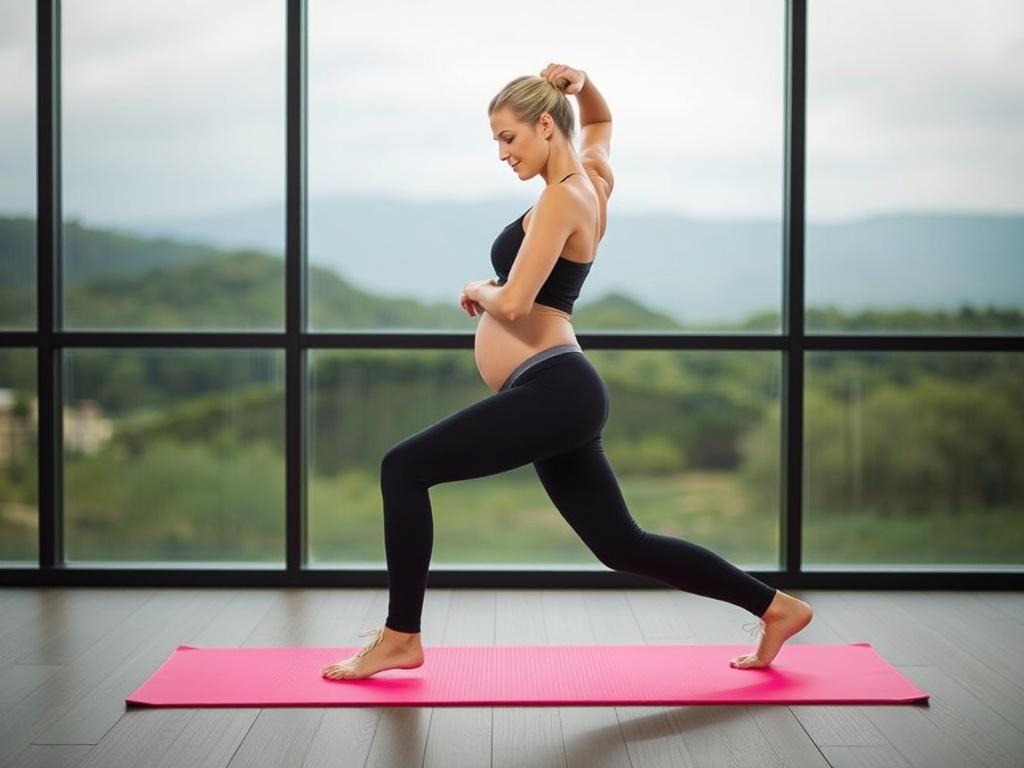
Incorporate positions that relieve the lower back and open the pelvis—supported lunges, wide-legged squats, and hands-and-knees rocking can feel restorative and practical. Use a birthing ball for upright work and to practice pelvic circles and perineal-sparing movements.
Third-trimester sample workout (gentle)
Begin with 5–7 minutes of breathing and gentle walking to center yourself. Perform one to two light circuits of the following moves with emphasis on slow, controlled range of motion.
- Supported squat to chair (3 sets of 8–10 reps)
- Hands-and-knees cat–cow with pelvic rocking (8–12 reps)
- Side-lying leg lifts or banded clamshells (10–12 reps each side)
- Seated row with band (12–15 reps)
Finish with lordosis-reducing stretches for the hip flexors and gentle glute release using a ball or foam roller. Use this time to practice slow breathing patterns and positions you plan to try during labor, such as supported squats and hands-and-knees rocking.
Core training, pelvic floor, and diastasis recti
Core work during pregnancy should prioritize function over aesthetics—think stability, breathing coordination, and controlled movement. Deep abdominal engagement (transverse abdominis) and pelvic floor training support the spine, pelvis, and eventual delivery process.
Avoid traditional crunches and rapid twisting that increase intra-abdominal pressure. Instead, use pelvic tilts, heel slides, side planks on the knees, and gentle seated or standing brace exercises that coordinate exhalation with engagement. Kegels are important, but they should be balanced with relaxation to avoid hypertonic pelvic floor issues.
Diastasis recti, a separation of the abdominal muscles, is common and not necessarily a problem if managed properly. If you suspect a significant separation, work with a qualified prenatal fitness professional or physical therapist to address the gap using targeted, safe progressions.
Exercises to avoid and modifications
Certain movements carry unnecessary risk during pregnancy. Avoid contact sports, activities with high fall risk (downhill skiing, horseback riding), and high-altitude exertion without medical clearance. Also skip scuba diving and hot yoga or environments where overheating is likely.
Modify balance challenges by holding on to support, lower ranges of motion when fatigued, and favor bilateral or supported single-leg work rather than dynamic unilateral moves that could cause instability. Replace supine positions after 20 weeks with side-lying or incline variations.
High-impact plyometrics are not automatically forbidden, but they should be scaled and used cautiously. If you were performing advanced jump training pre-pregnancy and your provider agrees, reduce volume and intensity and avoid exercises with a high risk of misstep or fall.
Managing common pregnancy issues with movement
Back pain is one of the most frequent complaints. Strengthening the posterior chain—glutes, hamstrings, and spinal extensors—along with daily mobility for the thoracic spine and gentle hip flexor stretching, will often reduce discomfort. Practice pelvic tilts and avoid prolonged sitting when possible.
Pelvic girdle pain and symphysis pubis dysfunction respond well to stabilizing exercises and external support such as a maternity belt during activity. Work with a physical therapist for an individualized program if pain limits daily function.
For swelling and varicose veins, prioritize low-impact activity and elevation when possible. Swimming and walking encourage venous return, while compressive stockings can offer additional support on long days of standing or travel.
Cardio choices and how to keep them safe
Cardiovascular fitness supports stamina for labor and improves recovery postpartum. Choose activities that are low-impact and easy to modify: brisk walking, swimming, cycling on a stationary bike, and elliptical workouts are reliable choices that minimize fall risk and joint stress.
Interval training can be safe when adjusted for pregnancy—brief periods of higher effort followed by recovery will maintain fitness without sustained maximal stress. Keep intervals shorter and listen to your body, using the talk test to ensure intensity stays appropriate.
If you used to run and want to continue, many runners remain comfortable through pregnancy with reduced mileage and slower paces. Be ready to switch to walking or cross-training when balance, pelvic discomfort, or joint pain increase.
Balance, proprioception, and fall prevention
As the abdomen expands, your center of gravity shifts forward and forward-backward stability can become challenging. Include routine balance drills in your sessions—tandem stands, single-leg holds with light support, and stability ball work—to keep proprioception sharp.
Modify balance exercises by holding a chair or wall, reducing time on one leg, and progressing only when confidence is strong. Avoid unsupported, high-risk balance activities such as standing on unstable platforms or rapid directional changes that could lead to a fall.
Footwear matters: supportive, low-profile shoes with good grip and shock absorption reduce joint load and help prevent slips. If you travel or spend long days on your feet, build in frequent micro-breaks and gentle calf stretches to reduce fatigue and cramping.
Breathing, relaxation, and labor preparation
Breathing techniques practiced during exercise carry over to labor. Diaphragmatic breathing and patterned exhalations can help manage pain and support efficient pushing when the time comes. Incorporate 5–10 minutes of breath work into your cool-down routine.
Practice positions that may ease labor: hands-and-knees rocking, supported kneeling, side-lying rests, and squatting with a support are useful to both open the pelvis and reduce back pressure. Consider a birthing ball for mobility and to learn which positions feel best for your body.
Relaxation and mindfulness practice—guided breathing, progressive muscle relaxation, or brief meditations—can reduce anxiety and improve pain tolerance. These tools often complement physical preparation and are effective even in short daily doses.
How to design a weekly prenatal plan (example)
A balanced weekly schedule blends cardio, strength, mobility, and restorative practices. The sample below is a guideline; adjust frequency and volume to match energy levels, trimester-specific needs, and provider recommendations.
| Day | Focus | Example |
|---|---|---|
| Monday | Strength | Full-body resistance session, 30–40 minutes |
| Tuesday | Cardio + mobility | 30 minutes brisk walk + hip/thoracic mobility |
| Wednesday | Rest or gentle yoga | Breathing, pelvic floor, light stretching |
| Thursday | Strength | Short circuit focusing on posterior chain and balance |
| Friday | Cardio | Swimming or stationary bike, 25–40 minutes |
| Saturday | Functional movement | Walk with hills or light hiking; practice squats and lunges |
| Sunday | Rest | Self-care and walking as desired |
This plan totals roughly 150 minutes of moderate activity plus two strength sessions and sufficient recovery, matching general recommendations while remaining flexible. Adjust intensity and duration as pregnancy progresses.
Classes, instructors, and professional support
Look for prenatal-specific fitness classes or instructors trained in pregnancy-safe modifications. They’ll be familiar with common concerns—pelvic floor dysfunction, diastasis recti, and positional advice—and can tailor movements to your trimester and symptoms.
Physical therapists who specialize in women’s health are invaluable for persistent pain, pelvic floor issues, or significant diastasis. They can offer hands-on assessment and create a rehabilitation plan that complements your fitness routine.
When joining group classes, tell the teacher you are pregnant and share any restrictions. A good instructor offers options and monitors form to keep movements effective and safe for changing biomechanics.
Nutrition, sleep, and recovery for active pregnancies
Active bodies require good fuel and rest. Aim for balanced meals with protein, healthy fats, complex carbohydrates, and plenty of vegetables to support both your energy needs and fetal growth. Small protein-rich snacks before exercise can help prevent lightheadedness for people prone to nausea or low blood sugar.
Sleep can be interrupted during pregnancy, but recovery matters. Prioritize naps and adequate nightly rest, and schedule workouts at times of day when you feel strongest. If you notice persistent fatigue that doesn’t resolve with rest, check with your healthcare provider for anemia or other treatable issues.
Restorative practices—stretching, foam rolling, and gentle yoga—should be part of the weekly plan to promote circulation and reduce muscle tension. Recovery is not optional; it’s where adaptive gains occur and injuries are prevented.
Real-life examples and practical tips from my experience
Working with pregnant clients over the years, I’ve seen how simple adjustments make huge differences. One client who’d been a regular CrossFitter switched to shorter, controlled strength circuits and found her pelvic pain disappeared within weeks. The key was listening to cues and emphasizing technique over load.
Another person who struggled with early pregnancy nausea found walking intervals and ginger tea more tolerable than trying to maintain previous gym routines. She kept movement consistent by focusing on short bouts—ten to fifteen minutes of walking several times daily—which maintained fitness without triggering symptoms.
In my own pregnancy, replacing long runs with pool workouts in the third trimester preserved cardiovascular fitness and spared my joints. The water offered a sense of lightness that allowed me to move confidently even as balance became unpredictable.
Preparing for postpartum: transition and expectations
Think of prenatal fitness as preparation for recovery. Maintaining strength and mobility during pregnancy creates a smoother return to activity after birth. However, the postpartum period requires patience—start with gentle walks and pelvic floor-focused work, and progress only as your body and provider clear you.
Expect the timeline to vary: vaginal births and cesarean deliveries have different recovery trajectories, and individual healing rates differ. If you had significant diastasis or pelvic floor dysfunction, plan for supervised rehabilitation with a specialist before returning to high-load activity.
Many new parents find programs that gradually reintroduce core and load-bearing work, combined with realistic expectations about sleep and time constraints, to be the most sustainable. Small, consistent sessions often outperform sporadic intense efforts in the early postpartum months.
Common myths and straightforward truths
Myth: You must “eat for two” and avoid exercise. Truth: Moderate activity is safe and beneficial for most pregnancies and supports healthy weight gain. Focus on quality nutrition rather than excess calories, and adjust exercise to how you feel.
Myth: High-intensity training will harm the baby. Truth: Well-conditioned individuals can maintain higher-intensity work with medical approval, but it’s generally wise to moderate intensity and prioritize safe, sustainable efforts. Monitor symptoms and choose variety over extremes.
Myth: Pregnancy permanently ruins your abs. Truth: Changes like diastasis recti are common but often manageable with a targeted, progressive approach; many people regain function and strength over time with appropriate care.
When to seek specialized care
If you experience persistent pelvic pain, urinary leakage that limits activity, severe diastasis, or pain that worsens with exercise, consult a pelvic health physical therapist. Early intervention often prevents long-term complications and supports a faster return to comfortable movement.
Also seek help if your provider identifies pregnancy complications that affect exercise recommendations, such as gestational hypertension or growth restriction. A tailored plan developed in coordination with your medical team and a qualified trainer or therapist is the safest approach.
Finally, if your mental health is strained by anxiety about exercise or body changes, reach out to your healthcare provider or a counselor. Emotional well-being affects physical recovery and adherence to a program, and support is an important part of holistic care.
Takeaway practices you can use today
Start with three simple habits: prioritize daily gentle movement, practice diaphragmatic breathing and pelvic floor coordination for five minutes daily, and add two short strength sessions weekly that emphasize the posterior chain. These small, consistent steps build resilience without overwhelming your schedule.
Keep a short checklist in your workout: warm-up, posture and breathing cues, controlled strength with proper alignment, balance awareness, and a calm cool-down. Over time these routines become intuitive and will serve you well into postpartum fitness and beyond.
Pregnancy invites creativity in how you move. Listen to your body, adjust with compassion, and use movement as a tool to increase comfort, strength, and confidence for the months ahead.