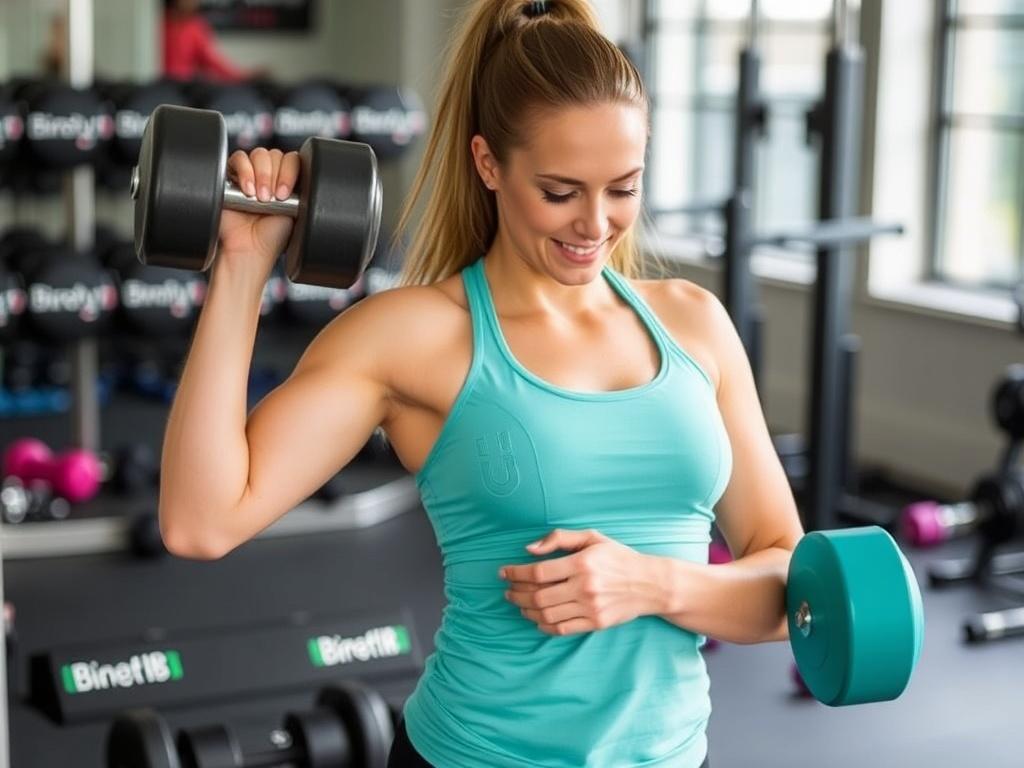
Starting with dumbbells can feel like stepping into a hardware store without instructions: dozens of options, unfamiliar numbers, and the quiet pressure of wanting to do it right. Pick a weight that’s too light and progress slows; pick one that’s too heavy and form breaks down or injury appears. This guide walks you through practical steps and real-world examples so you can choose sensibly, safely, and with confidence.
Why the correct starting weight matters
Choosing the appropriate load is the single best move a beginner can make to build strength efficiently. The right weight lets you complete each repetition with good form while still feeling challenged by the final reps. When that balance exists, you create the stimulus for strength and muscle growth without overstressing tendons or joints.
Going too heavy introduces compensations: the hips take over a weak back, shoulder momentum hides poor rotator cuff control, or breath-holding becomes a norm. These are subtle shifts at first, but they compound and make progress inconsistent and risky. Conversely, weights that are consistently too light condition endurance more than strength, and motivation can drop when workouts feel pointless.
Understanding basic strength levels and terminology
Before testing, it’s helpful to know a few commonly used terms. Rep max (RM) tells you the maximum number of repetitions you can perform with a load—12RM means the heaviest weight you can lift for 12 reps with good form. RPE, or rating of perceived exertion, is a 1–10 scale you can use to judge how hard a set feels; a useful target for many beginner sets is RPE 7–8, meaning you could do one or two more reps but not many more.
Beginners should focus on submaximal loads that allow for technical practice while still producing fatigue. That usually sits in the 8–15 rep range for hypertrophy and control, and the 4–8 rep range for heavier strength work once you have a base. For absolute starters, the emphasis should be movement quality and consistency, and rep ranges will skew higher to build coordination.
Quick tests to estimate a starting weight
You don’t need a lab to find an appropriate dumbbell. A simple practical test is to pick a weight you can press or curl for 8–12 clean reps, reaching near failure on the last two reps while keeping form. If you can easily do more than 12 without fatigue, increase the weight; if your form collapses before eight, reduce it.
Another method is the progressive trial: choose two weights spaced apart (for example, 5 and 10 pounds) and perform a set with each for an exercise like the goblet squat or dumbbell row. Track how many quality reps you can complete with each. The heavier weight that still allows control and a finishing challenge is your working load for that movement.
Warm-up sets and why they matter
Always begin testing with warm-up sets to prime the nervous system and rehearse movement patterns. Start with bodyweight or an empty dumbbell for 10–15 reps, then add moderate weight for 5–8 reps before attempting your working set. This reduces the chance of misjudging weight because of cold muscles or weak technique.
Warm-ups are also diagnostic: if a movement still feels awkward after warm-up reps, drop the weight and focus on technique. Using too heavy a load during warm-up can fatigue the muscles and make the real test unreliable, so increase gradually.
Recommended starting ranges by exercise
Not all exercises require the same dumbbell weight. Legs and larger compound patterns usually tolerate—or demand—more weight than isolated shoulder or arm work. Below are general starting ranges for complete beginners; treat them as flexible guidelines rather than hard rules. Individual factors like body weight, prior athleticism, and mobility will shift where you actually start.
| Exercise | Suggested starting weight (women) | Suggested starting weight (men) |
|---|---|---|
| Goblet squat | 10–25 lbs | 20–45 lbs |
| Dumbbell deadlift | 15–35 lbs per dumbbell | 30–70 lbs per dumbbell |
| Dumbbell bench press | 8–25 lbs | 15–40 lbs |
| Dumbbell shoulder press | 5–15 lbs | 10–30 lbs |
| Dumbbell row | 8–25 lbs | 15–40 lbs |
| Dumbbell lunge | 8–20 lbs | 15–40 lbs |
| Biceps curl | 5–15 lbs | 10–25 lbs |
| Triceps extension (overhead) | 5–12 lbs | 8–20 lbs |
These ranges are intentionally broad because “beginner” covers a wide swath of people. A 22-year-old who played sports in high school will start heavier than a 50-year-old who has been sedentary. The test-based approach earlier will quickly customize these numbers for you.
How to read the table and adjust for yourself
If you land in the lower end of a range and feel comfortable after a few workouts, increase by the smallest increment available—often 2.5 to 5 pounds. If you consistently fail to complete the target reps on compound moves but can on isolation moves, it may indicate that your stabilizers or technique need work rather than a pure strength deficit. Lower the weight and prioritize quality reps.
Consider unilateral (one-arm or one-leg) versions as diagnostic tools. Many beginners discover strength imbalances when performing single-arm dumbbell rows or Bulgarian split squats. Start with the weaker side, match your reps on the stronger side, and use the lighter weight as your working load until both sides balance out.
Upper-body versus lower-body guidelines
The lower body has larger muscles and typically can handle heavier loads, while the upper body and shoulders are more delicate and require precise loading. For example, a goblet squat with a single dumbbell held at chest level engages the quads, glutes, and core and therefore can be significantly heavier than a shoulder press that relies on smaller deltoid muscles and scapular stability.
This means don’t be surprised if your lower body exercises feel easy compared to pressing and pulling movements. That discrepancy is normal. Use it to guide your programming—prioritize compound lower-body lifts for strength and compound upper-body lifts for building stability before increasing weight dramatically.
Common beginner weight pitfalls for the upper body
A frequent mistake is choosing dumbbells for presses that require the shoulders to stabilize while the elbows flare out. The result is too much momentum and rounded posture. If you feel your neck or traps doing the work instead of the intended target, the weight is likely too heavy or your technique needs refinement.
Another trap is overestimating how much you can push from a standing position. A standing press demands whole-body bracing and coordination; seated or supported variations let you isolate the pressing muscles and find the correct load more easily. Start supported, then move to standing once you can control the weight for multiple sets at the intended rep range.
How to safely test and progress weights
Progression should be measured and deliberate. Increase load only when you can perform the prescribed reps and sets across all working sets with good form and controlled tempo. A reliable rule is the two-for-two: if you can do two extra reps on your final set for two workouts in a row, add weight on the next session.
Microloading—adding 1–2.5-pound increments—is especially useful for upper-body lifts where jumps of 5 pounds are too large. Many adjustable dumbbell systems and fractional plates support microloading. Patience with small increases prevents stalls and reduces injury risk while still moving strength forward.
Tempo and why it changes your perception of weight
Tempo describes the speed of each rep: the eccentric (lowering), pause, concentric (lifting), and pause phases. Slowing the eccentric phase makes a familiar weight feel heavier, exposing weaknesses and improving control. Beginners often underestimate weights because fast, uncontrolled reps mask flaws.
Try a 3-1-1 tempo for learning: three seconds down, one-second pause, one-second up. This encourages technique and reveals if a weight is appropriate. Once you can maintain tempo across all sets, you have a solid foundation for increasing load.
Programming tips: sets, reps, and frequency
A sensible starting program mixes compound lifts with a few accessory movements. For absolute beginners, full-body workouts done three times per week often produce the best results because they maximize practice and recovery. Each session can include 3–5 compound movements and 1–3 accessory exercises at higher rep ranges.
Keep early programs simple: 3 sets of 8–12 reps for most exercises, with a focus on progressive overload and consistency. As you gain experience, introduce lower-rep strength phases and higher-rep endurance phases to round out your capabilities. The key is gradual complexity, not immediate variety.
Sample weekly layout for a complete beginner
- Monday: full-body (squats, push, pull, core)
- Wednesday: active recovery or mobility work
- Friday: full-body (hinge, push, unilateral leg, core)
Each session should end with light conditioning or mobility work. Keep total workout time to 45–60 minutes to balance intensity with sustainability. Over time, the program can go to four sessions a week if recovery and life schedule allow.
Adjusting for age, mobility, and previous injury
Age and previous injuries matter more than raw numbers. Older beginners or those with joint issues should err on the lighter side and emphasize joint-friendly movements—goblet squats, chest-supported rows, and split squats are great choices. Strength gains are absolutely possible at any age, but they come faster and safer when you prioritize range of motion and tissue preparation.
If pain (sharp, persistent, or unusual) occurs during an exercise, stop and reassess. Mild muscle soreness is normal after new movement, but joint pain or radiating discomfort is a red flag. Modify the exercise, reduce load, or consult a physical therapist before proceeding with progression.
Choosing equipment: adjustable vs fixed dumbbells
Home gyms often present a choice between fixed-weight sets and adjustable dumbbells. Fixed dumbbells are affordable and durable but take up space. Adjustable dumbbells save space and allow fine increments, which is perfect for progressive microloading. They may cost more up front and sometimes sacrifice ease of use at high volumes.
If you plan a long-term home program and value versatility, adjustable dumbbells or a barbell with plates are smart investments. If you have a small budget and limited space, choose a few pairs of fixed dumbbells that cover your realistic starting weights and plan to add heavier ones as you progress.
Simple buying checklist
- Prioritize a comfortable handle and secure grip for safety.
- Check available increment sizes—can you add 2.5 pounds?
- Evaluate storage and footprint against your space constraints.
- Consider a warranty and material—rubber-coated heads protect floors and reduce noise.
Programming examples with suggested starting weights
Below are three sample beginner sessions that blend realistic starting weights and progression cues. The weights are suggestions; if they feel off for you, follow the testing rules instead of the numbers. Each exercise uses a 3 sets x 8–12 reps template unless noted otherwise.
Sample workout A — full-body emphasis
Goblet squat: choose a weight that allows 10–12 reps with tight core. Dumbbell bench press: select a weight where the triceps and chest are taxed on reps 9–12. One-arm dumbbell row: start lighter than your press to allow scapular control and equalize sides.
Accessory: dumbbell Romanian deadlift for hamstring control, 3 sets of 8–10. Finish with planks or dead bugs for core stability. Progress by adding 2.5–5 pounds when you hit two extra reps on two consecutive workouts.
Sample workout B — push/pull balance
Dumbbell shoulder press: start seated to find an appropriate weight before moving standing. Bulgarian split squat: hold a dumbbell in the goblet or at the side—legs will handle more weight than many expect. Biceps curls and triceps extensions finish the session at higher reps to build muscular endurance.
Frequency: alternate these workouts every other day, giving at least one rest day between sessions. If energy or form suffers, reduce the load and reassess technique.
How to tell when to increase or decrease weight
Signs it’s time to increase weight: your final set reps reach the top of the intended range for multiple workouts, RPE drops (you feel underchallenged), and you recover well between sessions. Simple and objective markers—like the two-for-two rule—keep progression steady and avoid guesswork.
Signs to decrease: consistent failure to complete reps with good form, sharp joint pain during lifts, or steady performance decline across the workout. If recovery is poor and general fatigue increases, a lighter week or deload can restore capacity. Adjusting frequency or volume sometimes helps more than changing weight immediately.
Real-life mistakes I’ve seen and how to fix them
In my first months of coaching, beginners often equated heavy with productive and sacrificed control for ego. One client repeatedly used too-heavy dumbbells on rows and developed lower-back soreness because his lats weren’t doing the pulling. We dropped the weight by 30 percent, focused on a full shoulder-blade retraction, and the soreness vanished while his pulling strength increased faster.
Another common misstep is inconsistent microloading. A woman I trained stalled for weeks because her gym only had 5-pound increments for upper-body work. Once we introduced 2.5-pound fractional plates, progress resumed and her confidence improved because the jumps felt manageable. Small increases matter.
Programming tools and tracking progress
Use a simple training log—paper or app—to record weights, sets, reps, and RPE. Over weeks, this record shows trends: consistent increases in load or reps indicate progress, while plateaus suggest strategic changes like tempo adjustment or a shift in rep ranges. The data removes guesswork from decisions to add weight.
If you prefer technology, apps with progression algorithms can propose the next weight based on your last sessions. Treat their recommendations as suggestions, not absolutes. Always cross-check with your form and perceived effort before following a prescribed jump in load.
Addressing common beginner questions
How many times per week should I lift dumbbells as a beginner?
A solid starting point is three full-body sessions per week, allowing at least one rest day between workouts. This frequency offers enough stimulus for adaptation while leaving space for recovery and lifestyle demands like work or family.
Are lighter dumbbells better for learning movements?
Yes. Lighter weights allow you to establish technique, control, and breathing patterns without the burden of maximal load. Use them until you can complete all prescribed sets and reps with consistent form, then gradually increase resistance.
Can I build muscle using only dumbbells at home?
Absolutely. Dumbbells are versatile and can target all major movement patterns. Progressive overload and proper nutrition are the core ingredients for hypertrophy; equipment variety is only one piece. Strategic use of tempos, rep ranges, and frequency will produce significant gains.
Safety and when to seek professional guidance
If you have pre-existing medical conditions, recent surgeries, or chronic joint pain, consult a medical professional or physical therapist before starting heavy resistance work. A trainer can assess movement patterns and provide an individualized plan to address mobility or stability deficits. This reduces injury risk and often speeds up progress.
Also consider working with a coach for a few sessions if you’re uncertain about form. The investment pays off because early technical corrections prevent years of compensation patterns. Even a single session to learn proper hip hinging, squat depth, and bracing strategies can transform your training trajectory.
Long-term mindset: how weight selection evolves
Expect that the way you choose dumbbell weight will change over years, not weeks. Early focus is on coordination and consistency; later focus shifts to strategic overload, periodization, and specific goals like strength, hypertrophy, or endurance. Your toolbox expands as you add tempo variations, unilateral loading, and advanced progressions.
Celebrate small wins: adding 2.5 pounds to a press or shaving off reps in a timed workout are signs of progress. Keep a long view and remember that linear progression slows over time—plateaus are normal, and adjustments in volume, intensity, and exercise selection keep growth moving.
Buying and budgeting: how many dumbbells do you really need?
If you’re building a minimal home setup, a set that covers light, medium, and heavy ranges for your body and goals is enough to start. For many beginners, three pairs per limb category—light (5–12 lbs), medium (15–30 lbs), and heavy (35+ lbs)—cover most exercises during the first year. Adjustable solutions compress this into one investment with a wider range.
If budget limits you to a few choices, prioritize the weights you use most: for most people, this means buying heavier pairs for leg-focused compound movements and mid-range pairs for presses and rows. You can also supplement with household items like filled backpacks for added variety while you save for more equipment.
Summary of practical steps to get started right now
1) Warm up thoroughly and pick a conservative test weight. 2) Use the 8–12 rep guideline for most beginner exercises and aim for RPE 7–8. 3) Track your sets, reps, and perceived effort in every session. 4) Progress using small increments and the two-for-two rule. 5) Prioritize technique and unilateral work to correct imbalances.
These steps build a training habit centered on steady progress rather than short-term bursts. They also keep your training enjoyable by avoiding frequent injuries and unnecessary plateaus.
Choosing your initial dumbbell weights is a practical process—not an exact science—and the best approach is one grounded in testing, honest feedback from your body, and consistent tracking. Begin conservatively, focus on form, and let small, steady increases accumulate into real strength. Your future self will thank you for starting smart and staying patient.