
When you walk into a supplement aisle or scroll fitness forums, you’ll see two familiar contenders: BCAAs and protein powders. Both promise muscle support, faster recovery, and better workouts, but they work differently and suit different needs.
This article will take you through the science, practical use, safety, cost, and real-world decisions so you can pick what actually helps you reach your goals rather than what a label or ad claims.
What are BCAAs?
Branched-chain amino acids, or BCAAs, are three essential amino acids: leucine, isoleucine, and valine. They are termed essential because your body cannot synthesize them; you must get them from food or supplements.
Leucine plays the starring role in stimulating muscle protein synthesis, while isoleucine and valine have supportive metabolic and energy roles. BCAA supplements are typically marketed as powders, capsules, or ready-to-drink mixes containing isolated amounts of these three amino acids.
People use BCAAs for intra-workout energy, to blunt muscle soreness, or to prevent muscle breakdown during long workouts or calorie-restricted phases. That perceived convenience fuels their popularity despite mixed evidence on benefit when adequate protein is already consumed.
What is protein powder?
Protein powder is a broader category that includes whey, casein, soy, pea, rice, and blended proteins. These products supply a full spectrum of amino acids, including the three BCAAs, plus additional nutrients depending on the source.
Whey protein, the most studied and widely used, is rapidly absorbed and rich in leucine, making it particularly effective at triggering muscle protein synthesis after exercise. Casein digests slowly, offering a prolonged amino acid release that can be useful overnight.
Protein powders are used to support muscle repair, increase daily protein intake, assist weight management through satiety, and provide a convenient source of high-quality amino acids for people with busy schedules.
How muscle protein synthesis actually works

Muscle protein synthesis (MPS) is the process by which your body builds new muscle proteins. MPS competes with muscle protein breakdown (MPB), and net muscle gain depends on the balance between these two processes over time.
Leucine acts as a molecular trigger for MPS by activating a signaling pathway called mTOR. However, triggering MPS is only one step—adequate availability of all essential amino acids is required to actually build muscle tissue.
That’s a key difference: while BCAAs, and leucine in particular, can signal MPS, they cannot provide the complete building blocks to synthesize full proteins unless other essential amino acids are present. Whole protein sources supply the full palette.
Timing and total daily protein intake have strong influence over long-term results. A single leucine hit without sufficient other amino acids or overall protein across the day will not produce lasting hypertrophy.
What the research says: BCAA-only versus whole protein
Early studies suggested BCAAs could reduce soreness and support recovery, but many of those trials lacked a comparison to complete protein or adequate total protein intake. More recent, controlled trials provide a clearer picture.
When total protein intake is suboptimal—say someone eating a low-protein diet—BCAA supplementation can help reduce breakdown and preserve lean mass. But when daily protein goals are met, adding standalone BCAAs usually provides little extra benefit for muscle growth.
Meta-analyses and randomized controlled trials show that complete protein sources, especially whey, are superior for maximizing MPS compared to isolated BCAAs. Whey delivers not only leucine but also the remaining essential amino acids required for synthesis.
There are contexts where BCAAs look useful: fasted training, prolonged endurance events, or during severe calorie restriction where protein intake is tightly limited. Even then, their advantages are situational rather than universal.
Practical differences: efficacy, calories, and satiety
Protein powders provide calories and a feeling of fullness that can assist with weight control, whereas BCAAs are typically low- or zero-calorie. This makes protein better for appetite control and overall nutrition planning.
From an efficacy standpoint, protein powder is a one-stop shop—you get a complete amino acid profile plus some products include vitamins, minerals, and added nutrients. BCAAs deliver a narrow set of amino acids that serve signaling roles rather than rebuilding material.
If you care about body composition, muscle gain, or recovery across weeks and months, whole protein will generally outperform BCAAs. If your goal is to sip something during a workout without calories, BCAAs might seem attractive but their incremental effect is often negligible.
For people tracking macronutrients, protein powder helps meet targets. BCAAs require you to account for other protein sources in your diet to ensure all essential amino acids are covered.
Timing: when to take BCAAs or protein
Pre- and post-workout windows are commonly touted, but total daily protein matters more than exact timing. Still, post-workout protein—especially fast-digesting whey—can speed amino acid availability for MPS.
BCAAs are marketed for intra-workout use to stave off fatigue and reduce perceived effort, but evidence for performance improvements is inconsistent. If you train fasted or on a low-protein day, BCAAs or amino acids before a session can blunt catabolism.
Casein at night can help limit overnight breakdown due to its slow digestion, while whey is favorable immediately after resistance training. BCAAs are sometimes used in addition to these strategies but rarely replace them.
Overall, prioritize hitting daily protein goals with whole proteins and use timing as a secondary adjustment based on schedule, appetite, and convenience.
Recommended dosages and simple protocols
General protein intake recommendations for active adults aiming to build or maintain muscle range from 1.6 to 2.2 grams per kilogram of body weight per day. Athletes in intense training may go slightly higher, but most benefit falls within that range.
For whey protein, a common effective dose post-workout is 20–40 grams, which typically supplies 2.5–3.5 grams of leucine—enough to robustly stimulate MPS in many people. Spreading protein evenly across meals (20–40 g each) appears beneficial.
BCAA supplements commonly suggest 5–10 grams before, during, or after exercise. Leucine-focused approaches aim for 2–3 grams of leucine per serving to trigger MPS, but remember that leucine alone won’t sustain synthesis without other essential amino acids present.
Sample protocol: consume 25–35 grams of high-quality protein within two hours after resistance training; if training fasted and unable to eat, use 5–10 grams of BCAAs pre-workout as a temporary measure, then prioritize a full protein meal as soon as possible.
Quick dosage list
- Daily protein target: 1.6–2.2 g/kg body weight.
- Post-workout whey: 20–40 g per serving.
- BCAA supplement: 5–10 g around exercise if used.
- Leucine per serving: aim for ~2–3 g to trigger MPS.
Who benefits most from each option
Recreational lifters and people who already meet protein targets gain the most value from whole proteins rather than BCAA isolates. Protein powder fills gaps and provides a broad range of amino acids necessary for adaptation and recovery.
Endurance athletes or long-duration trainers who cannot eat during an event may find BCAAs useful for reducing perceived exertion and delaying fatigue during very long sessions. The effect is modest and context dependent.
People dieting aggressively to lose weight and maintain lean mass sometimes use BCAAs to reduce muscle loss, but evidence indicates that boosting complete protein intake is a more reliable strategy. BCAAs are a patch, not a replacement for sufficient protein.
Older adults with anabolic resistance might benefit from higher per-meal protein and leucine, making complete protein a better choice than BCAAs alone for preventing sarcopenia and supporting function.
Risks, side effects, and interactions
For most healthy adults, both BCAAs and protein powders are safe when consumed in reasonable amounts. Excessive protein intake beyond what your body uses can strain digestive comfort and, in rare cases, renal function in people with pre-existing kidney disease.
BCAA supplements in high quantities may compete with other amino acids for transport and could theoretically affect neurotransmitter balance, but clinically significant issues are uncommon at recommended doses. Always follow label directions and consult your healthcare provider if you have chronic conditions.
Quality matters: contaminated or poorly manufactured supplements can introduce heavy metals, fillers, or banned substances. Choosing third-party tested products reduces this risk and is especially important for competitive athletes under anti-doping rules.
Quality, labeling, and regulation
Dietary supplements are not regulated like pharmaceuticals, so label claims aren’t always accurate. Third-party testing from organizations such as NSF, Informed-Sport, or USP can confirm purity and correct ingredient amounts.
Look for clear ingredient lists, absence of proprietary blends, and certifications for banned-substance testing if you compete. Protein powders should list the source and amount of protein per serving and any added sugars or fillers.
When buying BCAAs, check the ratio—many products use a 2:1:1 or 4:1:1 leucine:isoleucine:valine format. A higher leucine content isn’t automatically better if you can instead meet leucine needs through a complete protein source.
Combining BCAAs and protein: when it makes sense
Using BCAAs and whole protein together is not harmful, but often unnecessary. If you have a complete protein meal or shake, the added BCAAs provide little extra for MPS and simply increase cost.
There are practical scenarios where a small BCAA dose during long low-calorie workouts can be a convenience, while a protein shake post-workout provides the bulk of amino acids for repair. Think of BCAAs as a tactical supplement rather than a foundational one.
If you travel, skip meals, or train very early, carrying a small BCAA sachet for a quick hit can be handy, but it should complement rather than replace your regular protein strategy.
Cost and convenience considerations
Protein powders often cost more per serving than BCAAs if you consider just the grams of targeted amino acids, but they deliver far greater nutritional value. Long-term, a decent whey or plant blend tends to be a better investment for muscle and health.
BCAAs are lightweight, low-calorie, and sometimes flavored for palatability during workouts, making them convenient for specific situations. Yet buying them instead of a multi-serving protein powder because of taste or perceived training edge is usually not economical.
Factor in your lifestyle: if you skip meals often or have trouble meeting protein needs, a protein powder is a more practical solution. If you have a strict calorie budget and want something near-zero calorie for intra-workout sipping, BCAAs can fit that niche.
Common misconceptions and marketing spin
One widespread myth says BCAAs alone can build muscle as effectively as protein powder. That’s an oversimplification: BCAAs can stimulate signaling, but without the full amino acid pool, muscle construction is limited.
Another pitch claims BCAAs prevent all soreness. Research shows small reductions in perceived soreness in some settings, but they are not a magic cure. Consistent training, progressive overload, and adequate protein and recovery strategies are more powerful.
Marketing often emphasizes instant results; in reality, muscle adaptation is cumulative and depends on training quality, nutrition, sleep, and consistent protein intake more than a single supplement.
Real-world examples from my coaching experience
As a coach and gym-goer, I’ve seen people switch from BCAAs to whey and notice clearer progress in strength and muscle fullness within a few weeks. The difference often came from increased total daily protein rather than the switch itself.
I’ve also worked with endurance athletes who used small BCAA doses during ultraruns and reported less perceived fatigue in late stages. However, their recovery still depended heavily on post-event complete protein and carbohydrate refeeding.
Quick reference table: BCAA vs whole protein
| Feature | BCAA (isolates) | Whole protein (whey, casein, plant) |
|---|---|---|
| Amino acid completeness | Partial (leucine, isoleucine, valine) | Complete (all essential amino acids) |
| Best use | Intra-workout convenience, short-term anti-catabolism | Post-workout recovery, daily protein target, satiety |
| Effectiveness for MPS | Limited without other EAAs | High when appropriately dosed |
| Calories and satiety | Low/zero | Varies; usually contributes calories and fullness |
| Cost-effectiveness for muscle building | Lower | Higher |
Practical shopping tips
When buying protein, choose a brand that lists grams of protein per serving and avoids ambiguous proprietary blends. Check for added sugars and unnecessary fillers if you’re tracking macros.
For BCAAs, look for clear ratios and quantity per serving, and be cautious of highly sweetened intra-workout mixes that add calories. If you compete, prefer products with banned-substance testing labels.
Sample and taste matter. Some proteins are chalky or hard to mix, which can reduce adherence. Pick a product you’ll actually use consistently, since consistency matters more than micro-optimizations.
Practical decision tree: which should you choose?
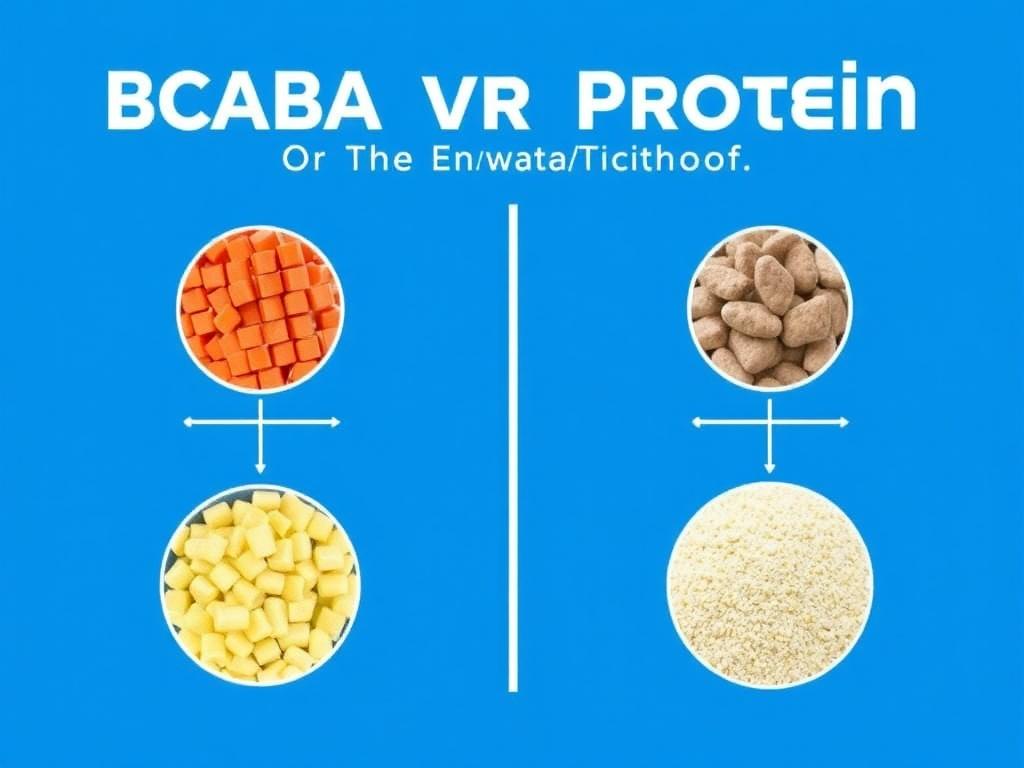
If you meet your daily protein goal from food and supplements, and your workouts are not extremely long or fasted, skip BCAAs and stick with whole protein. The marginal benefit of BCAAs in that case is small.
If you struggle to reach protein targets, choose a protein powder that helps you meet per-meal leucine and total protein requirements. That will be the most effective strategy for hypertrophy and recovery.
If you train fasted, do long endurance sessions, or are in a tight calorie deficit and cannot eat around training, consider short-term BCAA use as a practical tool rather than a replacement for dietary protein.
Sample weekly protocols
Strength trainee: Eat 1.8–2.0 g/kg protein daily, include 25–35 g whey after training, and distribute protein evenly across three to five meals. Skip BCAAs unless you train fasted.
Endurance athlete: Consume 1.4–1.8 g/kg protein daily, consider 5–10 g BCAAs during long sessions, and prioritize a carbohydrate-rich recovery with 20–30 g of complete protein within two hours post-event.
Dieting client: Increase protein toward the upper range (2.0–2.4 g/kg), use whey for satiety and convenience, and reserve BCAAs only if you must fast during training or the diet severely limits intake.
Frequently asked questions
Q: Can BCAAs replace protein shakes? A: Not reliably. BCAAs lack the full set of essential amino acids needed for sustained muscle protein synthesis and recovery, so they shouldn’t be a permanent substitute.
Q: Are BCAAs worth the money? A: Only in specific scenarios—fasting, prolonged exercise without food access, or targeted intra-workout use. For most people, investing in quality protein powder yields a better return.
Q: Which protein is best—whey or plant? A: Whey is superior for rapid MPS due to its amino acid profile and leucine content, but plant proteins can be effective if consumed in slightly higher amounts or blended to provide a complete EAA profile.
Q: Can too much leucine be harmful? A: High leucine intake through normal dietary means or supplements at recommended doses is generally safe. Excessive and prolonged high intake should be discussed with a healthcare professional, especially in the presence of metabolic or renal conditions.
Final thoughts on choosing wisely
In most practical situations, whole protein is the better foundational choice because it supplies the complete amino acid profile, supports satiety, and reliably promotes muscle repair and growth. It’s the workhorse of nutrition strategies aimed at improving body composition and performance.
BCAAs can have a place as a tactical tool—fasted sessions, very long workouts, or temporary gaps in protein intake—but they rarely replace the benefits of complete protein sources. Use them sparingly and intentionally, not as a universal shortcut.
Decide based on your training schedule, dietary patterns, budget, and goals. Prioritize total daily protein, choose quality products, and remember that consistent training and recovery practices matter far more than which supplement you buy.