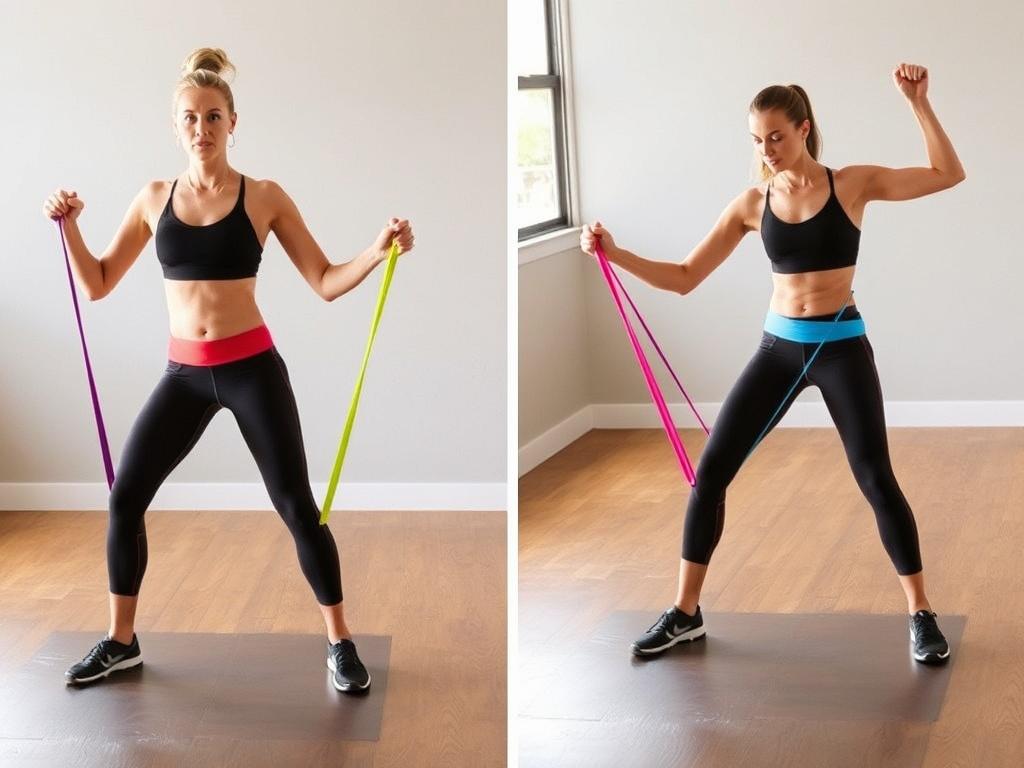
Resistance bands are the most underrated piece of fitness equipment you can own. They fold into a pocket, cost a fraction of a gym membership, and deliver a full, challenging workout whether you’re at home, in a hotel room, or rehabbing an old injury. In this article I’ll walk you through why they work, how to pick the right band, a complete collection of exercises, and a practical four-week plan you can use immediately.
Why resistance bands are effective for full-body training
Unlike free weights, bands provide variable resistance — the further you stretch them, the greater the load. That means muscles face increasing demand through the range of motion, which improves strength and coordination in ways that feel different and complementary to traditional lifting.
Bands also force you to control the movement the entire time, which recruits stabilizer muscles and improves joint health. That continuous tension is particularly helpful for correcting movement imbalances and building practical strength that translates to daily activities.
Finally, bands are inherently progressive: stack bands for more resistance, change anchor points to alter force angles, or increase tempo to raise difficulty. That flexibility makes them suitable for beginners, athletes, and people in physical therapy alike.
Types of resistance bands and how to choose
There are several common band designs, and each has an ideal use. Understanding their differences will help you pick a small kit that covers everything from mobility work to heavy strength training.
Tube bands with handles mimic dumbbells and are comfortable for pressing and rowing. Flat therapy bands are cheap and excellent for rehab and mobility. Loop bands — short or long — are perfect for lower-body work and progressive loading with minimal setup.
Fabric bands are gentler on skin and often used for glute activation, while heavy power bands (thick rubber loops) can replace a barbell in many deadlift and squat variations for higher load. Choose a mix: at least one light, one medium, and one heavy band to build a versatile program.
Quick comparison table
The table below helps you match the band to the task: portability, best uses, and resistance range give a practical guide when buying an inexpensive set.
| Type | Best uses | Typical resistance range |
|---|---|---|
| Flat therapy band | Rehab, warm-ups, shoulder work | Light to medium (2–30 lbs) |
| Tube band with handles | Presses, rows, pulldowns | Light to heavy (5–60 lbs) |
| Short loop band | Glute activation, lateral work | Light to medium (5–40 lbs) |
| Long loop/pull-up assist | Assisted pull-ups, banded squats | Medium to very heavy (20–200+ lbs) |
Essential movement categories for a full-body plan
A balanced program hits the body through movement patterns rather than isolated muscles. I structure band workouts around push, pull, hinge, squat, lunge, rotation/anti-rotation, and core work. Each pattern has multiple band-friendly variations you can rotate through.
That approach prevents overuse, builds functional strength, and keeps training interesting. Below you’ll find practical exercises for each movement pattern with cues and common progressions.
Push patterns (chest, shoulders, triceps)
Band chest presses and overhead presses train the same pushing mechanics as bench and military presses but with constant tension. Anchor a tube band behind you or step on a long loop and press forward; focus on full lockout and controlled return.
For shoulders, single-arm band presses or lateral raises target deltoids while forcing stabilization through the core. Triceps extensions — overhead or lying — are also highly effective with bands and useful when dumbbells aren’t available.
Pull patterns (back, biceps)
Rows and pulldowns translate easily to bands. Attach a band at chest height for horizontal rows, or anchor high for pulldowns and lat emphasis. Keep the shoulders down and squeeze the scapulae together at the end range to maximize back recruitment.
Band curls work well for biceps because you can vary hand position and angle to emphasize different parts of the muscle. The changing tension helps reduce joint strain compared to heavy free-weight curls.
Hinge and posterior chain (hamstrings, glutes, lower back)
Banded deadlifts, good mornings, and glute bridges target the posterior chain. Loop a long band under your feet and over your hips for bridges to feel progressive resistance at the top of the lift. For deadlifts, anchor the band under your feet and hold the ends or handles.
For deeper glute emphasis, perform single-leg Romanian deadlifts with a band for balance and resistance. Keep a slight bend in the standing knee and focus on hip hinge mechanics rather than bending the back.
Lower-body push and single-leg work (squats and lunges)
Banded squats vary from simple goblet-style squats to belt-squat-style setups using a long loop band. The band tension encourages a strong, upright torso and adds load through the top range, making squats feel different and sometimes more joint-friendly.
Lunges and split squats with bands are great for creating unilateral strength and addressing asymmetries. Hold the band under your front foot and press up, or anchor it behind you for forward resistance to challenge stability.
Rotation and anti-rotation (core and obliques)
Anti-rotation chops and pallof presses are simple to set up: anchor a band at chest height and resist rotation. These moves build core stiffness that transfers to better performance in lifts and safer everyday movement.
Dynamic band rotations teach the body to transfer force through the torso. Perform controlled standing or kneeling band chops with a slow eccentric and a strong finish to train both mobility and power.
Calves, grip, and accessory work
Don’t neglect small but important areas: band-resisted calf raises and wrist curls are easy to add at the end of a session. Bands are also useful for handgrip work by gripping the band and creating tension through finger extension or pinch holds.
These accessories improve balance and injury resilience. They also provide a simple way to accumulate volume when you’re short on time or recovering from heavy training cycles.
Sample exercises with cues and regressions
Below are practical cues and regressions so you can scale each exercise. I include alternative setups when equipment or anchor points are limited, which is common when training outside a gym.
Use these options to keep intensity manageable while ensuring technical quality. Poor form under band tension often leads to small compensations that become habits, so start light to learn the pattern.
Banded chest press
Setup: Anchor band behind you at chest height or step on a long loop and hold the band ends. Press forward keeping the ribs down and the shoulders packed. Pause briefly at lockout to emphasize control.
Regression: Perform standing presses with a lighter band, or do single-arm presses to identify and correct imbalances. Progress by adding another band or taking a longer step to increase stretch.
Banded row
Setup: Anchor at mid-height or step on the band with feet hip-width apart and hinge slightly at the hips. Pull the band to your belly button while squeezing your shoulder blades together. Keep the neck neutral and the chest tall.
Regression: Use a lighter band and focus on scapular retraction without excessive elbow movement. Progress to single-arm rows or increase distance from the anchor to add resistance.
Romanian deadlift with bands
Setup: Stand on a band with feet hip-width, hold the band ends, and hinge forward from the hips while keeping tension. Push hips back and maintain a neutral spine. Finish by driving hips forward until the band pulls taut at the top.
Regression: Reduce range of motion or use a lighter band to learn the hinge. Progress by performing single-leg variations or adding tempo (slow eccentrics) for increased time under tension.
Pallof press (anti-rotation)
Setup: Anchor a band at chest height and stand perpendicular to the anchor. Hold the band with both hands at the sternum and press forward, resisting rotation. Maintain a tall posture and tight midline throughout each rep.
Regression: Perform the move with feet wider for more base of support or with a lighter band. Progress by performing single-arm presses, adding a hold at full extension, or kneeling to reduce lower-body contribution.
Programming principles for a well-rounded plan
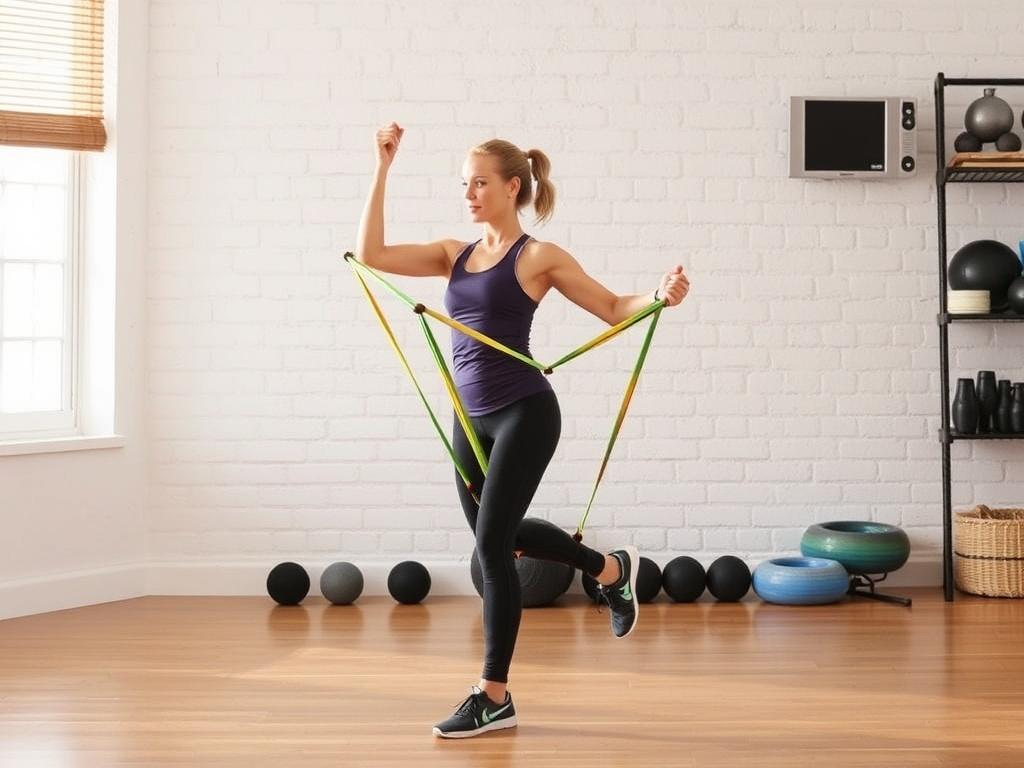
Designing a program with bands requires the same principles as weight training: progressive overload, recovery, specificity, and variation. Bands provide unique options for progression; use them thoughtfully.
Track either repetitions or the level of band tension. When you can complete the prescribed reps easily with good form, increase resistance by using a stronger band, reducing slack, or adding a second band. Consistency is more important than chasing heavier bands every session.
Sets, reps, and tempo guidelines
For general strength and muscle-building, aim for 3–5 sets of 6–12 reps on main lifts. For endurance and conditioning, use 12–20 reps or circuit formats. Tempo matters: a 2-0-1 tempo (two-second eccentric, no pause, one-second concentric) helps maintain control and build tension.
Use lower rep ranges with heavier bands for compound moves like deadlifts and squats, and higher rep ranges for accessory and core work. Rest 60–120 seconds between sets for most strength exercises, adjusting based on intensity.
Balancing frequency and recovery
Full-body training with bands is efficient; three sessions per week can yield excellent results for most people. Beginners benefit from three non-consecutive sessions, while intermediates can split into upper/lower or push/pull/legs variations if desired.
Recovery depends on overall stress, sleep, and nutrition. If you notice persistent soreness or performance drops, reduce volume or incorporate a deload week with lower intensity and more mobility work.
Four-week progressive band program
Here’s a practical four-week plan you can use to build a baseline of strength and movement quality. It alternates intensity and focuses on fundamental patterns. Do a brief warm-up before each workout and finish with mobility or stretching.
Weeks 1–2 emphasize technique and volume; weeks 3–4 increase resistance and intensity. Perform each workout three times per week (e.g., Monday, Wednesday, Friday) and use active recovery on off days.
Workout A — push + hinge focus
– Banded chest press: 4 sets x 8–12 reps. Rest 90 seconds between sets. Focus on controlled eccentrics and full lockout.
– Romanian deadlift (band): 4 sets x 8–10 reps. Keep a tall chest and hinge from the hips.
– Overhead band press: 3 sets x 8–10 reps. Use a lighter band to maintain stability.
– Pallof press: 3 sets x 10–12 reps per side. Hold 1–2 seconds at full extension.
– Band face pull (banded rear delt row): 3 sets x 12–15 reps.
Workout B — pull + squat focus
– Banded row (single or double): 4 sets x 8–12 reps. Emphasize scapular retraction.
– Banded squat (goblet or belt-style): 4 sets x 8–12 reps. Drive through the heels and maintain core tension.
– Bulgarian split squat (banded): 3 sets x 8–10 reps per leg. Use the band for added resistance or support.
– Banded curls: 3 sets x 10–15 reps. Vary hand position across sets.
– Standing calf raise with band: 3 sets x 15–20 reps.
Workout C — conditioning and core
– Circuit: perform 3–5 rounds with 60 seconds rest between rounds:
1) Band-resisted push-up x 10–15
2) Glute bridge (band over hips) x 12–15
3) Banded single-arm row x 10 per side
4) Pallof press x 10 per side
– Finish with a 5–10 minute mobility flow focusing on hips and thoracic spine.
Progressions and variations to keep improving
If a movement becomes too easy, don’t just add reps. Change the lever arm, increase band tension, reduce assistance, or alter the tempo. These small adjustments create new stimuli and steady progress.
Add isometric holds at the strongest point of the lift, perform eccentric-only reps to build strength, or chain bands to increase resistance quickly. Mixing these strategies keeps training fresh and productive.
Warm-up, mobility, and recovery with bands
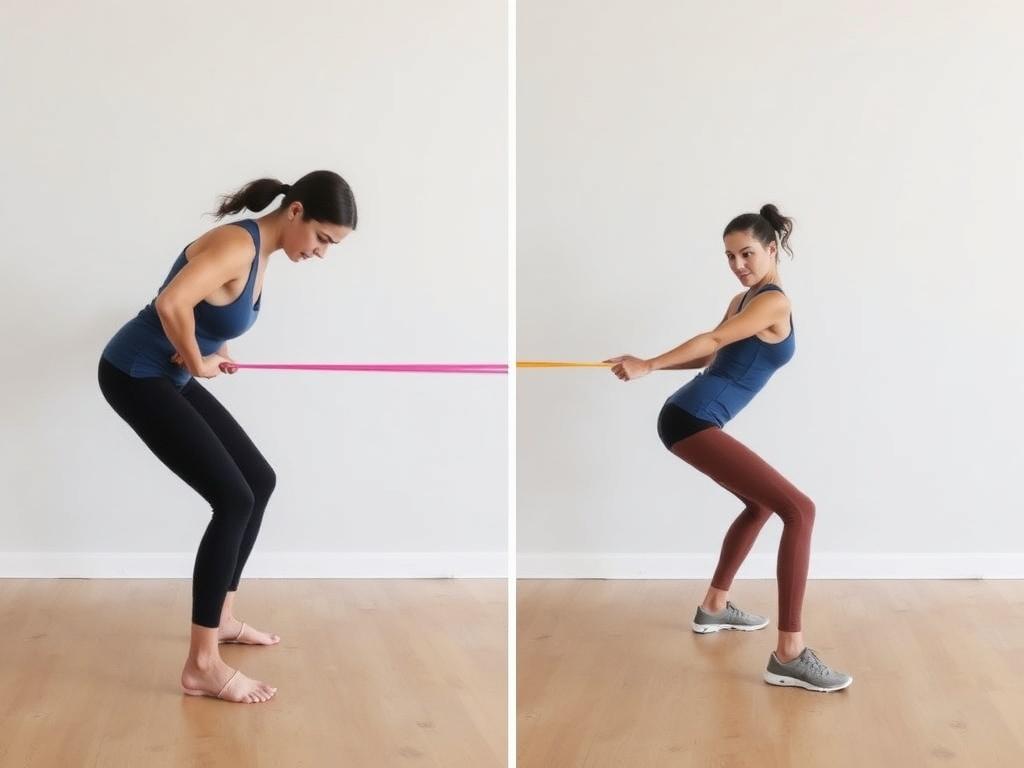
Bands shine for warm-ups and mobility work because they promote controlled movement and neuromuscular activation. Simple band pull-aparts, shoulder dislocations, and monster walks prime the body in minutes.
Use lighter bands for dynamic mobility drills: thoracic rotations with a band, banded ankle dorsiflexion, and hip CARs (controlled articular rotations) increase joint range and readiness. Finish sessions with light banded stretches or PNF-style holds to maintain flexibility.
Safety tips and common mistakes
Inspect bands for nicks or cracks before each session — damaged bands can snap and cause injury. Replace any band that shows visible wear, especially power bands that take heavy loads. Store bands away from direct sunlight to prolong their life.
A frequent mistake is choosing a band so heavy that form breaks down. The band should challenge you while still allowing controlled movement. Prioritize technique, and scale resistance conservatively to prevent compensatory movement patterns.
How to integrate bands with other training
Bands complement, rather than replace, other training modalities. Use them to add volume after a heavy barbell session, for warm-up activation before lifting, or as the primary tool for travel and light days. They also work well for drop sets and burnout sets at the end of workouts.
If you’re a lifter, banded variations (banded deadlifts, band-resisted squats) can target weak ranges and improve lockout strength. For athletes, bands are great for sport-specific movement drills and explosive band-resisted sprints or jumps.
Adjustments for special populations
Seniors and beginners often respond exceptionally well to band training because it offers low-impact resistance and excellent joint control. Start with higher repetition ranges and focus on balance and posture for safer progress.
For postpartum athletes or those with pelvic floor concerns, avoid heavy intra-abdominal loading initially. Use bands for controlled hip and glute strengthening, and consult a qualified pelvic health professional to clear return-to-exertion progressions.
Maintenance, care, and kit recommendations
Take care of your bands and they’ll last. Wipe them down with mild soap and water after sweaty sessions and store them flat or in a loop (not knotted) to avoid stress points. Replace any band that feels sticky, brittle, or shows surface splitting.
A practical starter kit includes: one light flat band, one medium loop band, one heavy loop or tube with handles, and a long power band for heavy pulls. This combination covers most needs without cluttering your bag.
Tracking progress without a scale
Track progress by increasing band tension, reducing rest, improving movement quality, or completing more reps at the same tension. Record how many full extensions you can achieve, how easily you hit tempo targets, and whether compensations disappear.
Keep a simple training log that notes the band used, anchor point, reps, and perceived exertion. Over weeks you’ll see patterns of improvement that a scale or mirror may not reflect immediately.
Real-life examples and personal notes
I’ve used bands during long travel months when gym access was inconsistent. A light kit kept my strength intact and actually improved my movement control; I noticed fewer low-back twinges when I returned to heavy barbell lifts. That consistency reminded me that the best training tool is the one you’ll use regularly.
In a clinic setting, I worked with a client rehabbing a shoulder impingement; banded external rotation and gradual overhead pressing rebuilt function with less discomfort than dumbbells. Small, consistent improvements mattered more than pushing weight prematurely.
Common program mistakes to avoid
Avoid letting bands be a purely corrective tool that never challenges you. They should simultaneously improve movement quality and build capacity. If you only use light bands and never progress tension, you’ll stall.
Another mistake is neglecting full-range movements because bands can feel different. Preserve full joint range and emphasize control at both the beginning and end of movements to build robust, transferable strength.
Sample weekly variations for different goals
If your goal is fat loss, convert one of the three weekly sessions into a higher-intensity circuit and add short cardio intervals. For hypertrophy, increase total volume per muscle group with additional accessory sets and shorter rest periods. For strength, focus on lower reps with heavier band combinations and longer rest.
Below is a compact weekly template you can customize:
- Strength focus: 3 full-body sessions, heavy band emphasis, 3–5 sets of 4–6 reps.
- Hypertrophy focus: 3 sessions, moderate bands, 3–4 sets of 8–12 reps, higher accessory volume.
- Maintenance/conditioning: 3 sessions, mixed-resistance circuits, 12–20 reps, cardio intervals 2x/week.
How often to replace bands and signs of wear
Longevity depends on material and usage. Latex bands often last several hundred sessions if cared for, while fabric bands can endure more abrasion. Replace bands immediately if you see cracks, discoloration, or if they suddenly snap under a familiar load.
Keep a spare heavy band at home and another in your travel bag. Band failures are rare but can be inconvenient and unsafe if they occur mid-set with high load or near the face.
Travel-friendly workouts and minimalist setups
For travel, bring one long loop and one medium flat band. You can construct presses, rows, squats, and deadlifts with those two and a sturdy anchor like a pole or a door (use a door anchor to protect the band and the door). A quick 20–30 minute routine maintains fitness and prevents stiffness from long flights.
Use circuits combining push, pull, and lower-body moves to create an efficient full-body session. Swap intensity by shortening rest periods or adding tempo changes to create metabolic stress when time is limited.
Final practical checklist before you start
– Choose three bands covering light, medium, and heavy resistances.
– Learn 6–10 core movements across push, pull, hinge, squat, lunge, and anti-rotation patterns.
– Program three workouts per week with progressive overload and deliberate recovery.
– Warm up with light band activation drills and cool down with mobility work.
With those basics handled, you’ll have a portable, flexible system that builds strength, improves movement, and fits into a busy life. Bands are simple but powerful — use them deliberately, and they’ll reward you with consistent gains and fewer days lost to soreness or inconvenience.