Few things are as practical, portable, and honest as training that uses only your own body. Упражнения с собственным весом на все тело offer a way to build strength, mobility, and endurance without a gym membership or heavy gear. This article lays out principles, exercises, progressions, and week-by-week plans so you can move smarter and get fitter from the living room, park, or hotel room.
Why train with your own body
Bodyweight work demands coordination and balance alongside raw strength, which means you develop usable fitness rather than just big numbers on a machine. Because you train through natural movement patterns, you often improve posture, joint control, and day-to-day function as you get stronger. The convenience is real: you can piece quality sessions into busy schedules and travel without losing progress.
Another advantage is adaptability—you can scale an exercise by changing leverage, tempo, or range of motion instead of adding plates. That makes it beginner-friendly and eternally challenging for advanced athletes through variations like one-arm or single-leg moves. Finally, bodyweight systems tend to be low-cost and low-risk when programmed with proper progression and attention to form.
Core principles of effective sessions
Focus on compound movements that recruit multiple joints and large muscle groups; they give the greatest return for time invested. Prioritize movement quality over reps—clean mechanics protect joints and make strength gains more transferable to other activities. Consistency beats intensity spikes: steady, progressive load or difficulty increases will produce long-term improvement.
Balance your training across pushing, pulling, hinge, squat, lunge, and core patterns to avoid muscular imbalances and reduce injury risk. Use deliberate progression strategies—more reps, added range, slower tempo, or harder variations—so the body adapts without abrupt overload. Finally, listen to recovery signals and program rest days, mobility sessions, or lighter workouts to prevent burnout.
Movement patterns and targeted muscle groups
Understanding movement categories helps you design sessions that hit the whole body rather than random isolated moves. Pushing patterns (e.g., push-ups, dips) build chest, shoulders, and triceps; pulling patterns (e.g., rows, pull-ups) train the back and biceps. Squats and lunges target the quadriceps and glutes, while hinging movements (e.g., single-leg deadlifts or hip bridges) emphasize posterior chain strength like hamstrings and glutes.
Rotational and anti-rotational drills train obliques and deep core stabilizers, while vertical and horizontal carries—carrying a backpack or towel—challenge grip and anti-flexion strength. Mixing these categories across a workout ensures that no system is neglected and that you build durable, balanced fitness. A deliberate mix of strength, mobility, and conditioning keeps your sessions productive and interesting.
Warm-up: mobilize, activate, and prime
A brief, purposeful warm-up improves performance and lowers injury risk by raising temperature and activating target muscles. Start with 4–6 minutes of dynamic movements—arm circles, leg swings, hip rotations, and light jumping—to increase blood flow and joint mobility. Follow with activation drills like glute bridges, band pull-aparts, or scapular push-ups to cue the nervous system and prepare specific muscles for work.
Finish the warm-up with low-intensity progressions of the first exercise in your workout—for example, incline push-ups before full push-ups, or assisted squats before pistol progressions. This task-specific priming reduces early fatigue and improves technique when loading intensity matters. Aim for a warm-up that feels efficient: enough to move well, not long enough to tire you out.
Key exercises and how to progress them
Below are core exercises organized by pattern. For each movement, think in terms of progressions: easier regressions, the standard version, and harder variations. Small adjustments like foot position, tempo, or added isometrics can multiply difficulty without external weight.
Horizontal push: push-ups and variations
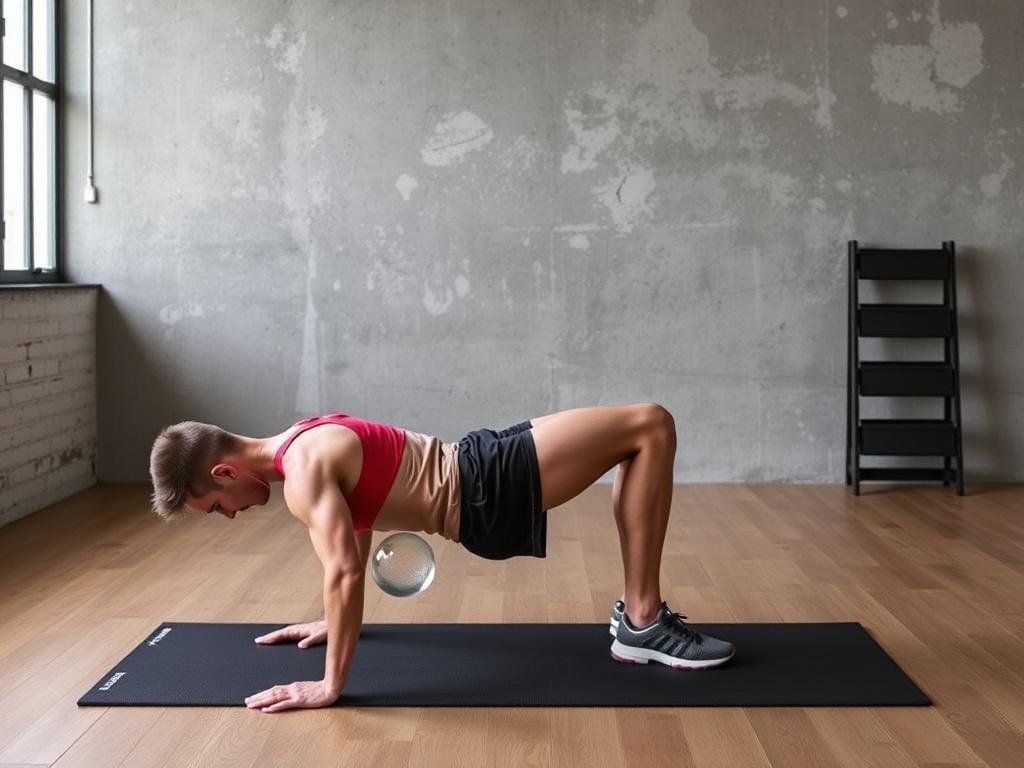
Standard push-ups train chest, shoulders, and triceps while demanding core stiffness. Regressions include wall push-ups and incline push-ups; progressions include decline push-ups, archer push-ups, and one-arm push-ups. To increase challenge without changing position, slow the eccentric phase, add a pause at the bottom, or elevate the feet to increase load.
Focus on a straight line from head to heels and active shoulder blades that don’t collapse forward. If wrist pain occurs, use push-up handles, form adjustments, or knuckle push-ups to shift pressure. For volume-based hypertrophy, aim for multiple sets of medium-high reps with short rest; for strength, reduce reps and increase difficulty of variations.
Horizontal pull: inverted rows and progressions
Inverted rows provide horizontal pulling strength and are typically performed using a low bar, sturdy table, or suspension trainer. Make the exercise easier by raising the bar to reduce the angle and harder by lowering it, elevating the feet, or adding a single-arm emphasis. Keep the body rigid and pull the chest to the bar rather than shrugging with the neck.
Rows complement push exercises and help maintain shoulder health by strengthening the posterior chain. If equipment is limited, loop a towel around a post or use a strong door-mounted anchor with caution and proper setup. Aim for balanced volume with pushing movements to avoid forward shoulder rounding.
Vertical pull: pull-ups and alternatives
Pull-ups are a benchmark of upper-body strength, primarily working the lats, biceps, and scapular stabilizers. Assisted options include resistance bands, negative-only reps, or Australian rows at a higher angle; progress to weighted variations, archer pull-ups, or one-arm pull-ups for advanced training. When you can’t access a bar, towel rows over a sturdy door or gymnastic ring rows offer similar benefits.
Grip strength often limits pull-up progression, so include dedicated gripping work like dead hangs and farmer carries in your routine. Practice full ranges: starting from a dead hang and pulling chin over bar improves muscular recruitment and resilience. Consistency with small increases—one extra rep every session or a tighter grip—adds up faster than occasional maximal attempts.
Squat and lunge variations for lower body
Bodyweight squats and lunges develop thigh and glute strength while reinforcing hip mobility and balance. Regress by reducing range or holding onto support, and progress with Bulgarian split squats, shrimp squats, or pistol squats for unilateral strength. Tempo manipulation—longer descents or paused bottoms—dramatically increases time under tension and builds control without external load.
Include both bilateral and unilateral movements to address side-to-side asymmetries and coordination. For conditioning days, circuit-style squat variations (jump squats, walking lunges) add a cardiovascular component. Maintain an upright chest and neutral spine to protect the lower back and promote efficient force transfer.
Hinge pattern: bridges and single-leg deadlifts
Hip-dominant movements like glute bridges, hip thrusts, and single-leg Romanian deadlifts target hamstrings and glutes that are often neglected in purely squat-based training. Start with two-legged bridges, then increase difficulty by extending one leg or elevating feet for a greater range. For advanced posterior chain strength, add slow eccentrics or hold long isometric positions at peak contraction.
The hinge pattern is critical for jumping, sprinting, and postural support. Train with emphasis on pushing the hips back and maintaining a neutral spine rather than bending at the lower back. Integrate hinge work twice weekly for balanced lower-body development and injury prevention.
Core and anti-rotation work
Core training for bodyweight athletes goes beyond crunches; emphasize anti-extension, anti-rotation, and integrated bracing patterns. Planks, side planks, hollow holds, and Pallof presses (with a band or towel anchored) develop stability that protects the spine during loaded movements. For dynamic strength, add hanging knee raises, windshield wipers, or controlled toes-to-bar variations when appropriate.
Quality core work means training the core as a stabilizer during compound moves: maintain bracing during squats, push-ups, and rows. Progressive overload can come from longer holds, more challenging lever positions, or combining moves in flowing circuits. Practice breathing patterns that support bracing—exhale on exertion and maintain intra-abdominal tension when needed.
Full-body compound variations
Exercises that integrate many patterns—like burpees, muscle-up progressions, or Turkish get-up alternatives—boost conditioning and functional strength. Burpees combine hinge, plank, and vertical push patterns and can be tweaked for intensity by removing the jump or adding a push-up. The muscle-up requires mastery of pull-up and dip mechanics; break it down into strict pull-ups, chest-to-bar pull-ups, and transition drills to bridge the gap safely.
These compound exercises are efficient for time-crunched sessions and are excellent finisher options. Use them judiciously because their cumulative fatigue can compromise technical lifts later in the workout. When done correctly, compound moves create a satisfying blend of strength, coordination, and endurance.
Sample weekly plans: beginner to advanced
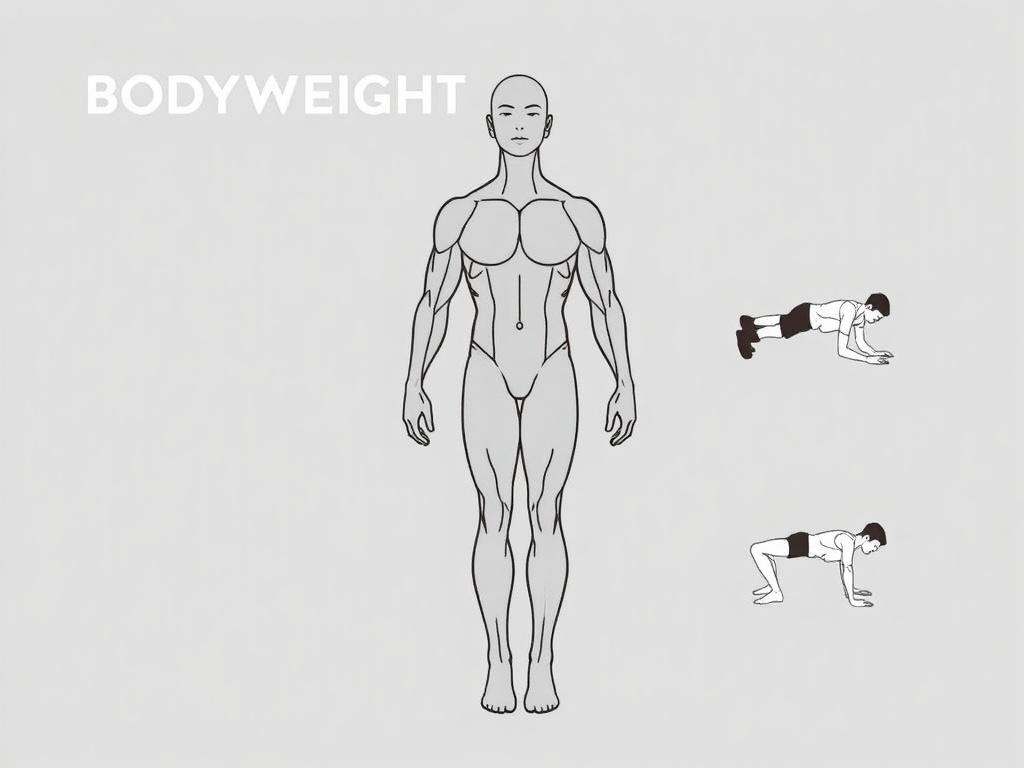
Below are three progressive weekly templates that prioritize whole-body coverage. Each plan includes warm-ups, primary strength sets, accessory work, and optional conditioning to craft balanced progress without equipment. Adjust volume and rest according to recovery and daily schedule.
| Level | Days/week | Focus |
|---|---|---|
| Beginner | 3 | Technique, foundational strength, mobility |
| Intermediate | 4 | Progressive overload, unilateral work, conditioning |
| Advanced | 5 | High-skill progressions, density, strength variations |
Beginner example: Day A—push + squat + core; Day B—pull + hinge + mobility; Day C—full-body circuit with low-impact conditioning. Each main lift uses 3–4 sets of 6–12 reps at a manageable intensity with tempo focus. Rest days include light mobility or walking to support recovery.
Intermediate example: Day 1—upper strength (push/pull), Day 2—lower strength (squat/hinge), Day 3—rest or mobility, Day 4—skill and conditioning, Day 5—full-body hypertrophy circuits. Introduce single-leg and single-arm variations and start structured progressions like adding paused reps or slower eccentrics. Track small weekly improvements: three extra reps, a lower incline, or longer hold times.
Advanced example: split training across strength, skill, and metabolic conditioning with higher overall volume and increased technical demand. Include heavy calisthenics variations—weighted pull-ups if you have gear or strict one-arm push-up progressions—and planned deload weeks. Quality sleep, nutrition, and periodized intensity are essential at this stage to sustain gains and avoid plateaus.
Designing progressive sessions
Progression is the engine of adaptation—if you’re not making the work harder over time, you won’t improve. Simple progress models include adding reps, improving range of motion, slowing tempo, shortening rest, or choosing a harder variation. Use a training log to record exact sets, reps, leverage angles, or tempo so you can objectively increase load each week.
Periodize your training with phases: build a few weeks of volume for hypertrophy, then shift to lower reps and higher difficulty for strength, followed by a maintenance or recovery microcycle. This prevents stagnation and allows neuromuscular systems to recover before another intensity wave. Tailor progression rates to your experience level—beginners can progress faster; advanced trainees need smaller, more deliberate increments.
Common mistakes and simple corrections
Rushing reps, compromising technique, and neglecting mobility are frequent errors that undermine progress and increase injury risk. Slow down the eccentric portion of each rep and prioritize full range of motion to get stronger while reinforcing joint health. If form deteriorates mid-set, reduce reps per set and add an extra set rather than pushing through sloppy mechanics.
Another common trap is training only what’s fun: people do tons of push-ups but avoid pulling or posterior chain work. Balance the program to maintain shoulder health and prevent muscular imbalances. Finally, don’t skip warm-ups or recovery; short mobility sessions and quality sleep often produce bigger gains than an extra hard workout.
Scaling for different fitness levels and limitations
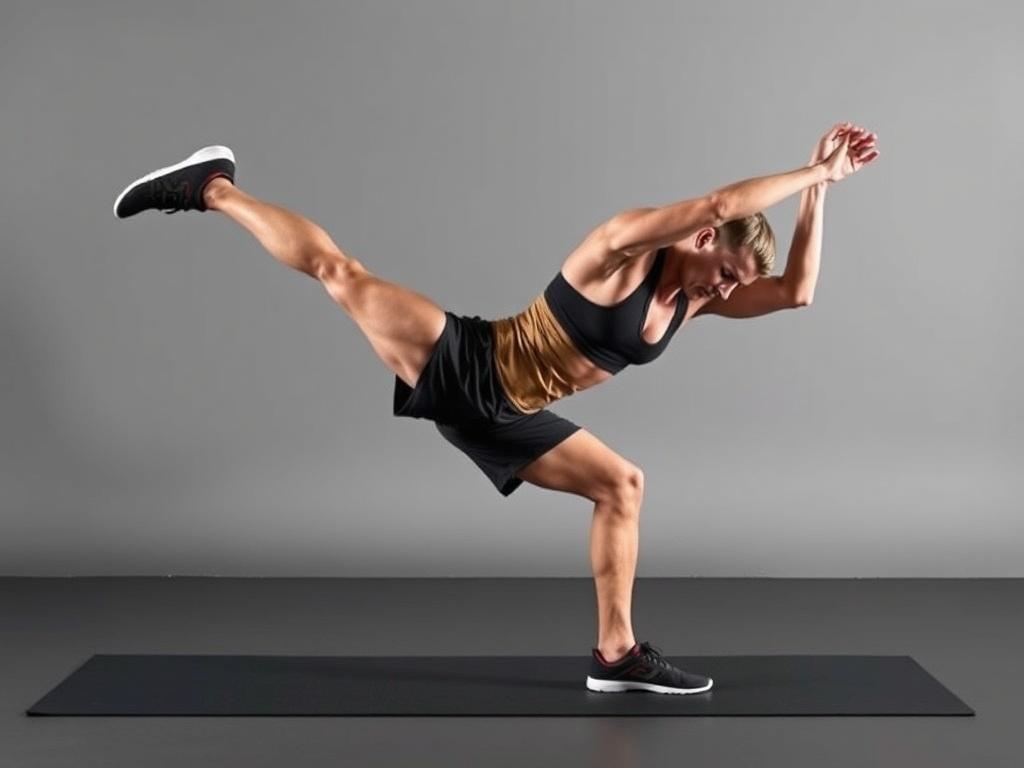
Regressions let beginners or injured athletes benefit from training while minimizing stress. Examples include wall or incline push-ups, band-assisted pull-ups, supported lunges, and partial-range pistol practice. Regressed versions should feel challenging but manageable for the prescribed reps and sets.
Progressions broaden the ceiling: add unilateral loading, explosive variants, or increased time under tension for advanced athletes. For those with limited mobility or joint concerns, prioritize pain-free ranges and slow eccentric control. A sensible approach is to work within pain-free motions and gradually expand range as symptoms improve under consistent, controlled loading.
Practical accessory tools that multiply results
Minimal equipment can expand possibilities: resistance bands, a suspension trainer, and a pull-up bar offer many useful variations and resistances. Bands create progressive assistance for pull-ups and add lateral resistance for presses, while a suspension trainer enables countless row and push variations with easy angle adjustments. A small set of rings or a sturdy door-mounted bar transforms a plain environment into a full calisthenics playground.
Simple household items also work: a chair for step-ups or Bulgarian split squats, a towel for sliding lunges, and a backpack filled with books for added load can be effective. Use improvised tools cautiously, ensuring stability and safe anchor points. The best equipment is the one you’ll actually use consistently and safely.
Conditioning: efficient ways to raise heart rate
Conditioning sessions can be short and impactful: interval formats like EMOMs (every minute on the minute), Tabatas, or 20–30 minute circuits combine strength and cardio without heavy equipment. Choose movements that remain crisp at higher heart rates—jump squats, mountain climbers, kettlebell swings (or hip hinge jumps), and burpees can be cycled in focused blocks. Keep technique standards even when fatigued to avoid injury.
For steady-state endurance, longer, low-intensity circuits with bodyweight squats, lunges, push-ups, and rows are useful and joint-friendly. Mix modalities across the week so heavy strength days and intense conditioning days don’t overlap, allowing for better recovery. Conditioning also benefits from progressive overload: increase duration, reduce rest, or choose harder variations to continue making gains.
Recovery, nutrition, and supporting habits
Recovery is where the training pays off; without it, workouts become stressors rather than growth stimuli. Aim for quality sleep, adequate protein intake across meals, and consistent hydration to support muscle repair and central nervous system recovery. Light movement on rest days—walking, mobility circuits, or yoga—promotes circulation and reduces stiffness more effectively than complete inactivity.
Nutrition need not be complicated: prioritize whole foods, lean proteins, healthy fats, and carbohydrates timed around workouts to fuel sessions and replenish glycogen. For strength-focused phases, maintain a slight caloric surplus and sufficient protein; for fat-loss phases, combine a modest deficit with preserved strength work to protect lean mass. Track energy and adjust intake when progress stalls rather than making dramatic swings.
Programming tips: tracking and adapting
Keep a simple training log: record the exercise, variation, sets, reps, tempo, and how difficult it felt. This data helps you make small, consistent progressions—add one rep, increase time under tension, or move to a slightly harder variation when the logged sessions feel easy. Objective tracking removes guesswork and prevents either overtraining or complacency.
Deload every 4–8 weeks depending on intensity and personal signs of fatigue, or adopt an auto-regulated approach where you reduce volume when performance dips. Use perceived exertion and daily readiness checks—sleep quality, stress, and joint soreness—to guide adjustments. Good programming is flexible: it follows a plan but adapts to the actual human underneath it.
Common travel and space-friendly routines
Travel-friendly sessions lean on circuits and unilateral work that require little room: single-leg squats, push-up variations, prisoner squats, and core holds fit neatly in a hotel room. Pack one resistance band and a jump rope to multiply exercise options without much weight or space. Short, intense sessions of 20–30 minutes can maintain or even improve fitness during busy travel stretches when scheduled consistently.
When equipment is unavailable, use time under tension and tempo changes to increase difficulty: slow negatives and long pauses create muscular stimulus similar to added weight. I’ve maintained strength gains on week-long trips by substituting slow eccentrics and isometric holds for heavy sets. The principle is consistency and creativity rather than perfect conditions.
Programming for special populations
Older adults and those with chronic conditions benefit from lower-impact progressions, emphasis on balance, and slower tempos to protect connective tissue. Bodyweight training translates well because it can be scaled to suit joint limitations and focuses on functional tasks like standing, pushing, and pulling. Include extra mobility work and avoid ballistic moves unless cleared and conditioned for them.
Pregnant individuals should consult healthcare providers and prioritize pelvic floor safety, modified ranges, and avoided supine exercises after the first trimester as recommended by a professional. Children and adolescents should focus on movement quality, play-based conditioning, and foundational strength rather than maximal efforts. Tailor intensity, frequency, and progressions to individual needs and medical guidance.
Real-life examples: my training experiments
When I first committed to an all-bodyweight routine, I tracked simple progressions: moving from incline push-ups to full push-ups, then to decline variations over several months. I found that small, steady progress—adding one or two reps each week and introducing a harder variation every six to eight weeks—kept motivation high and reduced soreness compared to intermittent heavy lifting. The exercises transferred to better posture and less lower-back tension during long travel days.
On a three-week road trip with only a suspension strap and a park bench, I maintained strength by prioritizing single-leg work and slow eccentrics. Paired carries (backpack) and long plank holds preserved core integrity, while daily short conditioning circuits maintained cardiovascular capacity. The takeaway: consistency and thoughtful scaling allow meaningful progress even without a full gym.
Sample exercise library (quick reference)
Use this short list when you need ideas for a session or want to swap elements without changing your entire plan. Each entry can be regressed or progressed to match your capability and goals. The goal is variety and coverage across movement patterns rather than random selection.
- Push: wall push-ups, incline push-ups, standard push-ups, decline push-ups, archer push-ups
- Pull: band-assisted pull-ups, inverted rows, ring rows, strict pull-ups, one-arm progressions
- Legs: bodyweight squat, Bulgarian split squat, pistol progression, walking lunges, jump squats
- Hinge: glute bridge, single-leg bridge, hip hinge jumps, Nordic curl progressions
- Core: plank variations, hollow hold, Pallof press, hanging knee raise, windshield wipers
- Full-body: burpees, mountain climbers, Turkish get-up variations, bear crawl circuits
How to measure progress without a scale
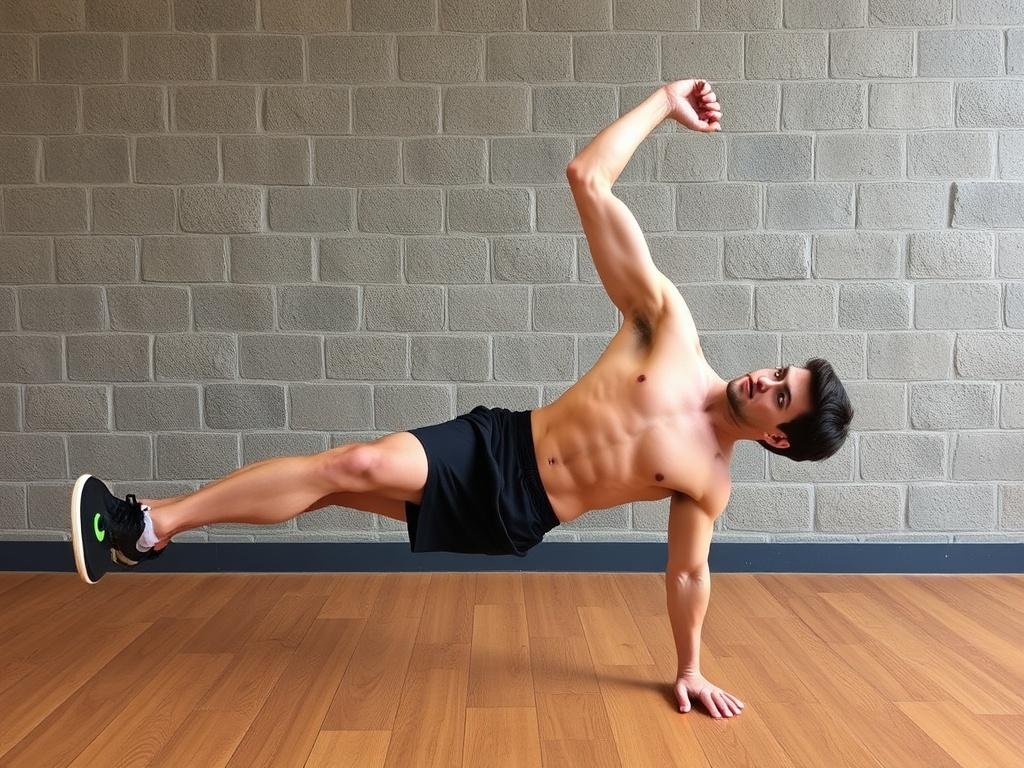
Performance measures are often more motivating than body composition alone: track reps, leverage angle, tempo control, and movement quality. Set benchmarks—time under tension in a plank, maximum strict pull-ups, or single-leg squat depth—and retest every 4–6 weeks to assess meaningful changes. Photos, movement videos, and subjective scales for energy or sleep also provide insights beyond numbers.
When strength improves and everyday tasks feel easier, you’re achieving the practical benefits of training even if the scale doesn’t move as fast. Celebrate non-scale victories such as climbing stairs without fatigue, better posture while seated, or the ability to play actively with kids or friends. These indicators reflect functional fitness that bodyweight programs emphasize.
Short troubleshooting guide
If progress stalls, first audit recovery: are you sleeping enough, eating adequately, and managing stress? Next, examine training variables and alter one at a time—add a set, reduce tempo, or change a variation—so you can identify what truly produced the shift. If pain limits certain movements, regress to a pain-free version or choose an alternative that trains the same pattern while allowing healing.
Plateaus are normal. They often signal the need for a microcycle change—either a deload or an intentional intensity increase. Use patience and small, consistent changes instead of dramatic overhauls that risk injury and frustration.
Putting it all together: a sample month of progress
Week 1 emphasizes technique and volume with approachable variations: 3 workouts focusing on balanced push, pull, legs, and core patterns. Week 2 increases total reps or reduces incline/assistance to make exercises slightly tougher. Week 3 introduces harder variations for primary moves or longer hold times, and Week 4 is a lighter deload with mobility focus and lower volume to consolidate gains.
Track each session and aim for one small win per week—a few extra reps, improved form, or a longer plank. At the end of the month, compare videos or log entries to see objective changes that reward consistent work. Repeat the cycle, increasing difficulty in small steps to maintain upward momentum without undue risk.
Getting started today
Pick three compound moves representing different patterns—one push, one pull or row, and one lower-body hinge or squat—and perform a short circuit of 3–4 rounds with controlled tempo. Keep the first week intentionally conservative to dial in form and a reliable warm-up, then nudge one variable each week to progress. Remember that consistency and thoughtful progression will outpace sporadic maximal efforts every time.
Whether you want to get fitter, stronger, or simply move better, an intelligently structured bodyweight approach delivers results that carry into daily life. Start small, stay curious about variations, and make your training a sustainable habit; the gains will compound quietly and powerfully over months and years.